
1992 Mexico 50 Centavos (Aluminum-Bronze): Value Guide
Prices updated: August 2026
Centavos aluminum bronze 1992.
Centavos aluminum bronze 1992.
Design
Banxico
Reverse
Reverse of the 50 Bronze Aluminum 1992 piece. Die detail cataloged by Banxico in its Colección Numismática.
Obverse
Obverse with the Mexican National Coat of Arms and the legend "ESTADOS UNIDOS MEXICANOS" per official convention. Minted by the Mexican Mint under Banxico decree.
How much is the 1992 Mexico 50 Centavos (Aluminum-Bronze): Value Guide worth?
The market value of the 1992 Mexico 50 Centavos (Aluminum-Bronze): Value Guide is not yet documented with enough data to give a firm range. Weigh and measure your piece, compare it against the specifications, and check the forum for a second opinion.
The real price depends on four factors: the grade of preservation (a circulated piece is worth the low end of the range; an uncirculated one, or one still in its official blister pack, the high end), the finish (satin vs mirror/proof), the rarity within the series based on the mintage, and the metal spot price on the day of the deal when the piece is silver or gold. Check the value-by-grade table above and compare with equivalent pieces before buying or selling.
Where to buy or sell this coin?
Browse the national directory of numismatic shops or the community forum to trade directly with other collectors.
Description
If you inherited or found a 1992 Mexican 50 centavos coin, here is the honest answer: in circulated condition it is worth a few cents, not a fortune. This is a common circulation coin, not a rare silver piece. The exception is uncirculated examples still in original Banxico packaging, which trade for a small premium among collectors.
So before you get your hopes up, let's clear the air. "Old Mexican coin" almost never means "valuable Mexican coin." Value comes from rarity, demand, condition, and metal content. This coin is made of aluminum-bronze, so there is no silver or gold floor to prop up its price. What you have is a modern circulation coin that Mexico minted in large numbers.
What this coin actually is
The 1992 50 centavos belongs to Mexico's pre-1992 monetary system, right before the currency was revalued (the "new peso" reform dropped three zeros starting in 1993). The denomination is 50 centavos, meaning half of one old peso. "Centavos" are the Mexican equivalent of cents.
Here are the exact specifications:
| Spec | Detail |
|---|---|
| Denomination | 50 centavos |
| Year | 1992 |
| Metal | Aluminum-bronze (no precious metal) |
| Weight | 4.39 grams |
| Diameter | 22 mm |
| Edge | Plain (smooth) |
| Mint | Casa de Moneda de México |
Obverse (front): The Mexican National Coat of Arms (the eagle on a cactus devouring a serpent) with the legend "ESTADOS UNIDOS MEXICANOS," which is the official name of the country, United Mexican States.
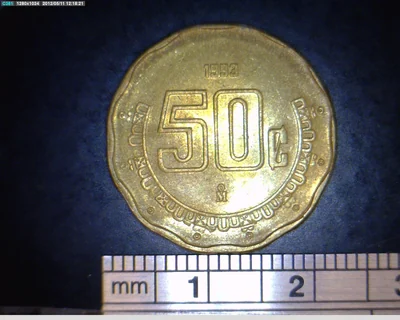
Reverse (back): The denomination and design cataloged by Banxico (Mexico's central bank).
What it's worth in 2026
Be realistic. This is a high-mintage circulation coin, and value tracks condition closely.
| Condition | Realistic value (USD) |
|---|---|
| Circulated (worn, from pocket change) | A few cents, essentially face-value scrap |
| Uncirculated (no wear, full luster) | Under 1 dollar to a couple of dollars |
| In original Banxico blister/set | A small premium, typically a few dollars |
Do not expect a windfall. Anyone claiming this specific coin is worth hundreds or thousands is either confusing it with a genuine mint error or repeating clickbait. A worn 1992 50 centavos is not a treasure. It is a common coin from a country next door that produced millions of them.
The mint-error myth
Here is where the real money could hide, and where most people get fooled. Genuine mint errors (off-center strikes, die rotation, double strikes, and cataloged varieties) can multiply a coin's value if they are authentic and verifiable. That is the honest exception.
The catch: the vast majority of "errors" people post online are post-mint damage. Scratches, corrosion, dents, and cleaning marks happen after the coin left the mint and add nothing. A true error is present at the moment of striking. If you think you have a genuine error, get it confirmed before you celebrate.
How to tell if yours is genuine
For a low-value coin like this, counterfeits are rare because there is no profit in faking it. Still, a quick check settles it:
- Weigh it. A genuine example is 4.39 grams. Use a jewelry scale.
- Measure the diameter. It should be 22 mm. Use calipers.
- Check the strike. Real coins have crisp relief and evenly distributed color. Flat, mushy detail or blotchy coloring is a red flag.
If weight and diameter match, you almost certainly have the real thing.
How to check the exact value of yours
Condition (grade) is everything with this coin. A coin that has been cleaned or scrubbed loses value, so never polish it. Read our guide to grading Mexican coins to place yours accurately, and compare it with other pieces in the 50 centavos aluminum-bronze series.
Where to sell it
If you have a handful of these, they are not worth shipping across the border individually. Realistic options:
- A verified coin dealer from the Pesoteca shop directory will appraise it on the spot.
- The Pesoteca buy-and-sell forum connects you directly with collectors, which matters if you have an uncirculated example or a suspected error.
- Photograph the obverse, reverse, and edge in good light before offering it anywhere.
Got a box of old Mexican coins and not sure which ones are worth pulling aside? Post clear photos in the Pesoteca forum and let the community tell you what's common and what's actually worth money.
Historical context
Context of the fifty centavos piece from 1992
This fifty centavos coin (KM#549) was minted by the Mexican Mint in 1992, under the presidency of Carlos Salinas de Gortari. It is part of the family of circulating coins in bronze and aluminum with nickel alloy that Banxico issued between 1992 and 2009, with a 22 mm diameter and 3.10 g weight.
The year in Mexico. It is the first minting year after the Nuevo Peso decree published in the Diario Oficial de la Federación on June 22, 1992. The reform removed three zeros from the currency: one hundred thousand old pesos came to be worth one hundred new pesos. That year, according to INEGI's INPC, annual inflation closed at 11.94% and the Bank of Mexico's FIX exchange rate closed the year at 3.12 pesos per dollar.
How it circulated. In 1992 these pieces began to circulate at par with the bills and coins of the previous system, marked with the N$ prefix to distinguish them from the old peso. They were used to pay for an urban bus ticket in many cities and as small change in the market.
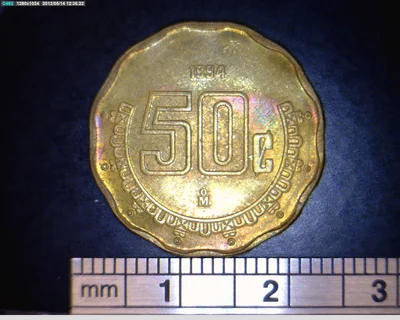
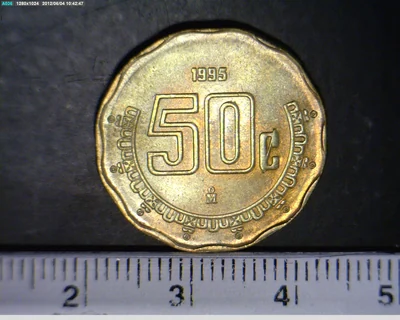
Numismatic note. The 1992 date engraving appears on the first dies produced by the Mexican Mint under the new scheme. Collectors seek this date as the head of the series. The obverse design is Banxico's official National Coat of Arms and the reverse shows the face value alongside the minting year. From year to year the design stays identical and only the engraved date changes, so the visible difference is minimal. Internal die variations, when they exist, are documented in the Bank of Mexico catalog.
This piece belongs to the era
México Moderno (pre-1992) →Explore all the Mexican coins of this era, their historical context and how they connect to the monetary system of the period.
Value range of this piece
Value range without enough data for this piece.
See the full breakdown by grade (VG, F, VF, EF, AU, MS-60, MS-63, MS-65) for the whole series →
Same denomination, other years
50 centavos Aluminio-bronce · 50 Centavos Bronce Aluminio
Frequently asked questions
How much is a 1992 Mexican 50 centavos worth?
In circulated condition, a few cents in USD. Uncirculated examples with full luster can bring under a dollar to a couple of dollars, and coins still in the original Banxico blister pack trade for a small premium among collectors. This is a common aluminum-bronze circulation coin, not a rare or precious-metal piece.
Is the 1992 50 centavos rare?
No. It was minted in large numbers as everyday circulation coinage, so worn examples are common and inexpensive. The only versions that carry any premium are pristine uncirculated pieces, coins in original packaging, and genuine, verifiable mint errors.
Where can I sell a 1992 Mexican 50 centavos?
The safest routes are a verified coin dealer from the [Pesoteca shop directory](/tiendas), who can appraise it in person, or the [Pesoteca buy-and-sell forum](/foro/compra-venta) among collectors. Photograph the front, back, and edge, and check the value ranges on this page before selling. Avoid dumping it to the first buyer on social media.
How do I know if my 1992 50 centavos is genuine?
Weigh it and measure it: a real coin is 4.39 grams and 22 mm in diameter. Counterfeits usually have the wrong weight or size, flat relief, or uneven coloring. For a low-value coin like this, fakes are uncommon, so if the measurements match you almost certainly have an authentic piece.
Conversation
0 comments
Sources
- Ejemplar de la Coleccion Numismatica Banco de Mexico . inv. 16768
- Ejemplar de la Coleccion Numismatica Banco de Mexico . inv. 16787
- Ejemplar de la Coleccion Numismatica Banco de Mexico . inv. 16788
- Ejemplar de la Coleccion Numismatica Banco de Mexico . inv. 16959
- Ejemplar de la Coleccion Numismatica Banco de Mexico . inv. 16960
Images for informational and educational purposes, attributed to their original source. Reference values; the real price depends on the grade, the specific variant and demand.
Loading comments…