
Mexican 10 Centavos 1996 (Stainless Steel): Value Guide
Prices updated: August 2026
Centavos stainless steel 1996.
Centavos stainless steel 1996.
Design
Banxico
Reverse
Reverse of the 10 stainless steel 1996 piece. Detail of the die cataloged by Banxico in its Numismatic Collection.
Obverse
Obverse with Mexican National Coat of Arms and legend "ESTADOS UNIDOS MEXICANOS" per the official convention. Struck by the Mexico City Mint under Banxico decree.
How much is the Mexican 10 Centavos 1996 (Stainless Steel): Value Guide worth?
The market value of the Mexican 10 Centavos 1996 (Stainless Steel): Value Guide is not yet documented with enough data to give a firm range. Weigh and measure your piece, compare it against the specifications, and check the forum for a second opinion.
The real price depends on four factors: the grade of preservation (a circulated piece is worth the low end of the range; an uncirculated one, or one still in its official blister pack, the high end), the finish (satin vs mirror/proof), the rarity within the series based on the mintage, and the metal spot price on the day of the deal when the piece is silver or gold. Check the value-by-grade table above and compare with equivalent pieces before buying or selling.
Where to buy or sell this coin?
Browse the national directory of numismatic shops or the community forum to trade directly with other collectors.
Description
If you found a 1996 Mexican 10 centavos coin, here is the honest answer: worn examples are worth face value, essentially pocket change. A crisp, uncirculated one with full mint luster can sell to a collector for a few dollars, not more. There is no hidden fortune in this coin, but there is a reason a completist would pay for the right example.
This is a stainless steel coin, not silver, so it has no precious metal value. Anyone telling you it is worth hundreds because it is "old" is wrong. It was made for daily circulation and hundreds of millions passed through Mexican hands.
What this coin actually is
The 1996 10 centavos (ten cents in Mexican pesos) belongs to the coinage that followed Mexico's 1993 monetary reform. In that reform the country dropped three zeros from its currency and launched the "Nuevos Pesos" (New Pesos). By 1996 the word "Nuevo" had already been removed from the designs, and the modern peso system was fully in place.
Stainless steel was chosen for the low-value fractions because it is durable and cheap to strike. These 10 centavos were the small change of everyday life, the kind of coin that ended up in jars and between couch cushions.
Technical specifications
| Feature | Detail |
|---|---|
| Denomination | 10 centavos |
| Year | 1996 |
| Metal | Stainless steel (no silver or gold) |
| Weight | 2.08 grams |
| Diameter | 17 mm |
| Edge | Smooth (plain) |
| Mint | Casa de Moneda de México (Mexican Mint) |
How much is it worth in USD?
Value is driven entirely by condition here, not rarity. Because this coin circulated heavily, worn examples are common and worth face value. What collectors want is a piece that survived without wear.
| Condition | Approximate value (USD) |
|---|---|
| Circulated (worn, spotted) | Face value, under 25 cents |
| Uncirculated (full steel luster, no wear) | A few dollars |
| Certified high-grade (NGC/PCGS, top pop) | Higher, still modest, depends on the grade |
An uncirculated 1996 10 centavos, with the original bright steel finish and none of the spotting that comes from handling, is genuinely harder to find than it sounds. That is where the value lives. A clean UNC example is the ideal building block for someone assembling a complete date-and-grade run of Mexican fractional coinage.
The coin people think is worth a fortune but isn't
A lot of chatter online claims common modern Mexican coins are worth hundreds or thousands. For this one, that is not true. It is stainless steel with no metal premium, and it was minted in enormous quantities. The only version worth paying up for is a top-condition example, and even then we are talking a few dollars, not a windfall.
Genuine mint errors are the exception. Off-center strikes, die rotation, double strikes and legitimate varieties can multiply the value if they are real and verifiable. Be careful: most "errors" shared on social media are post-mint damage (dents, corrosion, scratches), not factory errors. If you think you have a real one, get it looked at before you assume it is valuable.
How to tell if yours is genuine
Start with the numbers. Weigh it on a jewelry scale and measure the diameter with calipers, then compare to the specs above: 2.08 grams and 17 mm. Counterfeits usually miss on weight or diameter, or show flat relief and poor detail. For a low-value circulating coin like this, outright fakes are rare because there is no profit in faking it, but the checks still apply.
Where to sell it
If you want to sell a 1996 10 centavos, photograph the obverse, reverse and edge in good light, and check the condition against the guide above before you list it. Your best options:
- A verified numismatic shop from the Pesoteca directory, which can value it in person.
- The Pesoteca buy-and-sell forum, where you deal directly with collectors.
Realistically, a single circulated example is not worth the effort to sell. These are most useful as part of a larger lot or a date set. If you have a jar of mixed Mexican coins, sort out any uncirculated pieces first, since those are the ones worth setting aside.
Have a 1996 10 centavos with unusual luster or what looks like a strike error? Post clear photos in the Pesoteca forum and let the community weigh in before you decide what it's worth.
Historical context
This 10 centavos piece from 1996 belongs to the family B without the N$ prefix issued by Banxico. The 10 centavos is the most-used fractional step in Mexico. They turn up when paying cash bills with an odd price and as change in supermarkets, tortillerias, and pharmacies. Its national eagle + denomination + year face is among the most familiar to the ordinary Mexican.
Stainless steel made it corrosion-resistant and cheap to strike. The piece replaced the copper-nickel that earlier generations had in the old peso system.
In 1996 annual inflation closed at 27.7% according to INEGI and the average exchange rate was 7.60 pesos to the dollar according to Banxico's FIX. A year of incipient recovery. GDP grew 5.2% and the peso stabilized above seven to the dollar. Banxico kept the corto (reserve requirement rule) as its main monetary policy tool. The country was under the Presidency of Ernesto Zedillo Ponce de Leon (PRI).
Catalog reference: KM#547. The piece is part of the official Banxico Numismatic Collection catalog and follows the convention of the PSM System, one ID per distinct physical piece, not per design shared with other years of the same series.
This piece belongs to the era
Nuevos Pesos y actualidad →Explore all the Mexican coins of this era, their historical context and how they connect to the monetary system of the period.
Value range of this piece
Value range without enough data for this piece.
See the full breakdown by grade (VG, F, VF, EF, AU, MS-60, MS-63, MS-65) for the whole series →
Same denomination, other years
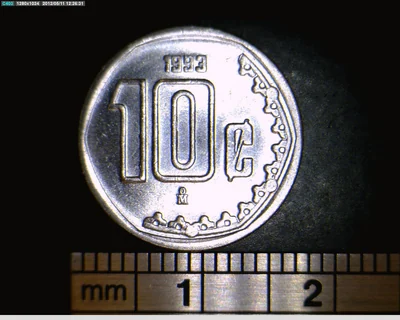
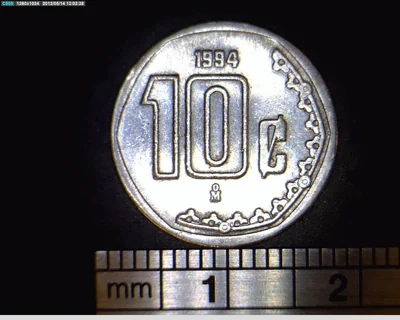
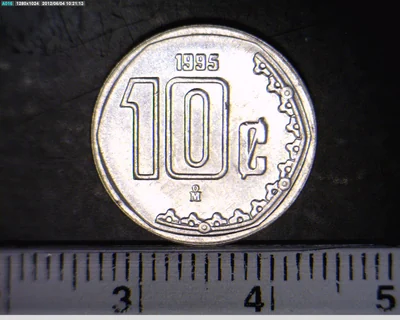
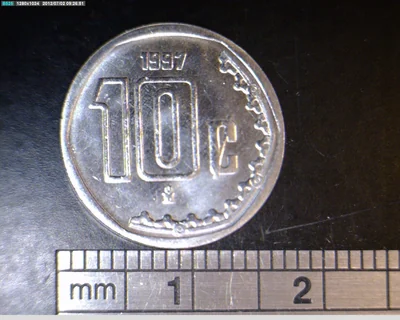
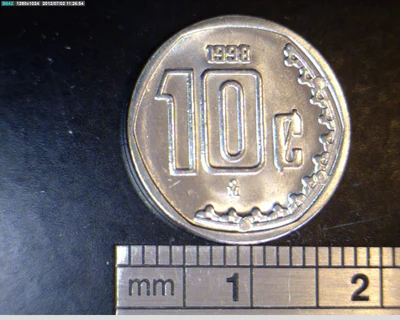
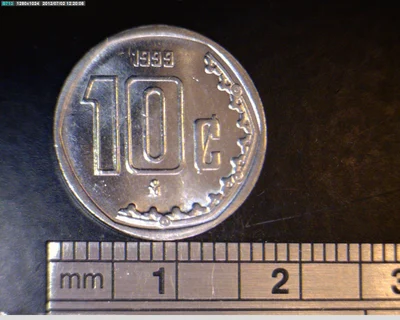
10 centavos Acero inoxidable · 10 Centavos Acero Inoxidable
Frequently asked questions
How much is a 1996 Mexican 10 centavos worth?
In circulated condition it is worth face value, essentially pocket change under 25 cents in USD. A truly uncirculated example with full steel luster and no spotting can sell to a collector for a few dollars. It is stainless steel with no precious metal value, so there is no melt premium.
Is the 1996 10 centavos rare or valuable?
No, it is not rare. It was minted in huge quantities for daily circulation. Value comes from condition, not scarcity: worn coins are common, while high-grade uncirculated examples are harder to find and command a small premium. Genuine mint errors are the only pieces that could be worth significantly more.
Where can I sell a 1996 Mexican 10 centavos?
Use a verified numismatic shop from the Pesoteca directory (/tiendas) for an in-person valuation, or the Pesoteca buy-and-sell forum (/foro/compra-venta) to deal directly with collectors. Photograph the obverse, reverse and edge first. A single circulated coin is usually only worth selling as part of a larger lot.
How can I tell if my 1996 10 centavos is genuine?
Weigh it with a jewelry scale and measure it with calipers, then compare to the official specs: 2.08 grams and 17 mm diameter, smooth edge, stainless steel. Fakes usually have the wrong weight or diameter, flat relief or poor detail. For a low-value coin like this, counterfeits are uncommon because there is no profit in faking it.
Conversation
0 comments
Sources
- Ejemplar de la Coleccion Numismatica Banco de Mexico . inv. 19036
- Ejemplar de la Coleccion Numismatica Banco de Mexico . inv. 19035
- Ejemplar de la Coleccion Numismatica Banco de Mexico . inv. 19037
- Ejemplar de la Coleccion Numismatica Banco de Mexico . inv. 19038
- Ejemplar de la Coleccion Numismatica Banco de Mexico . inv. 19039
Images for informational and educational purposes, attributed to their original source. Reference values; the real price depends on the grade, the specific variant and demand.
Loading comments…