
1994 Mexico 10 Centavos (Stainless Steel): Value Guide
Prices updated: August 2026
Centavos stainless steel 1994.
Centavos stainless steel 1994.
Design
Banxico
Reverse
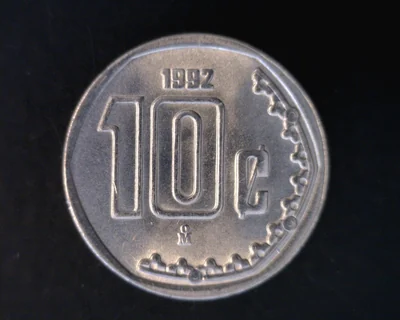
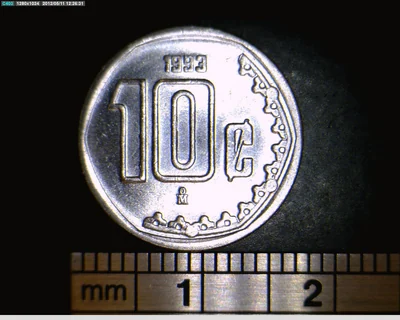
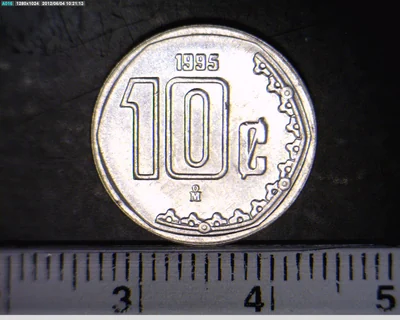
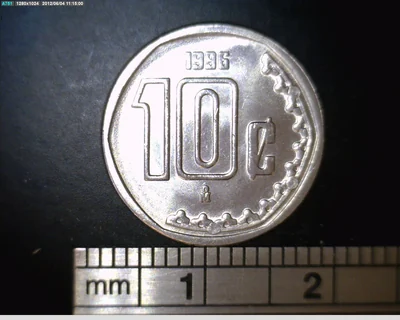
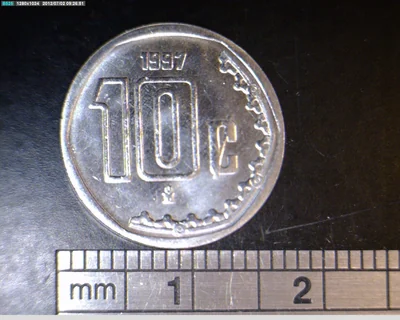
Reverse of the 10 Stainless steel 1994 piece. Detail of the die cataloged by Banxico in its Numismatic Collection.
Obverse
Obverse with the Mexican National Coat of Arms and legend "ESTADOS UNIDOS MEXICANOS" per official convention. Minted by the Mexican Mint under Banxico decree.
How much is the 1994 Mexico 10 Centavos (Stainless Steel): Value Guide worth?
The market value of the 1994 Mexico 10 Centavos (Stainless Steel): Value Guide is not yet documented with enough data to give a firm range. Weigh and measure your piece, compare it against the specifications, and check the forum for a second opinion.
The real price depends on four factors: the grade of preservation (a circulated piece is worth the low end of the range; an uncirculated one, or one still in its official blister pack, the high end), the finish (satin vs mirror/proof), the rarity within the series based on the mintage, and the metal spot price on the day of the deal when the piece is silver or gold. Check the value-by-grade table above and compare with equivalent pieces before buying or selling.
Where to buy or sell this coin?
Browse the national directory of numismatic shops or the community forum to trade directly with other collectors.
Description
If you found a 1994 Mexican 10 centavos coin, here's the honest answer up front: in circulated condition it's worth about a nickel to a quarter in US terms, essentially face value. This is a common modern coin, not a rare find. The value only climbs slightly for pristine, uncirculated examples still in the original mint packaging.
We get this coin a lot from people cleaning out a jar of foreign change or an inherited box. It's understandable to hope, but this one is a modern circulating piece, not a scarce collectible. That said, there's a right way to check yours, and a few things that would change the picture.
What this coin actually is
The 10 centavos is a small fraction of a Mexican peso (100 centavos = 1 peso). This particular version, minted starting in 1994, is part of the stainless steel 10 centavos series issued under Mexico's "Nuevos Pesos" currency reform. It was struck by the Casa de Moneda de México (the Mexican Mint), the oldest mint in the Americas.
Key specifications, exactly as issued:
| Feature | Detail |
|---|---|
| Denomination | 10 centavos |
| Year | 1994 |
| Metal | Stainless steel |
| Weight | 2.08 grams |
| Diameter | 17 mm |
| Edge | Smooth (plain) |
| Era | Nuevos Pesos (modern) |
Front (obverse): The Mexican national coat of arms, an eagle perched on a cactus devouring a serpent, with the legend "ESTADOS UNIDOS MEXICANOS" (United Mexican States, the country's official name).
Back (reverse): The denomination and design cataloged by Banxico (the Bank of Mexico) in its official numismatic collection.
Because it's stainless steel, not silver or gold, there's no precious-metal value here. It won't melt for anything meaningful.
What it's worth in 2026
Value depends almost entirely on condition (grade). Here's the realistic range:
| Condition | Approximate value (USD) |
|---|---|
| Circulated (worn) | Face value, a few cents |
| About uncirculated | 10 to 25 cents |
| Uncirculated (BU) | 50 cents to about 2 dollars |
| Sealed in original mint packaging | Up to a few dollars |
Don't expect a windfall. A worn 1994 10 centavos found in change is worth its face value. The only versions that bring even a couple of dollars are flawless, uncirculated coins with full luster, ideally still in the original Banxico blister pack. Use our coin grading guide to figure out where yours falls.
The "error coin" question
This is where hope usually lives. Genuine mint errors (off-center strikes, die rotation, double strikes, recognized varieties) can multiply the value of an otherwise common coin. That part is real.
Here's the reality check: most "errors" people post online are post-mint damage. Dents, scratches, corrosion, and grime from decades in a drawer are not factory errors and add zero value. A true error has to be verifiable and present at the moment of striking. If you think yours qualifies, photograph both sides clearly and post it to the Pesoteca forum so collectors can weigh in before you get your hopes up.
How to tell if yours is genuine
Counterfeiting a 10 centavos coin makes no economic sense, so fakes are rare here. Still, if you want to confirm:
- Weigh it on a jewelry scale. It should be 2.08 grams.
- Measure the diameter with calipers. It should be 17 mm.
- Check the strike. Real coins have crisp, even relief. Flat details or uneven coloring point to a problem.
Fakes usually miss on weight or diameter and show mushy detail.
Where to sell it
If you want to move it, skip dumping it on social media to the first bidder. Better options:
- A verified numismatic shop from the Pesoteca dealer directory, which can appraise it on the spot.
- The Pesoteca buy-and-sell forum, where collectors trade directly.
Photograph the front, back, and edge, and compare your coin against the value ranges above before you sell.
Have a full jar of these and want to know what's actually worth pulling out? Post your photos in the Pesoteca forum and let the community help you sort the keepers from the pocket change.
Historical context
This 1994 10-centavos piece belongs to family B with the N$ symbol (Nuevo Peso) issued by Banxico. The 10 centavos is the most used fractional step in Mexico. It shows up when paying cash bills with an odd price and as change in supermarkets, tortillerías and pharmacies. Its national eagle + denomination + year face is one of the most familiar to the ordinary Mexican.
Stainless steel made it resistant to corrosion and cheap to mint. The piece replaced the copper-nickel that earlier generations had under the old peso system.
In 1994 annual inflation closed at 7.1% according to INEGI and the average exchange rate was 3.38 pesos per dollar according to Banxico's FIX. The year of the December error: on December 20 Banxico let the peso float and within weeks it traded above seven pesos per dollar. Before the collapse, the year was that of the EZLN uprising in Chiapas and the assassination of Luis Donaldo Colosio. The country was under the Presidency of Carlos Salinas de Gortari (PRI).
Catalog reference: KM#547. The piece is part of the official Banxico Numismatic Collection catalog and follows the convention of the PSM System, one ID per distinct physical piece, not per design shared with other years of the same series.
This piece belongs to the era
Nuevos Pesos y actualidad →Explore all the Mexican coins of this era, their historical context and how they connect to the monetary system of the period.
Value range of this piece
Value range without enough data for this piece.
See the full breakdown by grade (VG, F, VF, EF, AU, MS-60, MS-63, MS-65) for the whole series →
Same denomination, other years
10 centavos Acero inoxidable · 10 Centavos Acero Inoxidable
Frequently asked questions
How much is a 1994 Mexico 10 centavos worth?
In circulated condition it's worth face value, just a few US cents. Uncirculated examples run from about 50 cents to 2 dollars, and coins still sealed in the original Banxico mint packaging can reach a few dollars. It is not a rare or high-value coin.
Is the 1994 stainless steel 10 centavos rare?
No. It's a common modern circulating coin struck by the Mexican Mint. Millions entered circulation. The only versions with any premium are flawless uncirculated pieces or verified genuine mint errors.
Where can I sell a 1994 Mexican 10 centavos?
The safest routes are a verified numismatic shop from the Pesoteca dealer directory, which appraises it in person, or the Pesoteca buy-and-sell forum where collectors trade directly. Photograph the front, back, and edge, and check the value range first. Avoid selling to the first bidder on social media.
How can I tell if my 1994 10 centavos is genuine?
Weigh it (should be 2.08 grams) and measure the diameter (should be 17 mm) with a jewelry scale and calipers, then compare to the specs above. Counterfeits usually have the wrong weight or diameter, flat relief, or uneven coloring.
Conversation
0 comments
Sources
- Ejemplar de la Coleccion Numismatica Banco de Mexico . inv. 18625
- Ejemplar de la Coleccion Numismatica Banco de Mexico . inv. 18623
- Ejemplar de la Coleccion Numismatica Banco de Mexico . inv. 18624
- Ejemplar de la Coleccion Numismatica Banco de Mexico . inv. 18626
- Ejemplar de la Coleccion Numismatica Banco de Mexico . inv. 18627
Images for informational and educational purposes, attributed to their original source. Reference values; the real price depends on the grade, the specific variant and demand.
Loading comments…