
En resumen
Most old Mexican banknotes are worth little more than their history, but a handful genuinely command a premium. Here is which ones, why, and how to figure out what you actually have.
Most old Mexican banknotes are worth little more than their history. The Bank of Mexico printed millions of each one, so age alone means almost nothing. A small group does command real money: private-bank notes from before 1925 and high-denomination 1980s bills in uncirculated condition. Here is how to tell the difference.
Almost everyone has opened a drawer and found an old bill: a 1,000-peso note with Juana de Asbaje, a 5-peso note for a denomination that no longer exists, something from "when a peso was a peso." The question is always the same: is this worth anything? The honest short answer is that most are worth the memory and not much more, but a few do take off. Let us separate them.
Why almost no old banknote is worth a fortune
Before you get excited, the reality: the Bank of Mexico (Banco de México, the country's central bank) printed millions of each note. A bill that exists in tens of millions of copies is not rare by definition, no matter how old it looks. Collector value moves on three things, in this order:
- Condition. A note with no folds, no stains, and sharp corners (what collectors call UNC, uncirculated) is worth far more than the same note worn down. The gap between a crumpled example and a crisp one can be 10 to 1.
- Real rarity. Not age. Print run, short series, printing errors, unusual signature combinations.
- Demand. Someone has to want it today. Without demand, rarity does not pay.
If your note is folded, written on, or faded, it is almost certainly worth sentimental value and little else. That is not bad news, just the truth a quick buyer will not tell you.
Which old Mexican banknotes are actually worth more
These are the ones collectors chase and that do command a premium in good condition:
- Private issuing-bank notes (before 1925). Before the central bank monopolized currency, banks such as the Banco de Zacatecas printed their own paper. The 500-peso Banco de Zacatecas note and its late-19th-century siblings are genuine historical pieces, scarce and sought after.
- High denominations from the 1980s in good condition. The 100,000-peso note of 1988, the 50,000-peso note, and the 20,000-peso note were products of the inflation era, and in UNC they have a real audience.
- Short series, rare signatures, and errors. A common note becomes interesting when it carries a rarely printed signature pairing, a replacement series, or a cutting or printing error. There, rarity sets the price, not the denomination.
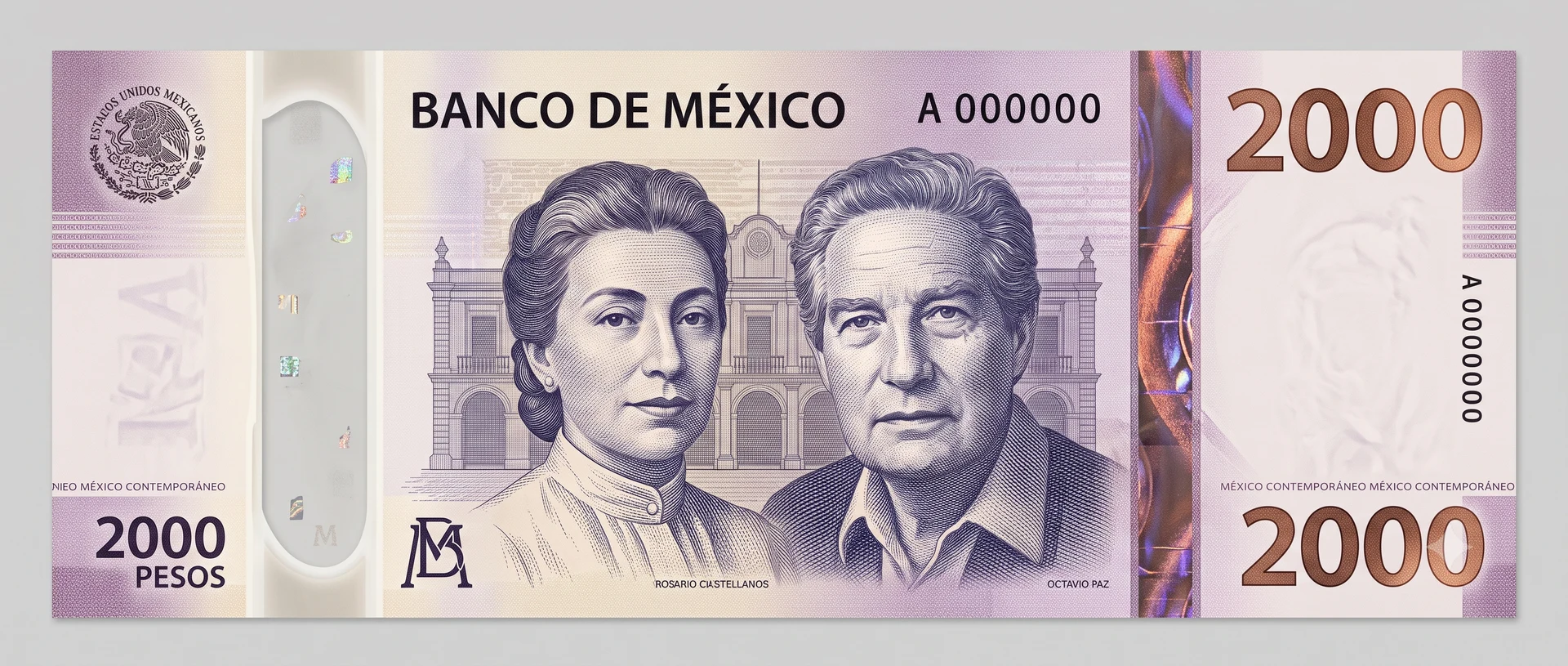
- The ghost note that never circulated. Separately, there is the 2,000-peso note of the Familia G that the central bank designed but never issued. It has no value as a piece because it was never printed, but it is one of the most searched-for out of pure curiosity.
Quick reference: what drives value
| Note | Era | Why collectors want it |
|---|---|---|
| Banco de Zacatecas 500 pesos | Before 1925 | Private-issue, genuinely scarce, historical |
| 100,000 pesos | 1988 | Top inflation-era denomination, premium in UNC |
| 50,000 pesos | 1986 | High denomination, collector demand in UNC |
| 20,000 pesos | 1985 | High denomination, sought in top grade |
| Error / replacement notes | Various | Rarity outweighs denomination |
| 1,000 pesos (Juana de Asbaje) | 1970s-80s | Common when circulated, low value |
How to check what yours is worth
Do not guess from a listing photo, where many sellers ask fantasy prices that nobody actually pays. Do this instead:
- Identify the exact piece: denomination, year, and above all the real condition. Hold it to the light and check for folds and corner wear.
- Look it up in the catalog. Each note has an entry with a value range by condition. Start with the Mexican banknote catalog and work entry by entry, from the first issues to the current Familia G series.
- Use the tool. If you would rather not search by hand, use how much is my banknote worth and compare against the market.
- Get a second opinion. If you are unsure about the grade or think you have a rare variety, post it on the forum and someone who has done this for years will tell you what you have.
Where to sell without getting lowballed
This is where many people lose money. A note worth 800 pesos sells for 200 because the owner did not know what they had. To sell well:
- Check the real value range in the catalog entry first, so you do not accept the first offer.
- Visit a verified numismatic shop. Many buy on the spot and give an honest reference by grade. Get an appraisal at two or three places and compare.
- For stronger pieces (19th-century private banks, high denominations in UNC), consider selling collector to collector on the forum, where no middleman takes a cut.
- Never let a quick buyer "do you a favor" by taking it off your hands fast. Fast almost always means cheap.
What is not worth much (so you skip the disappointment)
To close honestly: the 1970s, 1980s, and 1990s notes in circulated condition (worn, folded) that almost everyone has are worth their history and little more. A well-used 1,000-peso note with Juana de Asbaje is not a treasure, even though it looks old. Practice notes, replicas, and film-prop money have no numismatic value at all. And watch for forgeries that copy historical notes: if something looks too good to be true, have it checked.
Got an old note and do not know what it is? Post it on the forum with a photo of the front and back, and the community will help you identify it.

Loading comments…