
Peso Caballito 1910: Value & Real Prices
The Peso Caballito 1910: Value & Real Prices is worth between $1,581 and $4,162 MXN depending on its grade of preservation.
Prices updated: August 2026
Commemorative peso of the Centennial of Independence
Commemorative peso of the Centennial of Independence
Design
Banxico
Obverse
Caballito peso, short ray.
The Peso Caballito 1910: Value & Real Prices is worth between $1,581 and $4,162 MXN depending on its grade of preservation.
Prices updated: August 2026
How much is the 1 peso Peso Caballito 1910: Value & Real Prices 1863 worth?
The estimated value of the 1 peso Peso Caballito 1910: Value & Real Prices ranges from $1,581 (circulated, XF) up to $4,162 (official blister pack), with $3,223 as a reference for an uncirculated (UNC) piece. The estimate is based on the official mintage and the historical behavior of the family.
The real price depends on four factors: the grade of preservation (a circulated piece is worth the low end of the range; an uncirculated one, or one still in its official blister pack, the high end), the finish (satin vs mirror/proof), the rarity within the series based on the mintage, and the metal spot price on the day of the deal when the piece is silver or gold. Check the value-by-grade table above and compare with equivalent pieces before buying or selling.
Where to buy or sell this coin?
Browse the national directory of numismatic shops or the community forum to trade directly with other collectors.
Description
If you inherited a large Mexican silver coin with a horse and rider on the front, you have a Peso Caballito, and it is one of the more collectible Mexican coins from the early 20th century. In 2026, most circulated examples trade for roughly 20 to 60 USD, while a sharp, certified high-grade coin can bring several hundred. The metal alone gives it a floor.
What the 1910 Peso Caballito actually is
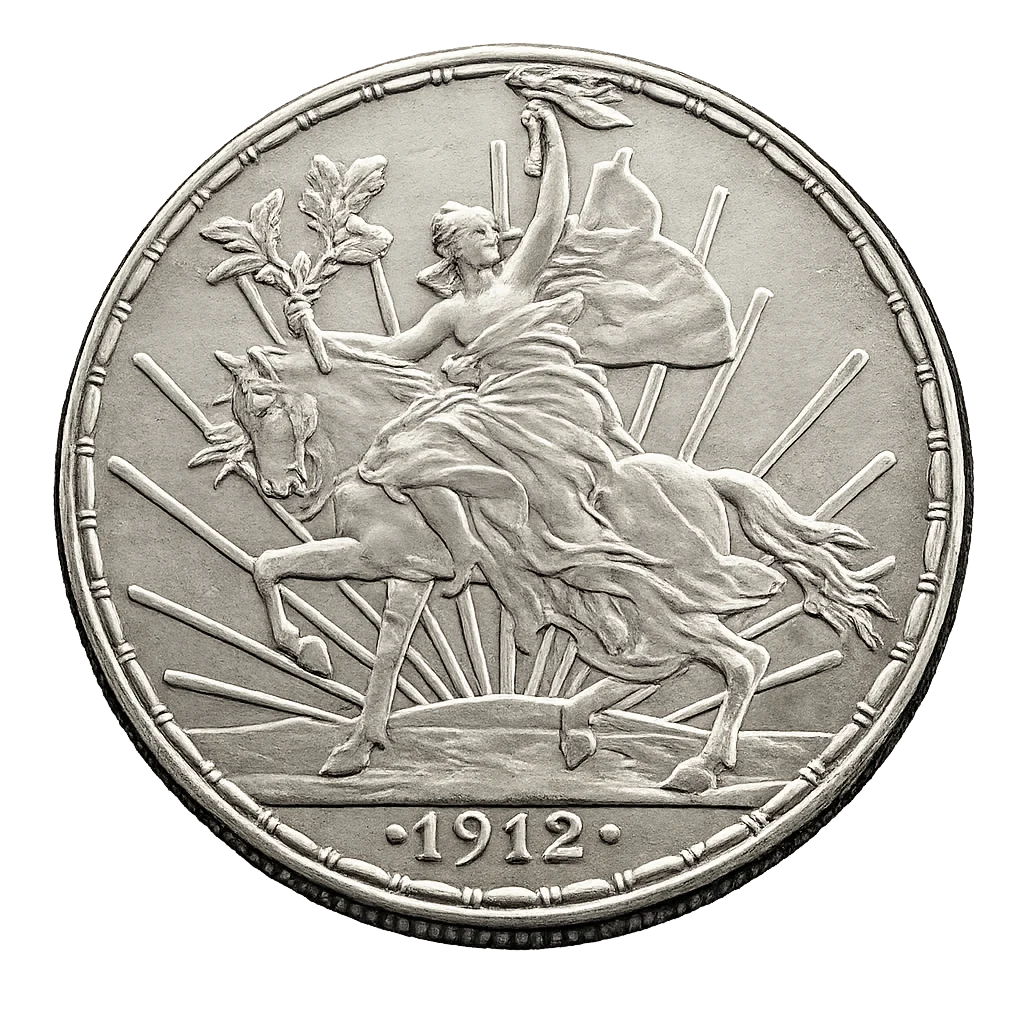
"Caballito" means "little horse" in Spanish, the nickname collectors gave this coin because the reverse shows Lady Liberty on horseback. It was Mexico's one-peso coin struck from 1910 to 1914, widely regarded as one of the most beautiful designs the Mexican mint ever produced. The 1910 date is the first year of issue and marks the centennial of Mexican independence.
Here is what matters for value: this is a real silver coin.
- Metal: 0.900 fine silver
- Weight: 27.07 grams
- Diameter: 39 millimeters
- Actual silver content: about 0.7860 troy ounces
- Design: Liberty on horseback (reverse), Mexican coat of arms with eagle and snake (obverse)
Because it contains almost eight-tenths of an ounce of silver, the coin can never be worth less than its melt value. As silver prices move, so does that floor.
What it is worth
Condition drives everything. A worn coin that spent years in circulation is worth a modest premium over its silver content. A crisp, lightly handled coin, and especially one certified by a grading service, is worth much more.
| Grade | Description | Approximate value (USD) |
|---|---|---|
| Good / Very Good | Heavy wear, design flat in spots | 20 to 35 |
| Fine / Very Fine | Moderate wear, clear detail | 35 to 70 |
| Extremely Fine | Light wear, sharp | 70 to 150 |
| About Uncirculated | Trace of wear, near mint | 150 to 400 |
| Mint State (certified) | No wear, original luster | 400 to 1,500+ |
These are working ranges for the common 1910 date. The top of the market belongs to certified Mint State examples. Well-graded pieces have sold in the hundreds to low thousands of dollars at major auctions such as Heritage and Stack's Bowers, with the finest known survivors reaching the strongest numbers.
Is the 1910 the rare one?
Not especially. The 1910 is the most available date of the Caballito series, so being "old" and "from 1910" does not by itself make your coin rare. Within the series, the sought-after dates are the low-mintage later years, particularly 1914, which is scarcer and commands a real premium.
What separates an ordinary Caballito from a valuable one is condition, not age. A common 1910 in Mint State can easily outsell a worn example of a scarcer date. If you want to know where yours falls, our coin grading guide walks through how to read wear.
How to tell if yours is genuine
The Caballito is one of the more counterfeited Mexican silver coins, so verification matters before you buy or sell.
- Weigh it. A genuine coin weighs 27.07 grams. Anything meaningfully off, lighter or heavier, is a red flag.
- Measure it. Diameter should be about 39 millimeters.
- Check the relief. Authentic strikes show crisp, three-dimensional detail on the horse and rider. Cast fakes look soft and flat, and often have a grainy or pitted surface.
- Examine the edge. The reeding (the ridges on the edge) should be even and sharp.
- Test the silver. Real 0.900 silver is non-magnetic. A magnet sticking to it means it is fake.
For any coin you believe is in high grade, professional certification by NGC or PCGS is the definitive answer. It confirms authenticity and assigns a grade, which is exactly what buyers pay a premium for.
Where to sell it
Your best options in the US market:
- Certified auction houses (Heritage, Stack's Bowers) for high-grade or certified coins where you want top dollar.
- Reputable coin dealers who handle world coins and will make an offer on the spot.
- eBay for common circulated examples, though buyers there scrutinize authenticity, so include photos of both sides and the edge, plus the weight.
If you are unsure of the grade, get the coin evaluated before listing it. A common mistake is dumping a Mint State coin at a circulated price because the seller did not know what they had. You can also compare notes with collectors and identify errors or varieties in the Pesoteca forum.
Want a second opinion on your Caballito before you sell? Post clear photos of the front, back, and edge in the Pesoteca community forum and let experienced collectors weigh in on grade and value.
Historical context
The Mexican peso (symbol: $; currency code: MXN; also abbreviated Mex$ to distinguish it from other peso-denominated currencies; referred to as the peso, Mexican peso, or colloquially varo) is the official currency of Mexico. The peso was first introduced in 1863, replacing the old Spanish colonial real. The Mexican peso is subdivided into 100 centavos, represented by "¢". Mexican banknotes are issued by the Bank of Mexico in various denominations and feature vibrant colors and imagery representing Mexican culture and history. Modern peso and dollar currencies have a common origin in the 16th–19th century Spanish dollar, most continuing to use its sign, "$". During the era of silver coinage, the Spanish dollar and the Mexican peso circulated globally in trade and as reserve currencies. They were also legal tender in the United States, Canada, and China, and served as a model for the U.S. dollar and several other currencies.
The current ISO 4217 code for the peso is MXN; the "N" refers to the "new peso". Prior to the 1993 revaluation, the code MXP was used. The Mexican peso is the 16th most traded currency in the world, the third most traded currency from the Americas (after the United States dollar and Canadian dollar), and the most traded currency from Latin America.
This piece belongs to the era
República Federal Mexicana →Explore all the Mexican coins of this era, their historical context and how they connect to the monetary system of the period.
Go deeper on this coin
Peso Caballito 1910 de plata: cuánto vale, años y cómo identificarlo
Qué es el Peso Caballito, cuál año vale más, cuánto cuesta de verdad y cómo detectar las falsas. La moneda más bella de México y su diseñador francés.
Read the full article →Value range of this piece
Market estimate: $1,581 - $4,162 MXN depending on the grade of preservation (typical range between a circulated and an uncirculated piece).
See the full breakdown by grade (VG, F, VF, EF, AU, MS-60, MS-63, MS-65) for the whole series →
Frequently asked questions
How much is a 1910 Peso Caballito worth?
Circulated examples typically sell for 20 to 70 USD, driven partly by the coin's silver content of about 0.786 troy ounces. Higher grades climb fast: About Uncirculated pieces run 150 to 400 USD, and certified Mint State coins can bring 400 to over 1,500 USD at major auctions.
Is the 1910 Peso Caballito rare?
The 1910 is the most common date of the Caballito series, so it is not rare on its own. Value comes from condition, not age. Within the series, the 1914 is the scarce date. A common 1910 in Mint State can still outsell a worn scarcer date.
How can I tell if my Peso Caballito is genuine?
A real coin weighs 27.07 grams, measures about 39 millimeters, and is non-magnetic because it is 0.900 silver. Genuine strikes show sharp, high-relief detail on the horse and rider; fakes look flat, soft, or grainy. For high-grade coins, certification by NGC or PCGS is the definitive check.
Where can I sell a 1910 Peso Caballito?
For high-grade or certified coins, use auction houses like Heritage or Stack's Bowers, or a reputable world-coin dealer. Common circulated examples sell on eBay, but include photos of both sides and the edge plus the weight, since buyers watch closely for counterfeits.
Conversation
0 comments
Sources
Images for informational and educational purposes, attributed to their original source. Reference values; the real price depends on the grade, the specific variant and demand.
Loading comments…