
1/8 Real Agustín de Iturbide 1822 (Tlaco): Value Guide
Prices updated: August 2026
First Empire · Nueva Vizcaya Mint
First Empire · Nueva Vizcaya Mint
How much is the coin 1/8 Real Agustín de Iturbide 1822 (Tlaco): Value Guide worth?
The market value of the coin 1/8 Real Agustín de Iturbide 1822 (Tlaco): Value Guide is not yet documented with enough data to give a firm range. Weigh and measure your piece, compare it against the specifications, and check the forum for a second opinion.
The real price depends on four factors: the grade of preservation (a circulated piece is worth the low end of the range; an uncirculated one, or one still in its official blister pack, the high end), the finish (satin vs mirror/proof), the rarity within the series based on the mintage, and the metal spot price on the day of the deal when the piece is silver or gold. Check the value-by-grade table above and compare with equivalent pieces before buying or selling.
Where to buy or sell this coin?
Browse the national directory of numismatic shops or the community forum to trade directly with other collectors.
Description
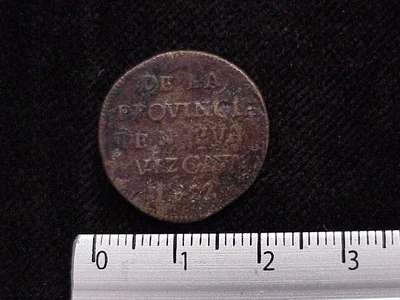
If you inherited an old, small copper Mexican coin dated 1822, you may be holding a 1/8 real from the short-lived First Mexican Empire. Honest answer up front: most worn examples trade for a few dollars to around 20 USD. Sharp, well-preserved pieces can reach the low hundreds. This is a genuine early Mexican coin, but it is not a five-figure rarity unless it comes back certified in exceptional condition.
What you actually have
This is a 1/8 real (sometimes called an "octavo" or tlaco in old usage), the smallest copper denomination struck during the reign of Agustín de Iturbide, Mexico's first and only emperor. His government lasted less than a year, which is why 1822 is the only year this coin was made. That single-year window is the most interesting thing about it for collectors.
The specifications, exactly as struck:
- Metal: copper
- Weight: 2.87 grams
- Diameter: 16 mm
- Edge: plain (smooth)
- Year: 1822 only
- Era: Primer Imperio Mexicano (First Mexican Empire)
Because it is copper, not silver or gold, there is no bullion floor here. A worn 1/8 real is worth what a collector will pay for the history and the grade, nothing from melt value. Do not expect precious-metal money for it.
What it's worth in 2026
Value on early copper like this is driven almost entirely by condition. Copper corrodes, spots, and wears fast, so a clean, sharp example is far scarcer than a smooth brown one. The exact original mintage for this issue is not documented, so pricing follows the market rather than a published rarity number.
Here is a realistic range based on how early Iturbide copper trades:
| Condition | What it looks like | Typical value (USD) |
|---|---|---|
| Heavily worn (Good/VG) | Flat, corroded, hard to read | 3 to 15 |
| Circulated (Fine/VF) | Readable design, honest wear | 15 to 60 |
| High grade (XF/AU) | Sharp detail, minimal wear | 60 to 200 |
| Certified Mint State | Uncirculated, graded by NGC/PCGS | 200+ (varies widely) |
The jump happens at the top. A certified Mint State example from a reputable grading service can command a strong premium precisely because clean early copper survives so rarely. If your coin looks unusually crisp with original color, that is the one worth sending in for grading.
The "it's from an empire, it must be a fortune" myth
Being over 200 years old and tied to an emperor sounds like a jackpot. It usually is not. Enormous numbers of low-denomination copper coins were produced and heavily circulated, and most survivors are worn. Age alone does not create value; surviving quality and demand do. A well-worn 1/8 real is a nice, affordable piece of Mexican history, not a retirement fund. Anyone quoting you thousands of dollars for an average, uncertified example is overselling it.
How to tell if yours is genuine
Early Mexican copper is faked, so run these checks before you get excited or before you buy one:
- Weigh and measure it. A genuine example is 2.87 grams and 16 mm. Off-weight or off-diameter coins are a red flag.
- Look at the relief. Authentic strikes have crisp, dimensional detail. Cast fakes tend to look flat, soft, or slightly grainy, sometimes with a seam on the edge.
- Check the edge. It should be plain and even, with no casting line.
- Compare the design against reference images from a trusted catalog, letter shapes and positioning included.
- When in doubt, certify. For anything you think might be high grade or high value, submitting to NGC or PCGS settles authenticity and grade in one step. That certification is what buyers actually pay a premium for.
Use our coin grading guide to place your coin in the right condition tier before you value it.
Where to sell it (and get a fair price)
For a US owner, your realistic options are:
- Certified auction or dealer sale. If the coin grades XF or better, a numismatic dealer or an auction house that handles world coins will get you the strongest price.
- Verified numismatic shops. Browse the Pesoteca shop directory to find dealers who appraise on the spot without inflated markups.
- Collector marketplaces. The Pesoteca buy-and-sell forum connects you with collectors who actually know what this coin is.
Before selling, photograph the obverse, reverse, and edge in good light, and check the value range above. Skip dumping it on a general marketplace to the first offer; general sites are also where most fakes circulate, so serious buyers there will demand weight and edge photos anyway.
If you want a second opinion on grade, authenticity, or a possible mint error, post clear photos in the Pesoteca forum and let collectors who handle Iturbide copper weigh in. Is your 1822 an average brown example, or the sharp one worth grading?
Historical context
Nueva Vizcaya.
Edge: Smooth.
This piece belongs to the era
Primer Imperio Mexicano →Explore all the Mexican coins of this era, their historical context and how they connect to the monetary system of the period.
Value range of this piece
Value range without enough data for this piece.
See the full breakdown by grade (VG, F, VF, EF, AU, MS-60, MS-63, MS-65) for the whole series →
Other denominations from 1822
Reales Coloniales (1/2 a 4 reales) · Cobre
Frequently asked questions
How much is the 1822 1/8 real Iturbide coin worth?
It depends almost entirely on condition. Heavily worn examples trade for roughly 3 to 15 USD, circulated pieces 15 to 60 USD, and sharp high-grade coins 60 to 200 USD. A certified Mint State example can bring 200 USD or more. Copper has no melt value, so grade and demand drive the price.
Is the 1822 1/8 real a rare coin?
The exact mintage is not documented, and while the coin itself is not scarce in worn grades, clean high-grade survivors are genuinely hard to find because copper corrodes and wears quickly. 1822 is the only year this coin was struck, which adds interest, but age alone does not make it valuable.
How can I tell if my 1822 1/8 real is genuine?
Weigh and measure it first: a real one is 2.87 grams and 16 mm. Genuine strikes show crisp, dimensional relief; fakes tend to look flat or grainy and may have an edge seam. The edge should be plain with no casting line. For anything you think is high grade, NGC or PCGS certification confirms authenticity and grade at once.
Where can I sell my 1822 1/8 real coin?
For a fair price, use a verified dealer from the [Pesoteca shop directory](/tiendas) or the [Pesoteca buy-and-sell forum](/foro/compra-venta) where collectors know the coin. Photograph the obverse, reverse, and edge, and check the value range for your grade before selling. Avoid dumping it on a general marketplace to the first bidder.
Conversation
0 comments
Sources
Images for informational and educational purposes, attributed to their original source. Reference values; the real price depends on the grade, the specific variant and demand.
Loading comments…