
8 Reales Resplandor Mexico 1882: Value & How to Sell
The 8 Reales Resplandor Mexico 1882: Value & How to Sell is worth between $745 and $1,961 MXN depending on its grade of preservation.
Prices updated: August 2026
Strong silver peso .9028, Mexico City Mint, struck in 1882.
Strong silver peso .9028, Mexico City Mint, struck in 1882.
Design
Banxico
Reverse
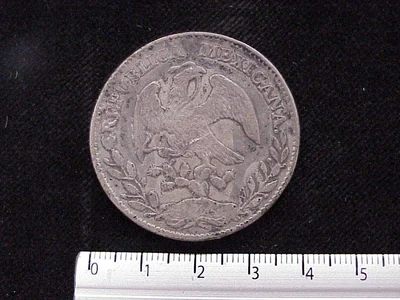
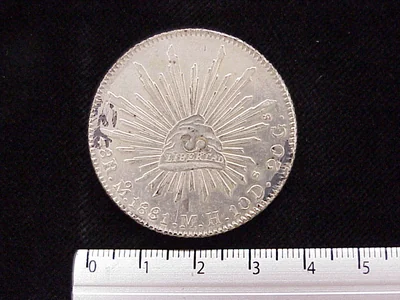
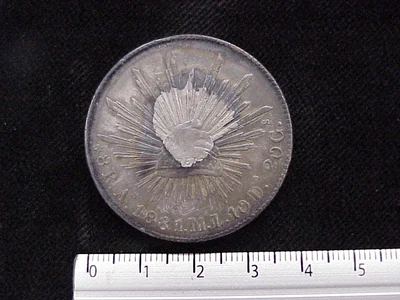
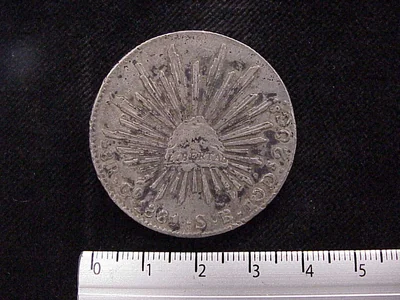
Reverse with the facing republican eagle devouring a serpent on a nopal cactus, legend "REPÚBLICA MEXICANA". Piece attributed to the Mexico mint, 1882.
Obverse
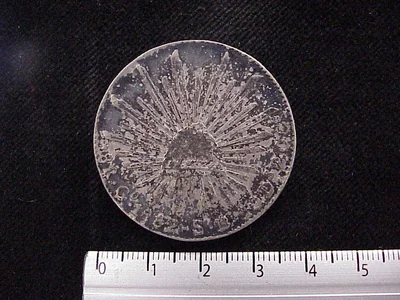
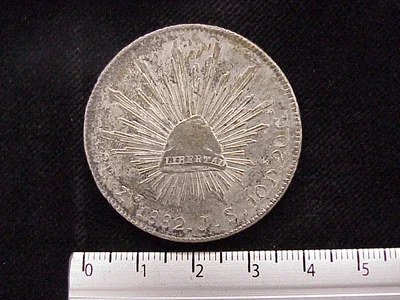
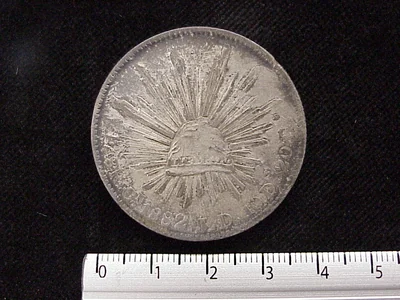
Obverse with a Phrygian cap over solar rays (resplandor) and the legend "LIBERTAD". Struck in 0.9028 silver following the octaval republican standard in force until the monetary reform of 1905.
The 8 Reales Resplandor Mexico 1882: Value & How to Sell is worth between $745 and $1,961 MXN depending on its grade of preservation.
Prices updated: August 2026
How much is the 8 Reales Resplandor Mexico 1882: Value & How to Sell worth?
The estimated value of the 8 Reales Resplandor Mexico 1882: Value & How to Sell ranges from $745 (circulated, XF) up to $1,961 (official blister pack), with $1,519 as a reference for an uncirculated (UNC) piece. The estimate is based on the official mintage and the historical behavior of the family.
The real price depends on four factors: the grade of preservation (a circulated piece is worth the low end of the range; an uncirculated one, or one still in its official blister pack, the high end), the finish (satin vs mirror/proof), the rarity within the series based on the mintage, and the metal spot price on the day of the deal when the piece is silver or gold. Check the value-by-grade table above and compare with equivalent pieces before buying or selling.
Where to buy or sell this coin?
Browse the national directory of numismatic shops or the community forum to trade directly with other collectors.
Price today
How much is the gold in a Centenario worth?
The Centenario is Mexico's main gold investment piece. Its price follows the gold spot in USD adjusted for MXN.
Description
If you inherited or found an 1882 Mexican 8 Reales (the coin with the eagle on one side and a radiant cap on the other), the short answer is yes, it has real value. It is a genuine silver coin, and even a worn one carries a floor price from its metal content alone. In 2026, most circulated examples trade in the range of roughly 25 to 60 USD, while sharp, high-grade pieces can bring several hundred.
What you actually have
The 8 Reales Resplandor (Spanish for "radiance," named for the radiant Phrygian cap on the reverse) is a large silver coin struck at the Mexico City Mint. Collectors also call this type the "Balanza y Gorro" (Scales and Cap). It was one of the most widely accepted trade coins of the 19th century, a direct descendant of the old colonial Spanish dollar.
Here are the exact specs for the 1882 Mexico City issue, catalogued as KM#377.10:
| Spec | Detail |
|---|---|
| Weight | 27.07 grams |
| Diameter | 39 mm |
| Fineness | .903 silver |
| Actual silver content | approx. 0.7859 troy oz |
| Edge | Reeded |
| Mint | Mexico City |
| Catalog reference | KM#377.10 |
The obverse shows the Mexican eagle standing on a nopal cactus, gripping a snake. The reverse shows the radiant Phrygian cap (a symbol of liberty) over a set of scales, surrounded by the liberty legend.
What it's worth in USD
Two things drive the price: the silver in it, and the grade.
The silver floor. With about 0.786 troy ounces of pure silver, this coin can never be worth less than its melt value. That alone puts a hard bottom under the price regardless of condition. A coin that is heavily worn, cleaned, or damaged is still worth its bullion value.
The collector premium. This depends almost entirely on grade and strike:
- Worn (Good to Fine): roughly 25 to 45 USD, close to or slightly above melt.
- Very Fine to Extremely Fine: roughly 45 to 100 USD, with clear detail in the eagle's feathers and the cap's rays.
- About Uncirculated to Mint State: several hundred USD for a strong, clean strike, and more for certified top-grade examples.
The Resplandor type was minted in enormous quantities and circulated hard, so most surviving coins are worn. That is exactly why crisp, high-grade 1882 pieces hold steady collector demand.
Is it rare?
Honest answer: the 1882 Mexico City issue is not rare as a date. These were workhorse trade coins produced in volume. What is scarce is a genuinely high-grade survivor with full detail. If yours is worn and dark, you have a common but real silver coin. If it is sharp, lustrous, and problem-free, you have something a collector will pay a premium for.
There is a separate premium for genuine, verifiable mint errors: off-center strikes, die rotations, and doubled dies. Be skeptical. Most "errors" people post online are post-mint damage (scratches, corrosion, rim dings), not factory errors. If you think yours is real, get it looked at before you assume it's worth a fortune.
How to tell if yours is genuine
Counterfeits of 19th-century Mexican silver exist, so verify before you buy or sell.
- Weigh it. Use a jewelry scale. It should be very close to 27.07 grams. Fakes are often noticeably light or heavy.
- Measure it. Diameter should be 39 mm. Check the edge is properly reeded.
- Look at the engraving. Compare the eagle style, the mint mark, and the assayer's initials against reference images. Cast fakes look mushy and lack fine detail.
- Be suspicious of bargains. Any offer well below the silver value is a red flag.
For anything valuable, third-party grading from NGC or PCGS settles both authenticity and grade in one step.
Where to sell it
- A verified numismatic shop from the Pesoteca directory can appraise it on the spot and pay by grade, no middleman markup.
- The Pesoteca buy-and-sell forum puts you in front of collectors who actually want the coin.
- Photograph the obverse, reverse, and edge, and check the price range above before you accept an offer. Don't dump it to the first bidder on Facebook.
If you have an 1882 Resplandor and you're not sure whether it's a common circulated piece or a high-grade keeper, post clear photos on the Pesoteca forum and let collectors weigh in before you sell.
Historical context
In 1882 Manuel González was in power, a close friend of Porfirio Díaz, during the 1880-1884 term. A period of financial crisis and of the debate over nickel as fractional currency.
The Mexico mint (Mo) is the oldest on the American continent, founded in 1535. It was the leading producer of the Republic's silver pesos and operated continuously until 1929, when it closed for good.
The Mo 8 reales have the highest mintages in the family, which makes them the entry point to the type. Good MS grades are more attainable here than at provincial mints.
For catalog reference, this mint's variant is listed as KM#377.10 in Krause. The piece is .9028 fineness silver with a reeded edge and a theoretical weight of 27.07 grams. The 1882 Mexico (Mo) example corresponds to the phase in the mint's mature stage, near its closing (1535-1929), and is identified on the coin by the mint mark Mo.
The collector who builds the series by mint tends to hunt Mo examples from the 1880s cycle in lots or peer-to-peer trades, avoiding middleman resale. It is worth confirming that the piece has a weight close to 27 grams (striking tolerance) and a diameter of 39 millimeters. Pieces resurfacing from local hoards appear periodically on the market and are the best window to obtain a high grade without a price premium.
This piece belongs to the era
República Restaurada y Porfiriato →Explore all the Mexican coins of this era, their historical context and how they connect to the monetary system of the period.
Value range of this piece
Market estimate: $745 - $1,961 MXN depending on the grade of preservation (typical range between a circulated and an uncirculated piece).
See the full breakdown by grade (VG, F, VF, EF, AU, MS-60, MS-63, MS-65) for the whole series →
Other denominations from 1882
8 Reales Republicanos (Resplandor) · Plata 0.900
Same denomination, other years
8 reales Plata 0.900 · 8 Reales Republicanos (Resplandor)
Frequently asked questions
How much is an 1882 8 Reales Resplandor worth?
It depends on grade. Worn examples trade for about 25 to 45 USD, close to their silver melt value. Very Fine to Extremely Fine pieces run roughly 45 to 100 USD, and About Uncirculated or Mint State coins can bring several hundred USD. The coin contains about 0.786 troy ounces of silver, which sets a hard price floor.
Is the 1882 8 Reales Resplandor rare?
Not as a date. It was a high-volume trade coin, so worn examples are common. What is scarce is a high-grade survivor with full detail in the eagle's feathers and the cap's rays. Those command real premiums with collectors.
Where can I sell my 1882 8 Reales Resplandor?
The safest options are a verified numismatic shop from the Pesoteca directory, which appraises it in person, or the Pesoteca buy-and-sell forum among collectors. Photograph the obverse, reverse, and edge, and check the price range on this page first. Avoid selling to the first bidder on social media.
How can I tell if my 1882 8 Reales Resplandor is genuine?
Weigh it (should be about 27.07 grams) and measure it (39 mm diameter with a reeded edge) using a jewelry scale and caliper. Check the engraving style, mint mark, and assayer initials against reference images, since counterfeits are common. For valuable examples, NGC or PCGS grading confirms both authenticity and grade.
Conversation
0 comments
Sources
- Ejemplar de la Coleccion Numismatica Banco de Mexico . inv. 4421
- Ejemplar de la Coleccion Numismatica Banco de Mexico . inv. 4422
- Ejemplar de la Coleccion Numismatica Banco de Mexico . inv. 4423
Images for informational and educational purposes, attributed to their original source. Reference values; the real price depends on the grade, the specific variant and demand.
Loading comments…