
8 Reales Culiacán 1891 (Resplandor): Value & Silver Content
The 8 Reales Culiacán 1891 : Value & Silver Content is worth between $745 and $1,961 MXN depending on its grade of preservation.
Prices updated: August 2026
Strong silver peso .9028, Culiacán Mint, struck in 1891.
Strong silver peso .9028, Culiacán Mint, struck in 1891.
Design
Banxico
Reverse
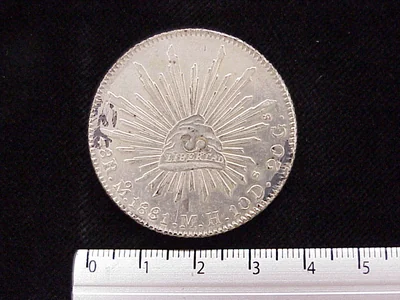
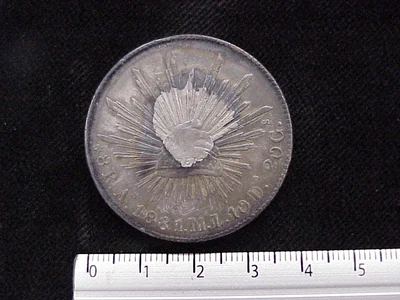
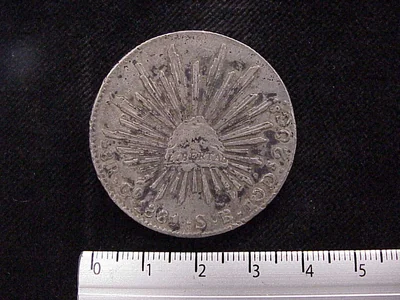
Reverse with a facing republican eagle devouring a serpent atop a prickly pear cactus, legend "REPÚBLICA MEXICANA". Piece attributed to the Culiacán mint, 1891.
Obverse
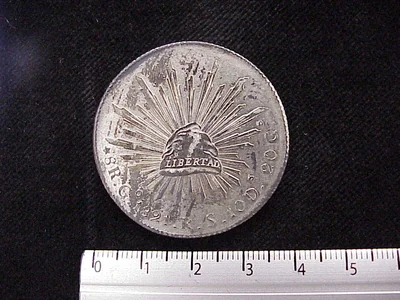
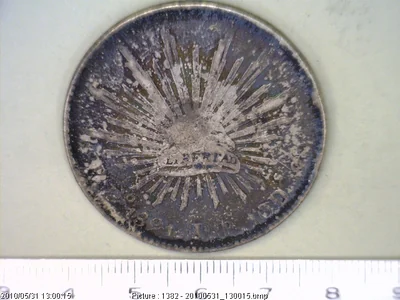
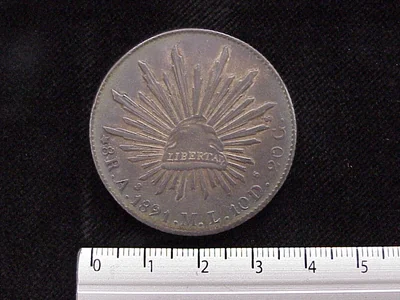
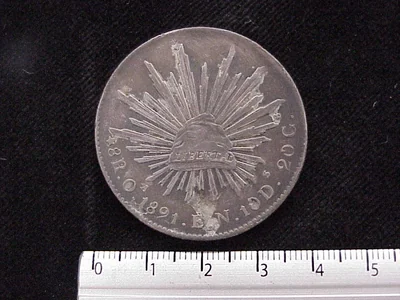
Obverse with a Phrygian cap over solar rays (resplandor) and the legend "LIBERTAD". Struck in 0.9028 silver per the republican octaval standard in force until the monetary reform of 1905.
The 8 Reales Culiacán 1891 : Value & Silver Content is worth between $745 and $1,961 MXN depending on its grade of preservation.
Prices updated: August 2026
How much is the 8 Reales Culiacán 1891 (Resplandor): Value & Silver Content worth?
The estimated value of the 8 Reales Culiacán 1891 (Resplandor): Value & Silver Content ranges from $745 (circulated, XF) up to $1,961 (official blister pack), with $1,519 as a reference for an uncirculated (UNC) piece. The estimate is based on the official mintage and the historical behavior of the family.
The real price depends on four factors: the grade of preservation (a circulated piece is worth the low end of the range; an uncirculated one, or one still in its official blister pack, the high end), the finish (satin vs mirror/proof), the rarity within the series based on the mintage, and the metal spot price on the day of the deal when the piece is silver or gold. Check the value-by-grade table above and compare with equivalent pieces before buying or selling.
Where to buy or sell this coin?
Browse the national directory of numismatic shops or the community forum to trade directly with other collectors.
Price today
How much is the gold in a Centenario worth?
The Centenario is Mexico's main gold investment piece. Its price follows the gold spot in USD adjusted for MXN.
Description
If you inherited an old, hefty Mexican silver coin marked "8R" with a radiant cap design and a "Cn" mint mark, you are holding an 1891 8 Reales from the Culiacán mint. In 2026, a worn example trades close to its silver value (roughly 27 grams of silver), while sharp, high-grade coins with original luster bring a real premium. Here is what it is actually worth and how to check yours.
Quick answer: what it's worth
The 1891 Culiacán 8 Reales (catalog reference KM#377.3) is a large silver "cap and rays" coin, called resplandor in Spanish for the radiant Phrygian cap on the reverse. Its floor value is its silver content: it weighs 27.07 grams at .903 fineness, giving about 0.786 troy ounces of pure silver. That sets a melt-value baseline that moves with the silver market.
Above that baseline, condition drives everything. A heavily circulated coin with worn detail sells near melt, often in the range of a few tens of dollars. A well-preserved coin with a crisp cap, sharp eagle, and original mint brightness can bring several hundred dollars or more when certified in high grade. The exact figure depends on grade, eye appeal, and demand for the specific assayer initials on your coin.
Why the Culiacán mint matters
Mexico struck the 8 Reales at several mints in the 1800s. Coins from branch mints like Culiacán (mint mark "Cn"), in the state of Sinaloa, often draw more collector interest than coins from the main Mexico City mint. The reason is simple: smaller production runs and a wider variety of documented assayers and dies. That scarcity, when paired with strong condition, is what lifts a common-looking silver piece above its metal value.
The 8 Reales, or "real de a ocho," was the workhorse silver coin of the Mexican economy for centuries and stayed in international circulation well after independence. The 1891 date sits at the tail end of this cap-and-rays type, just before Mexico moved to new designs. That makes late-date branch-mint examples a defined, collectible slice of the series.
Value at a glance
| Coin | Year | Metal | Approx. value range | Sold / traded via |
|---|---|---|---|---|
| 8 Reales Resplandor, Culiacán | 1891 | .903 silver, 27.07 g | Melt to a few tens (worn) | Coin shops, collector forums |
| 8 Reales Resplandor, Culiacán | 1891 | .903 silver, 27.07 g | Several hundred+ (high grade, certified) | Auction, certified sales |
Use the melt value as your hard floor. Any offer below the silver content is a bad offer, no matter how the coin is described.
The myth: "old Mexican silver is worth a fortune"
Most circulated 8 Reales are worth their silver plus a modest collector premium, not a windfall. Age alone does not make a coin valuable. What matters is grade, genuine rarity, and demand. If a listing or a buyer tells you a common date is worth thousands in worn condition, be skeptical. The real money is in high-grade, certified examples, and those are a small fraction of what survives.
Be just as careful with "error" claims. Genuine mint errors (off-center strikes, die rotation, doubled strikes) can multiply value when verified. But most "errors" circulating online are post-mint damage: dings, scratches, and corrosion. Those lower value, they do not raise it.
How to check what yours is worth
- Weigh and measure it. Use a jewelry scale and a caliper. A genuine coin should weigh close to 27.07 grams and measure about 39 millimeters across, with a reeded (grooved) edge. Numbers well off these figures point to a fake or a cast copy.
- Read the details. Confirm the "Cn" mint mark for Culiacán, the 1891 date, and the assayer initials. Counterfeits of Mexican silver are common, so compare the engraving style against verified references.
- Grade honestly. How much of the cap, the rays, and the eagle remain sharp? Is there original luster? For a potentially high-grade coin, professional certification (NGC or PCGS) is worth the cost, since certified coins sell for far more than raw ones.
- Never sell below melt. Calculate the silver value first (0.786 oz of pure silver times the current spot price). That is your walk-away number.
Where to sell it
For the best result, get more than one opinion. A verified numismatic dealer will value it on the spot, and a collector forum can connect you with buyers who pay fair prices for the right coin. Photograph the front, back, and edge in good light before you list it. Avoid dumping it on a general marketplace to the first bidder, and never sell a precious-metal coin to anyone who won't let you verify weight and authenticity first.
Not sure what you have or what it should bring? Post clear photos of both sides on the Pesoteca forum and let the community weigh in before you accept any offer.
Historical context
In 1891 Porfirio Díaz was governing, in the mid-Porfiriato. Years of the Paris Universal Exposition of 1889 with a Mexican pavilion and of the consolidation of the railroad as a pillar of the economy.
The Culiacan mint (Cn) was established in 1846 to strike silver from the Rosario and Cosalá mines. It was one of the last to close (1905), already under the gold standard of the late Porfiriato.
Cn pieces are in demand from the numismatic market of the northwest. Late mintages (1896-1897) are scarcer.
As a catalog reference, the variant of this mint is listed as KM#377.3 in Krause. The piece is .9028 fineness silver with a reeded edge and a theoretical weight of 27.07 grams. The 1891 example from Culiacán, Sinaloa corresponds to the mature stage of the mint, near its closing (1846-1905), and is identified on the coin by the mint mark Cn.
When hunting for Cn 8-reales resplandor pieces, it is wise to compare against the photographic reference in the Pesoteca catalog and to prioritize examples with a legible reverse (eagle, serpent, the legend REPÚBLICA MEXICANA, and the value 8R) over pieces with only a bright obverse. The peer-to-peer price among collectors of the 1890s cycle tends to be fairer than the display case of a specialized shop, where the middleman markup can double the real reference.
This piece belongs to the era
República Restaurada y Porfiriato →Explore all the Mexican coins of this era, their historical context and how they connect to the monetary system of the period.
Value range of this piece
Market estimate: $745 - $1,961 MXN depending on the grade of preservation (typical range between a circulated and an uncirculated piece).
See the full breakdown by grade (VG, F, VF, EF, AU, MS-60, MS-63, MS-65) for the whole series →
Other denominations from 1891
8 Reales Republicanos (Resplandor) · Plata 0.900
Same denomination, other years
8 reales Plata 0.900 · 8 Reales Republicanos (Resplandor)
Frequently asked questions
How much is an 1891 Culiacán 8 Reales worth?
It depends almost entirely on condition. A worn example sells close to its silver value (about 0.786 troy ounces of pure silver, so a few tens of dollars depending on the silver market). A sharp, high-grade coin with original luster, especially if certified by NGC or PCGS, can bring several hundred dollars or more. Always calculate the melt value first as your minimum.
Is the 1891 Culiacán 8 Reales rare?
Coins from branch mints like Culiacán (mint mark "Cn") generally draw more interest than Mexico City issues because of smaller production runs and varied assayers and dies. That said, worn examples are common and trade near silver value. Genuine rarity shows up in high grade and in verified mint errors, which are a small fraction of surviving coins.
Where can I sell my 1891 8 Reales?
Your safest options are a verified numismatic dealer, who will appraise it in person, or a collector forum like Pesoteca's [buy/sell board](/foro/compra-venta). Photograph the front, back, and edge, and know your melt value before selling. Avoid selling to the first bidder on a general marketplace, and never accept an offer below the coin's silver content.
How do I tell if my 8 Reales is genuine?
Weigh it with a jewelry scale and measure it with a caliper: it should be close to 27.07 grams and about 39 millimeters wide, with a reeded edge. Check the "Cn" mint mark, the 1891 date, and the assayer initials against verified references, since counterfeits of Mexican silver are common. Be suspicious of any coin offered well below its metal value.
Conversation
0 comments
Sources
- Ejemplar de la Coleccion Numismatica Banco de Mexico . inv. 6063
- Ejemplar de la Coleccion Numismatica Banco de Mexico . inv. 6064
- Ejemplar de la Coleccion Numismatica Banco de Mexico . inv. 6065
- Ejemplar de la Coleccion Numismatica Banco de Mexico . inv. 6066
Images for informational and educational purposes, attributed to their original source. Reference values; the real price depends on the grade, the specific variant and demand.
Loading comments…