
1810 Mexican 8 Reales Silver Coin: Value & Prices
The 1810 Mexican 8 Reales Silver Coin: Value & Prices is worth between $710 and $2,990 MXN depending on its grade of preservation.
Prices updated: August 2026
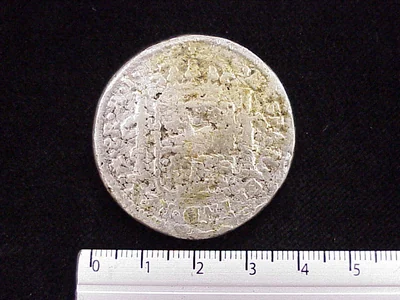
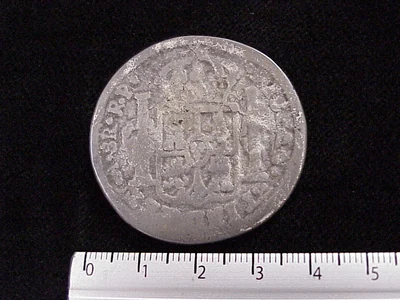
Countermark L.C.M.; cast.
Countermark L.C.M.; cast.
The 1810 Mexican 8 Reales Silver Coin: Value & Prices is worth between $710 and $2,990 MXN depending on its grade of preservation.
Prices updated: August 2026
How much is the 1810 Mexican 8 Reales Silver Coin: Value & Prices worth?
The estimated value of the 1810 Mexican 8 Reales Silver Coin: Value & Prices ranges from $710 (circulated, XF) up to $2,990 (official blister pack), with $2,161 as a reference for an uncirculated (UNC) piece. The estimate is based on the official mintage and the historical behavior of the family.
The real price depends on four factors: the grade of preservation (a circulated piece is worth the low end of the range; an uncirculated one, or one still in its official blister pack, the high end), the finish (satin vs mirror/proof), the rarity within the series based on the mintage, and the metal spot price on the day of the deal when the piece is silver or gold. Check the value-by-grade table above and compare with equivalent pieces before buying or selling.
Where to buy or sell this coin?
Browse the national directory of numismatic shops or the community forum to trade directly with other collectors.
Description
If you inherited an 1810 Mexican 8 Reales, here is the honest answer: at minimum it is worth its silver content, and in worn condition that means roughly 18 to 25 USD. A genuine, well-preserved example can bring several hundred to a few thousand dollars, depending on grade, mint, and assayer. In 2026, this remains one of the most recognized silver coins in the world, so demand is real, but so are the fakes.
The 8 Reales was the international trade coin for centuries, the direct ancestor of the modern dollar. Mexico's mint was its most prolific producer, which is exactly why so many survive and why value depends far more on condition than on the 1810 date alone.
What you actually have
The 8 Reales dated 1810 belongs to the years of transition during the Mexican War of Independence, when control of the mints shifted between royalist and insurgent forces. Your coin carries the assayer initials HJ, the official who certified the metal's purity.
Here is the technical data to verify against your piece:
| Specification | Value |
|---|---|
| Metal | Silver, .900 fine |
| Weight | 25.8 g |
| Diameter | 38 mm |
| Edge | Plain (no lettering) |
| Date | 1810 |
| Assayer | HJ |
The .900 silver fineness gives the coin a hard floor: even a battered, cleaned, or damaged example is worth its melt value. At current silver prices, that melt floor sits around 18 to 25 USD for a full-weight coin. Nothing genuine trades below that.
What it's really worth
Most circulated 8 Reales from this era are common enough that condition drives the entire price. A worn coin (heavy wear, weak details) may sell in the 25 to 60 USD range, close to melt with a small collector premium. A coin with clear details and honest surfaces can move into the low hundreds. Sharp, high-grade examples certified by NGC or PCGS are where the real money sits, ranging from several hundred to a few thousand USD.
| Condition | Approximate value (USD) |
|---|---|
| Heavy wear / cleaned | 18 to 40 (melt to small premium) |
| Circulated, clear details | 60 to 250 |
| Well-preserved, original surfaces | 250 to 1,200 |
| High grade, certified | 1,200 and up |
Two factors swing the price the most: which mint struck it and the eye appeal of the surfaces. Colonial 8 Reales were minted at several locations, and scarcer mints command more. A coin that has been polished or harshly cleaned loses a large share of its value, even if the details survive.
The "worth a fortune" myth
Other sites will tell you any 1810 coin is worth millions because it dates to independence. That is not how this works. The 8 Reales was mass-produced for global trade, and millions circulated. A common date in worn condition is a silver coin with a modest premium, full stop. The pieces that break records are rare mint-and-assayer combinations, error strikes, or top-grade survivors, not simply "old coins from 1810."
How to check if yours is genuine
Fakes are everywhere for colonial silver, so verify before you buy or sell:
- Weigh it on a jewelry scale. It should be very close to 25.8 g. Underweight is a red flag.
- Measure the diameter with calipers against 38 mm.
- Check the edge. It should be plain, with no lettering or reeding.
- Study the engraving, mint mark, and assayer letters. Cast fakes show soft, mushy detail and often a seam on the edge.
- Be suspicious of any offer far below melt value. If someone is selling silver for less than the metal is worth, assume there is a reason.
When in doubt, submit the coin to NGC or PCGS for authentication and grading. A certified coin sells faster and for more.
Where to sell it
To sell an 1810 8 Reales, your safest route is a verified numismatic dealer from the Pesoteca directory, who can appraise it on the spot, or the Pesoteca buy-and-sell forum among collectors. Because this is a precious-metal coin, only deal with someone who will let you see the piece and confirm its weight before money changes hands. Photograph the obverse, reverse, and edge, and check the price range in this listing before agreeing to anything. Do not dump it on the first social-media bidder.
If you think you have a genuine mint error (off-center strike, die rotation, double strike), that can multiply the value, but most "errors" circulating online are post-mint damage, not factory errors. Post clear photos to the Pesoteca forum and let the community weigh in before you assume you struck it rich.
Have an 1810 8 Reales sitting in a drawer? Share the mint mark and a photo of the edge in the forum, and we'll help you pin down what it's really worth.
Historical context
This 8 reales silver piece corresponds to 1810, in the midst of the Hidalgo stage (start of the insurgency) of the Mexican War of Independence. On September 16, 1810, the priest Miguel Hidalgo issued the Grito de Dolores, formally beginning the War of Independence. Within a few weeks the insurgency took San Miguel el Grande, Celaya, Guanajuato (Alhondiga de Granaditas), and Valladolid. Viceroy Francisco Javier Venegas organized the royalist response from the capital.
The piece does not declare a specific mint in the slug. During the war, pieces of the central Mexico City mint circulated alongside provincial royalist issues (Chihuahua, Zacatecas, Durango, Guadalajara, Guanajuato) and insurgent ones (Zitacuaro, Sultepec, Chilpancingo, insurgent Oaxaca). Issuing side: not declared. The silver fineness was 0.903 and the theoretical weight 27.07 grams, within the octaval system inherited from the viceroyalty.
The 1810 issues are direct witnesses to the outbreak of the War of Independence on September 16. Pieces of that year are sought for the theme of the start of the insurgency and for their temporal link to the taking of Guanajuato and Valladolid.
On the numismatic market they are hunted by collectors of military history and of the nation's origins. When buying peer-to-peer, verify the authenticity of the planchet and the declared mint. Many common pieces are sold as "war rarities" without being so: consult the Krause reference before accepting a middleman's premium.
This piece belongs to the era
Colonial / Virreinato →Explore all the Mexican coins of this era, their historical context and how they connect to the monetary system of the period.
Value range of this piece
Market estimate: $710 - $2,990 MXN depending on the grade of preservation (typical range between a circulated and an uncirculated piece).
See the full breakdown by grade (VG, F, VF, EF, AU, MS-60, MS-63, MS-65) for the whole series →
Other denominations from 1810
misc-8 Reales Plata Independencia · Plata 0.900
Same denomination, other years
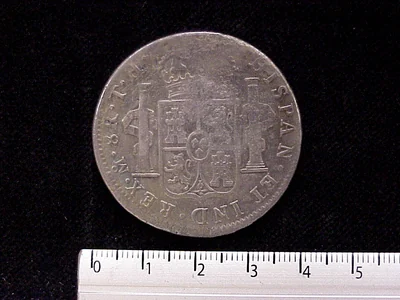
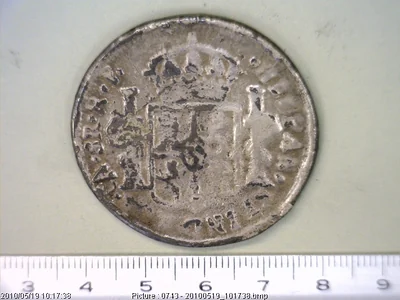
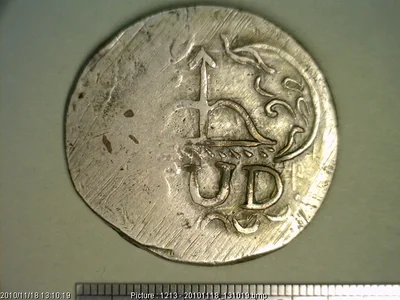
8 reales Plata 0.900 · misc-8 Reales Plata Independencia
Frequently asked questions
How much is an 1810 Mexican 8 Reales silver coin worth?
At minimum it is worth its silver content, roughly 18 to 25 USD for a full-weight coin. Circulated examples with clear details run 60 to 250 USD, and well-preserved or certified high-grade coins can bring anywhere from several hundred to a few thousand USD. Condition, mint, and assayer drive the price far more than the 1810 date.
Is the 1810 8 Reales rare?
Not as a type. The 8 Reales was mass-produced as the world's main trade coin, so millions survive and common dates are affordable. Rarity comes from specific mint-and-assayer combinations, genuine mint errors, or top-grade condition. A worn, common example is essentially a silver coin with a small collector premium.
Where can I sell an 1810 8 Reales?
The safest options are a verified numismatic dealer from the [Pesoteca directory](/tiendas), who can value it on the spot, or the [Pesoteca buy-and-sell forum](/foro/compra-venta) among collectors. Photograph the obverse, reverse, and edge, and confirm the metal's melt value first. Avoid selling to the first bidder on social media.
How do I tell if my 1810 8 Reales is genuine?
Weigh it (should be close to 25.8 g) and measure the diameter (38 mm) against the specs above. The edge should be plain, with no lettering. Check the sharpness of the engraving, mint mark, and assayer letters, since cast fakes look soft and may show an edge seam. Be wary of any coin offered well below silver value. For certainty, have it authenticated by NGC or PCGS.
Conversation
0 comments
Loading comments…