
8 Reales Felipe IV 1652 (Mexico City): Value & Real Prices
The 8 Reales Felipe IV 1652 : Value & Real Prices is worth between $754 and $4,759 MXN depending on its grade of preservation.
Prices updated: August 2026
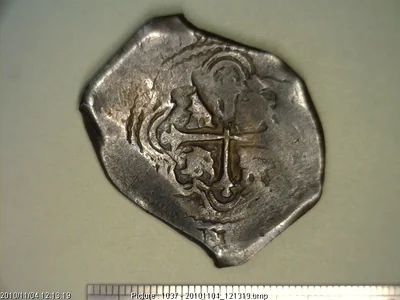
Overdate.
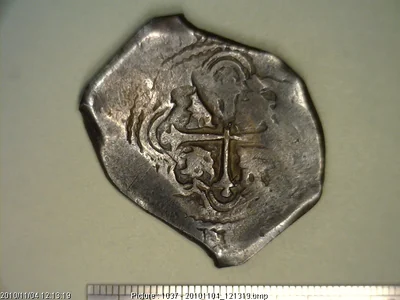
Overdate.
The 8 Reales Felipe IV 1652 : Value & Real Prices is worth between $754 and $4,759 MXN depending on its grade of preservation.
Prices updated: August 2026
How much is the 8 Reales Felipe IV 1652 (Mexico City): Value & Real Prices worth?
The estimated value of the 8 Reales Felipe IV 1652 (Mexico City): Value & Real Prices ranges from $754 (circulated, XF) up to $4,759 (official blister pack), with $3,303 as a reference for an uncirculated (UNC) piece. The estimate is based on the official mintage and the historical behavior of the family.
The real price depends on four factors: the grade of preservation (a circulated piece is worth the low end of the range; an uncirculated one, or one still in its official blister pack, the high end), the finish (satin vs mirror/proof), the rarity within the series based on the mintage, and the metal spot price on the day of the deal when the piece is silver or gold. Check the value-by-grade table above and compare with equivalent pieces before buying or selling.
Where to buy or sell this coin?
Browse the national directory of numismatic shops or the community forum to trade directly with other collectors.
Description
If you found a heavy, irregular silver coin with a Spanish cross and shield and the name PHILIPPVS, you likely have a Spanish colonial "cob," a hand-struck 8 Reales. A 1652 Mexico City example is real silver and typically worth from about 150 USD in low grade to several thousand for a sharp, fully dated piece. Here is what drives that number.
What you actually have
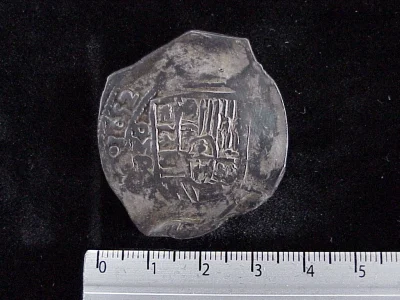
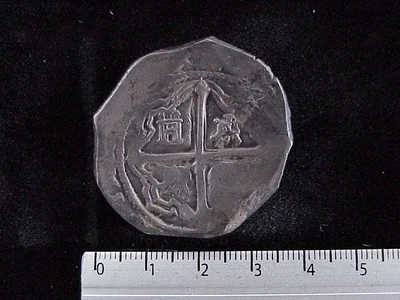
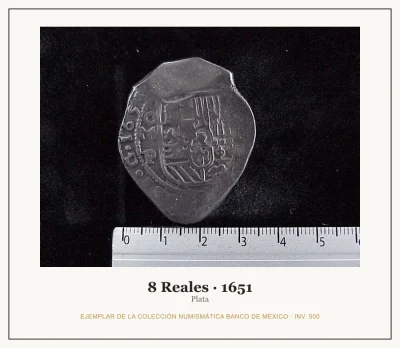
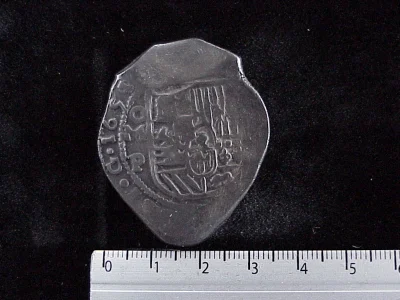
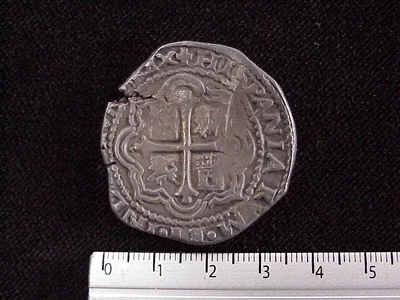
This is an 8 Reales ("pieces of eight"), the silver dollar of the Spanish empire and the coin U.S. currency was later modeled on. Yours was struck by hand with a hammer at the Casa de Moneda de México (Mexico City Mint), which is why the shape is crude and off-round. Collectors call these macuquinas, or cobs in English.
The hard specs, which you can verify yourself, are what confirm authenticity and set the floor price:
| Spec | Value |
|---|---|
| Denomination | 8 Reales |
| Date | 1652 |
| Mint | Mexico City (Casa de Moneda de México) |
| Ruler | Felipe IV (Philip IV) |
| Metal | Silver, .900 fine |
| Weight | 27.38 g |
| Diameter | 36 mm |
| Method | Hand-struck (cob / macuquina) |
Because a full-weight piece holds about 24.6 grams of pure silver, its melt value alone puts a hard floor under the coin. No genuine, undamaged 1652 8 Reales is worth "a few dollars." The real question is how far above melt yours sits.
What a 1652 8 Reales is worth
Cobs are graded less on mirror-perfect surfaces (they never had them) and more on how much of the design survives the hand-striking. Value climbs sharply with legibility.
| Condition | What you see | Rough value (USD) |
|---|---|---|
| Low grade / worn | Metal is right, but date and assayer are gone | 150 to 300 |
| Mid grade | Cross and shield clear, partial date | 300 to 900 |
| High grade, dated | Full readable 1652 date and assayer, strong strike | 1,500 to 5,000+ |
The single biggest price driver here is the date. On hand-struck cobs, a large part of the design routinely fell outside the metal blank, so a coin with a fully legible 1652 date and a clear assayer's initial is far scarcer, and far more valuable, than a coin of the same era with those details off the flan. Two coins of identical metal and weight can differ by an order of magnitude in price for this reason alone.
The year itself carries some collector interest. 1652 falls just after the Potosí debased-silver scandal that forced a redesign of the cobs to restore trust in the coinage, so pieces from this reform window get extra attention from advanced collectors.
The myth to ignore
"It's from the 1600s, so it must be worth a fortune." Age is not rarity. Millions of 8 Reales were struck across Spanish America over two centuries, and plenty survive. What commands strong money is a verifiable date, a clear mint and assayer, an above-average strike, and confirmed authenticity. A worn, undated example is still a genuine silver piece of history, just not a five-figure one. Be equally skeptical of the opposite claim: anyone offering you "scrap silver" money below melt value is trying to steal it.
How to check what yours is worth
- Weigh and measure it. Use a jeweler's scale and a caliper. A genuine full-weight piece should sit near 27.38 g and about 36 mm. A coin that is far too light or made of a magnetic metal is a red flag. Cast-copy fakes of colonial cobs are common.
- Read the details. Look for the shield of Spain on one side and the cross with lions and castles on the other. Hunt for the date, the mint mark (M for Mexico), and the assayer's initial. The more you can read, the higher the grade tier.
- Authenticate it. Colonial cobs are heavily faked. For anything you think is high grade, professional certification from a service like NGC or PCGS protects the value and settles authenticity. A slabbed, dated 1652 sells for far more than the same coin "raw" (uncertified).
- Get a real quote. Compare against recent sales, not a Facebook lowball.
If you want a broader sense of the market for these pieces, see our guide to Spanish colonial 8 Reales values and our overview of how coin grade affects price.
Where to sell it
For a coin made of precious metal, only deal with buyers who inspect it and weigh it in front of you. A verified numismatic shop in the Pesoteca directory will appraise it on the spot, and the Pesoteca buy-and-sell forum puts you in front of collectors who understand cobs. Photograph the front, back, and edge before you offer it, and never accept an offer below the silver melt value.
Got a colonial cob and not sure if the date is really 1652? Post clear photos of both sides in the Pesoteca forum and let collectors help you read it.
Historical context
This piece belongs to the reign of Felipe IV of Spain (1621-1665). King during the Thirty Years' War and the separation of Portugal. His favorite was the Count-Duke of Olivares.
The government of New Spain in 1652 was in the hands of Luis Enriquez de Guzman, Count of Alba de Liste, consolidating the administration after a previous fiscal crisis.
The numismatic type of the piece is cob, also called hammer-cut coin. The planchets were clipped with shears from a silver bar and struck between manual dies, so no cob has an edge or a perfectly circular shape. It circulated as a benchmark trade coin throughout the Atlantic for more than two centuries.
The Mexico mint (crowned Mo mark) operated from 1535 as the first mint in America. During the 17th century it struck cobs almost continuously, being the main point of issue of struck silver in the Spanish empire. The dies were signed by the assayer of the Mexico mint active in the period, an official charged by the Royal Treasury with certifying that the silver fineness met the viceregal standard.
The colonial catalogs trace this piece within the families of the Mexico Real de a ocho, with prices responding to rarity by year and assayer signature.
A year in which the Mexico mint was still coping with occasional metal shortages caused by conflicts in the mines.
This piece belongs to the era
Colonial / Virreinato →Explore all the Mexican coins of this era, their historical context and how they connect to the monetary system of the period.
Value range of this piece
Market estimate: $754 - $4,759 MXN depending on the grade of preservation (typical range between a circulated and an uncirculated piece).
See the full breakdown by grade (VG, F, VF, EF, AU, MS-60, MS-63, MS-65) for the whole series →
Other denominations from 1652
8 Reales Coloniales · Plata 0.900
Same denomination, other years
8 reales Plata 0.900 · 8 Reales Coloniales
Frequently asked questions
How much is an 8 Reales Felipe IV 1652 worth?
It depends almost entirely on how much of the design and date survives. A worn, undated genuine piece runs about 150 to 300 USD, mid-grade examples 300 to 900 USD, and a sharply struck coin with a fully readable 1652 date and assayer can reach 1,500 to 5,000 USD or more, especially if certified by NGC or PCGS.
Is the 8 Reales Felipe IV 1652 rare?
The type is not rare, since millions of 8 Reales were struck across Spanish America. What is scarce is a specimen with a clearly legible date and assayer's mark. Because these were hand-struck, much of the design often fell off the blank, so a fully dated 1652 with a strong strike is genuinely uncommon and worth far more.
Where can I sell an 8 Reales Felipe IV 1652?
The safest options are a verified numismatic shop in the Pesoteca directory, which appraises it on the spot, or the Pesoteca buy-and-sell forum among collectors. Photograph the front, back, and edge first, check the value range in this guide, and never sell below the silver melt value or dump it to the first Facebook offer.
How can I tell if my 8 Reales Felipe IV 1652 is genuine?
Weigh and measure it: a real piece is near 27.38 g and about 36 mm in .900 silver, and it should not be magnetic. Check the engraving style, mint mark, and assayer against known examples, since cast copies of colonial cobs are common. For a high-grade coin, get it certified by NGC or PCGS to confirm authenticity and protect its value.
Conversation
0 comments
Sources
Images for informational and educational purposes, attributed to their original source. Reference values; the real price depends on the grade, the specific variant and demand.
Loading comments…