
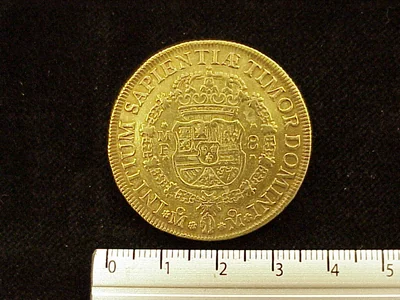
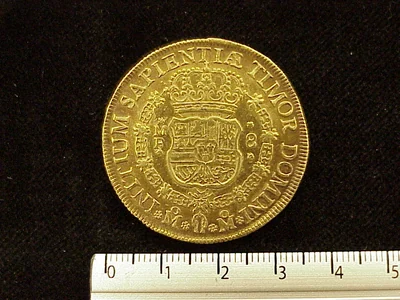
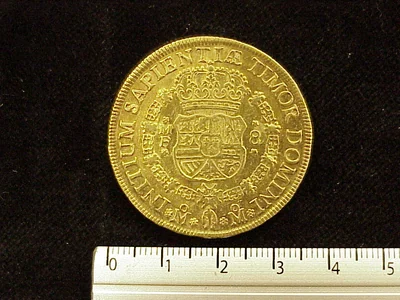
8 Escudos Gold Coin, Felipe V, 1741 (Mexico Mint)
The 8 Escudos Gold Coin, Felipe V, 1741 is worth between $51,080 and $86,030 MXN depending on its grade of preservation.
Prices updated: August 2026
The 8 Escudos Gold Coin, Felipe V, 1741 is worth between $51,080 and $86,030 MXN depending on its grade of preservation.
Prices updated: August 2026
How much is the 8 Escudos Gold Coin, Felipe V, 1741 (Mexico Mint) worth?
The estimated value of the 8 Escudos Gold Coin, Felipe V, 1741 (Mexico Mint) ranges from $51,080 (circulated, XF) up to $86,030 (official blister pack), with $73,321 as a reference for an uncirculated (UNC) piece. The estimate is based on the official mintage and the historical behavior of the family.
The real price depends on four factors: the grade of preservation (a circulated piece is worth the low end of the range; an uncirculated one, or one still in its official blister pack, the high end), the finish (satin vs mirror/proof), the rarity within the series based on the mintage, and the metal spot price on the day of the deal when the piece is silver or gold. Check the value-by-grade table above and compare with equivalent pieces before buying or selling.
Where to buy or sell this coin?
Browse the national directory of numismatic shops or the community forum to trade directly with other collectors.
Description
If you inherited or found a 1741 gold coin marked with the portrait of Felipe V and the value "8 S" (8 escudos), you are holding something worth real money. This is not a common circulation piece. Even in worn condition it carries close to an ounce of gold, and clean, authenticated examples trade from the low thousands into the tens of thousands of US dollars depending on grade and the specific variety.
What this coin actually is
The 8 escudos was the largest gold denomination of the Spanish colonial system, popularly called an onza ("ounce"). This one was struck in 2026's terms nearly three centuries ago: dated 1741, produced at the Mexico City Mint under the reign of Felipe V ("Philip V"), Spain's first Bourbon king. The letters MF on the coin are the assayer's initials, the mint official who guaranteed the metal's purity.
Here are the physical facts you can verify yourself:
| Feature | Specification |
|---|---|
| Metal | Gold (0.917 fine, 22 karat) |
| Weight | 26.86 g |
| Diameter | 37 mm |
| Edge | Diagonal reeding |
| Mint | Mexico City |
| Assayer | MF |
| Catalog reference | KM#148 |
That 26.86 g of gold at roughly 91.7% fineness is about 0.79 troy ounces of pure gold. At current gold prices that alone is a hard floor of well over 1,500 US dollars in pure metal value, before any collector premium.
How much is it worth?
There are two ways to think about the value, and both matter.
1. Melt value (the floor). No matter how worn or damaged, the gold content sets a minimum. With about 0.79 oz of gold, the metal alone is worth 1,500 to 2,000 US dollars or more depending on the daily gold price. No genuine example of this coin is "cheap."
2. Numismatic value (the real story). Colonial 8 escudos from the Felipe V era are sought after by collectors of both Mexican and world gold. A circulated but genuine example typically brings well above melt, and a well-struck, high-grade coin can command several times its gold value. Early Bourbon 8 escudos in strong grades have sold at major auctions from the low thousands into the range of 10,000 to 30,000 US dollars, with the finest known examples going higher.
A realistic range for a genuine 1741 Mexico 8 escudos:
- Heavily worn or damaged: near melt, roughly 1,800 to 2,500 US dollars
- Solid circulated (Fine to Very Fine): 3,000 to 7,000 US dollars
- Sharp, high grade (About Uncirculated or better): 10,000 US dollars and up
Grade and eye appeal drive these numbers far more than the date. Two coins with the same date can differ tenfold in price based on condition and certification.
Is it rare?
Colonial gold onzas are scarce as a class. They were the highest denomination of the era, held by merchants and the wealthy, and many were melted over the centuries. Survivors in collectible condition are limited. That said, "scarce" is not "unique." These coins do appear at auction, so value comes from grade and originality, not just age. Beware anyone claiming a specific date is "one of a kind" without certification to back it.
Warning: this coin is heavily counterfeited
Colonial gold, especially 8 escudos, is one of the most faked areas in numismatics. Because the metal value alone justifies the effort, forgers produce convincing cast and struck copies. Before you buy or sell, check these:
- Weight and diameter. Use a jeweler's scale and calipers. A genuine coin weighs close to 26.86 g and measures about 37 mm. Casts are often underweight or slightly oversized.
- Edge. Look for the diagonal reeding. Many fakes have soft, mushy, or wrong edges.
- Strike detail and style. Genuine dies show crisp, period-correct engraving. Blurry lettering, bubbles, or a grainy surface are red flags for a cast.
- The MF assayer mark and mint mark. These should match known genuine dies.
The safest move with a coin at this value is third-party certification. Send it to a recognized grading service (NGC or PCGS) that authenticates and encapsulates the coin. A certified genuine example sells faster and for more, and it protects you from a costly mistake.
Where to sell it
With a gold coin in this value range, do not hand it to the first Facebook buyer or a walk-in gold-buyer who only pays melt. Your best options:
- A verified numismatic shop from the Pesoteca directory, which can appraise it in person by city.
- The Pesoteca buy-and-sell forum, where you reach collectors who actually pay collector prices.
- A major auction house for high-grade or certified pieces, where colonial gold reaches its top prices.
Whatever route you choose, photograph the obverse, reverse, and edge in good light, and never let the coin out of your control before payment. Compare any offer against the melt floor and the ranges above.
If you want a second opinion before you decide, post clear photos of both sides and the edge on the Pesoteca forum. Is your 1741 onza a genuine survivor or a modern copy? The community can help you tell the difference before money changes hands.
Historical context
Eight escudos Felipe V second period, 1741, Mexico mint. In March, Pedro de Castro y Figueroa, Duke of the Conquest, died barely a year after taking up the viceroyalty. He was succeeded by the Royal Audiencia of Mexico in trusteeship until Pedro Cebrián y Agustín, Count of Fuenclara, took possession in August 1742. It was also the year England attacked Cartagena de Indias in Colombia as part of the War of Jenkins' Ear, an extended naval military offensive of the War of the Austrian Succession. The English expedition commanded by Admiral Vernon failed against the defense of Blas de Lezo, a key Spanish victory of the cycle. The ounce weighs 27.06 grams with 0.916 fineness. Produced by mill press with a standardized round planchet. The piece keeps the classic pillar reverse of the strong real system introduced in 1732 with the crowned Pillars of Hercules and the PLVS VLTRA banners. Pieces from 1741 are testimony to a triple year: viceregal transition, Spanish victory at Cartagena and sustained production by the capital's mint.
This piece belongs to the era
Colonial / Virreinato →Explore all the Mexican coins of this era, their historical context and how they connect to the monetary system of the period.
Value range of this piece
Market estimate: $51,080 - $86,030 MXN depending on the grade of preservation (typical range between a circulated and an uncirculated piece).
See the full breakdown by grade (VG, F, VF, EF, AU, MS-60, MS-63, MS-65) for the whole series →
Same denomination, other years
8 escudos Oro 0.875 (21k) · 8 Escudos Felipe V Segunda Epoca
Frequently asked questions
How much is a 1741 Felipe V 8 escudos gold coin worth?
It contains about 0.79 troy ounces of gold, giving a metal floor of well over 1,500 US dollars. As a collector coin, genuine examples typically run from about 3,000 US dollars in circulated grades to 10,000 US dollars and up for sharp, high-grade or certified pieces. Grade and authenticity drive the final price far more than the date.
Is the 1741 Mexico 8 escudos rare?
Colonial gold onzas are scarce because they were the highest denomination of the era and many were melted over the centuries. Survivors in collectible condition are limited, but these coins do appear at auction. Value comes mainly from grade and originality, not just age, so be skeptical of anyone claiming a single date is unique.
Where can I sell my 1741 Felipe V gold coin?
Use a [verified numismatic shop from the Pesoteca directory](/tiendas) for an in-person appraisal, or the [Pesoteca buy-and-sell forum](/foro/compra-venta) to reach collectors who pay collector prices. For high-grade or certified pieces, a major auction house gets the top results. Photograph the obverse, reverse, and edge, and never release the coin before payment.
How can I tell if my 8 escudos coin is genuine?
Colonial gold is heavily counterfeited. Weigh it (should be close to 26.86 g) and measure it (about 37 mm) with a jeweler's scale and calipers, and check for diagonal reeding on the edge. Look for crisp, period-correct engraving; bubbles, grainy surfaces, or blurry lettering suggest a cast fake. For a coin at this value, get it authenticated by NGC or PCGS.
Conversation
0 comments
Loading comments…