
8 Escudos Carlos IV 1791 Gold Coin: Value & Real Prices
The 8 Escudos Carlos IV 1791 Gold Coin: Value & Real Prices is worth between $51,346 and $86,478 MXN depending on its grade of preservation.
Prices updated: August 2026
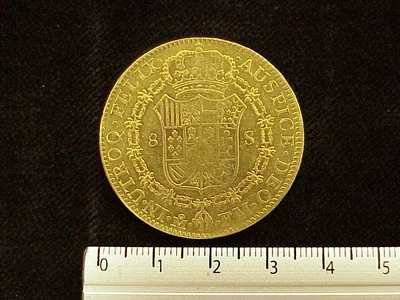
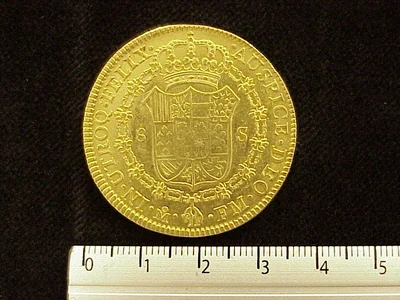
Viceroyalty · Mexico City Mint · Assayer FM
Viceroyalty · Mexico City Mint · Assayer FM
The 8 Escudos Carlos IV 1791 Gold Coin: Value & Real Prices is worth between $51,346 and $86,478 MXN depending on its grade of preservation.
Prices updated: August 2026
How much is the 8 Escudos Carlos IV 1791 Gold Coin: Value & Real Prices worth?
The estimated value of the 8 Escudos Carlos IV 1791 Gold Coin: Value & Real Prices ranges from $51,346 (circulated, XF) up to $86,478 (official blister pack), with $73,703 as a reference for an uncirculated (UNC) piece. The estimate is based on the official mintage and the historical behavior of the family.
The real price depends on four factors: the grade of preservation (a circulated piece is worth the low end of the range; an uncirculated one, or one still in its official blister pack, the high end), the finish (satin vs mirror/proof), the rarity within the series based on the mintage, and the metal spot price on the day of the deal when the piece is silver or gold. Check the value-by-grade table above and compare with equivalent pieces before buying or selling.
Where to buy or sell this coin?
Browse the national directory of numismatic shops or the community forum to trade directly with other collectors.
Description
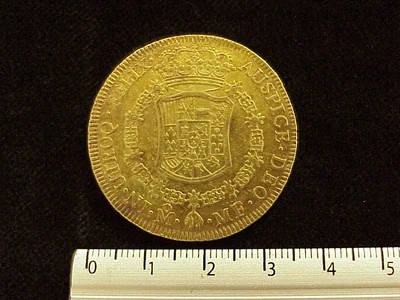
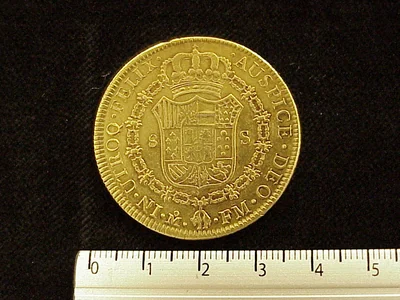
If you inherited an 1791 8 Escudos with a bust of Carlos IV, you have a serious gold coin, not a common old piece. It holds 0.7616 troy ounces of gold, which puts its melt floor above 2,000 USD at current prices no matter the condition. A worn example trades near bullion; a sharp, certified one can bring several thousand dollars. Here is what yours is actually worth in 2026 and how to check.
What this coin is
The 8 Escudos was the largest gold denomination struck under Spanish colonial rule in what is now Mexico. This one dates to 1791, the year the coinage of King Carlos IV of Spain (of the Borbón dynasty) began at the Mexico City Mint (Casa de Moneda de México). Collectors and dealers often call this size an "onza" of colonial gold, though in troy terms it is just under a full ounce.
Key specs, exactly as struck:
- Metal: Gold, .875 fine (21 karat)
- Weight: 27 grams
- Actual gold content: about 0.7616 troy ounces
- Diameter: 37.4 mm
- Edge: diagonally reeded
- Mint: Mexico City (Casa de Moneda de México)
- Assayer: FM
These numbers matter for two reasons: they set the melt value, and they are your fastest authenticity test. A real one weighs 27 grams and measures 37.4 mm. Anything lighter or smaller is a fake.
How much is an 1791 8 Escudos worth?
Because it is nearly an ounce of gold, this coin never trades below its metal value. That gives you a hard floor. Above that floor, condition (grade) and eye appeal drive the price.
| Condition | What it means | Typical value range (USD) |
|---|---|---|
| Heavily worn / damaged | Details flat, edge dings, ex-jewelry | melt value, roughly 2,000 to 2,300 |
| Circulated (VF) | Honest wear, full design readable | 2,500 to 3,500 |
| About Uncirculated (AU) | Light wear, strong detail | 3,500 to 6,000 |
| Mint State, certified | Sharp, graded by NGC or PCGS | 6,000 to 15,000+ |
These are working ranges for the type. Exact figures for a specific 1791 date and assayer combination depend on how many survive in that grade. Early Carlos IV bust 8 Escudos in high grade are genuinely scarce, and certified Mint State examples of Mexico City colonial gold have sold in the five-figure range at Heritage Auctions and Stack's Bowers over the past several years. If your coin is uncertified, price it toward the lower end of its grade band until a grader confirms it.
The myth: "it's colonial gold, so it must be worth a fortune"
Age alone does not make this coin rare. Mexico City struck 8 Escudos in gold across many years and reigns, and worn examples are relatively available. A cleaned, scratched, or ex-jewelry piece is worth its gold and little more. The premium above melt comes from three things: original surfaces, sharp strike, and a certified grade. A raw coin that has been polished can lose most of its collector premium instantly, so do not clean it.
How to tell if yours is genuine
Gold fakes, often struck in lower fineness, usually give themselves away on the scale. Run these checks before you buy or sell:
- Weigh it. A genuine coin is 27 grams. Underweight means base metal or low-fineness gold.
- Measure it. 37.4 mm across. Fakes are frequently off by a millimeter or more.
- Check the edge. It should show diagonal reeding, not a plain or seamed edge.
- Look for a seam. Cast counterfeits often show a faint line around the rim.
For anything you plan to buy or sell above a few hundred dollars, get it authenticated. The gold standard is third-party grading from NGC or PCGS. A certified slab confirms it is real, assigns a grade, and roughly doubles how fast you can sell it at full value.
Where to sell an 8 Escudos Carlos IV
Because it is a precious-metal coin, you always have a buyer. The question is whether you get bullion price or collector price.
- Get it graded first if it looks better than circulated. The certification cost is small next to the premium a Mint State piece commands.
- Sell to a numismatic dealer who handles world gold. You will get an on-the-spot offer, usually a bit below retail.
- Auction it through a house like Heritage or Stack's Bowers if it is high grade and certified. That is where colonial gold reaches its ceiling.
- Sell peer to peer among collectors in the Pesoteca buy and sell forum, where informed buyers pay closer to full value.
Whatever route you choose, photograph the obverse, reverse, and edge, and share the weight. Serious buyers ask for all three. Never let anyone polish or clean the coin before sale.
This piece belongs to the Colonial Escudos gold series from the Viceregal era of New Spain. To compare it against related pieces, see other Mexican 8 Escudos and coins dated 1791.
Got an 1791 8 Escudos in a drawer and want a real read on grade and value? Post clear photos of both sides and the edge in the Pesoteca forum and let collectors weigh in before you sell.
Historical context
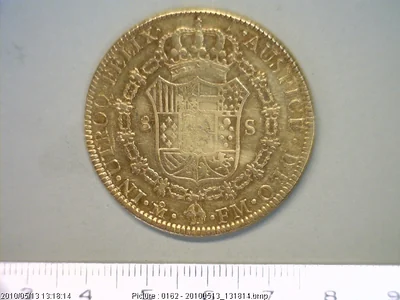
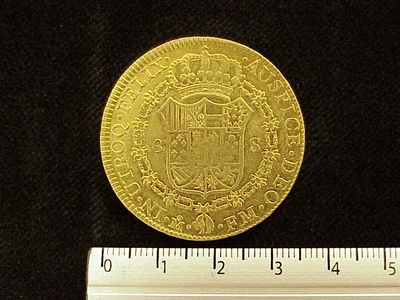
Eight escudos Carlos IV, 1791, Mexico mint, assayer FM, Krause KM#159. Type change in the Krause catalog: KM#159 replaces KM#157 from 1791, a sign of an adjustment to the royal bust die or to the obverse legend. That year the Gaceta de Mexico was founded as an official newspaper and the Count of Revillagigedo ordered the first modern demographic census of the viceroyalty. The ounce weighs 27.06 grams with the 0.875 fineness typical of Carlos IV gold. Produced by mill press with a round planchet. In Europe the French revolutionary process continued with Louis XVI's flight to Varennes in June and the new constitution. The FM signature of the assayers appears in the field as the mark of the capital's workshop. Pieces of 1791 are the first issue of the second Carlos IV bust type of Mexico, a type that would remain in use throughout the decade.
This piece belongs to the era
Colonial / Virreinato →Explore all the Mexican coins of this era, their historical context and how they connect to the monetary system of the period.
Value range of this piece
Market estimate: $51,346 - $86,478 MXN depending on the grade of preservation (typical range between a circulated and an uncirculated piece).
See the full breakdown by grade (VG, F, VF, EF, AU, MS-60, MS-63, MS-65) for the whole series →
Same denomination, other years
8 escudos Oro 0.875 (21k) · Escudos Coloniales (oro)
Frequently asked questions
How much is an 1791 8 Escudos Carlos IV worth?
It holds about 0.76 troy ounces of gold, so it never trades below its melt value, currently above 2,000 USD. A circulated example runs roughly 2,500 to 3,500 USD, while a certified Mint State coin can reach 6,000 to 15,000 USD or more. Grade drives everything above the metal floor.
Is the 1791 8 Escudos rare?
Worn examples are relatively available and trade near their gold value. What is genuinely scarce is a high-grade, original-surface piece. Early Carlos IV bust 8 Escudos in certified Mint State from the Mexico City Mint are hard to find and command the biggest premiums.
How can I tell if my 8 Escudos is genuine?
Weigh and measure it first: a real one is exactly 27 grams and 37.4 mm across, with a diagonally reeded edge. Fakes are usually underweight or the wrong diameter. For final certainty, submit it to NGC or PCGS for authentication and grading before selling.
Where can I sell an 1791 8 Escudos?
Sell through a numismatic dealer who handles world gold, a major auction house like Heritage or Stack's Bowers for high-grade certified coins, or the Pesoteca buy and sell forum for peer-to-peer collector prices. Photograph both sides and the edge, and never clean the coin first.
Conversation
0 comments
Sources
Images for informational and educational purposes, attributed to their original source. Reference values; the real price depends on the grade, the specific variant and demand.
Loading comments…