
50 Nuevos Pesos Jaina 1994: Half-Ounce Gold Coin
The 50 Nuevos Pesos Jaina 1994: Half-Ounce Gold Coin is worth between $37,321 and $40,876 MXN depending on its grade of preservation.
Prices updated: August 2026
Pre-Columbian Maya Series · KM#580
Pre-Columbian Maya Series · KM#580
Design
Banxico
Reverse
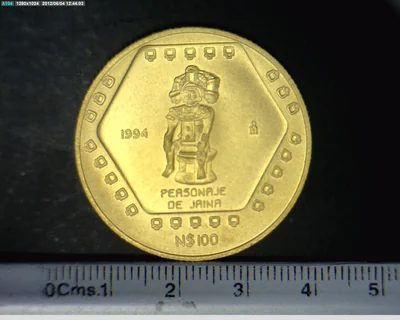
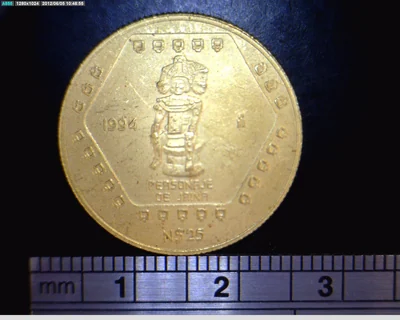
Motif "Personaje de Jaina" of the Maya culture. The legend "15.552g PLATA PURA" or equivalent according to material appears, along with the mint mark "Mo" of the Mexico City Mint and the year "1994".
Obverse
Mexican National Coat of Arms with the legend "ESTADOS UNIDOS MEXICANOS". The inscriptions of the face value "N$50" and the denomination "50 NUEVOS PESOS" appear.
The 50 Nuevos Pesos Jaina 1994: Half-Ounce Gold Coin is worth between $37,321 and $40,876 MXN depending on its grade of preservation.
Prices updated: August 2026
How much is the 50 Nuevos Pesos Jaina 1994: Half-Ounce Gold Coin worth?
The estimated value of the 50 Nuevos Pesos Jaina 1994: Half-Ounce Gold Coin ranges from $37,321 (circulated, XF) up to $40,876 (official blister pack), with $39,583 as a reference for an uncirculated (UNC) piece. The estimate is based on the official mintage and the historical behavior of the family.
The real price depends on four factors: the grade of preservation (a circulated piece is worth the low end of the range; an uncirculated one, or one still in its official blister pack, the high end), the finish (satin vs mirror/proof), the rarity within the series based on the mintage, and the metal spot price on the day of the deal when the piece is silver or gold. Check the value-by-grade table above and compare with equivalent pieces before buying or selling.
Where to buy or sell this coin?
Browse the national directory of numismatic shops or the community forum to trade directly with other collectors.
Description
If you inherited a small, heavy gold coin dated 1994 with a Mayan figure on the back, the good news is simple: it contains real gold, and gold coins have a price floor. The 50 Nuevos Pesos Jaina holds half a troy ounce of pure .999 gold, so in 2026 it is worth at least its melt value in that metal, usually a bit more to a collector.
This is not a rare coin that trades for a fortune. It is a bullion coin with a nice design, which means its value tracks the gold market closely. Below is what it actually is, what it's worth, and how to sell it without getting shortchanged.
What you actually have
The coin is part of a Mexican gold series dedicated to pre-Hispanic art, struck at the Casa de Moneda de México (the Mexican Mint). "Nuevos Pesos" (new pesos) was the currency Mexico used briefly in the mid-1990s, so the 50 face value is symbolic. The real value is the metal and the collector appeal.
Here are the exact specifications, which matter both for value and for spotting fakes:
| Spec | Value |
|---|---|
| Metal | Pure gold, .999 fineness |
| Weight | 15.552 grams (half a troy ounce of fine gold) |
| Diameter | 29 mm |
| Edge | Reeded |
| Year | 1994 |
| Mint | Casa de Moneda de México |
The reverse shows a "Jaina figure," a reference to the Maya ceramic figurines found on the small island of Jaina off the coast of Campeche, Mexico. The originals, made between the 7th and 10th centuries, are famous for their realism, portraying dignitaries, warriors, and women with unusual expressiveness. The engraver translated that detail into the half-ounce relief, and it holds up well.
What it's worth in USD
Because the coin contains a fixed half ounce of pure gold, its floor value is set by the gold spot price. To estimate it, take the current price of one troy ounce of gold and cut it in half. That number is your baseline melt value, and no dealer should offer you less than a slight discount to it.
On top of melt, the Jaina design is one of the more sought-after types in the pre-Columbian series, so an uncirculated example with full mint luster typically carries a small collector premium over pure bullion. A coin that has been handled, scratched, or cleaned drops back toward straight melt value. On pure gold, marks show badly, so condition drives whatever premium exists.
Do not expect "worth thousands beyond the gold" numbers you might see on social media. This is a modern bullion coin, not a rare 19th-century rarity. Its worth rises and falls with gold, and in 2026 that alone is meaningful money for a half-ounce piece.
The half-ounce advantage
Within the series, the half-ounce format is easier to buy and sell than the full one-ounce version, while carrying the same design. That makes it a practical size: enough gold to matter, small enough to move quickly if you decide to sell.
How to tell if it's genuine
Weigh it on a jewelry scale and measure the diameter with calipers, then compare against the specs above. Counterfeits usually miss on weight or diameter, or show flat, mushy relief and off color. A genuine .999 gold coin has a distinctive heft for its size and a warm, even yellow tone.
Be suspicious of any offer priced well below the metal value. That is either a fake or someone trying to steal your gold. For a definitive answer, third-party grading from NGC or PCGS confirms authenticity and grade, which also helps at sale time.
Where to sell it
Because you are selling a precious-metal coin, sell only to someone who will weigh it in front of you and price it against the live gold market. Your safest options:
- A verified coin shop from the Pesoteca dealer directory, which can appraise and buy it on the spot at a fair spread to melt.
- The Pesoteca buy-and-sell forum, where collectors trade directly and design premium is respected.
Photograph the obverse, reverse, and edge in good light before you sell, and check the current gold price the same day. Avoid dumping it to the first bidder on Facebook Marketplace, where gold coins routinely sell under value. If you want a second opinion on grade or authenticity, post clear photos to the Pesoteca forum and let the community weigh in.
Have a 1994 Jaina piece and not sure whether to hold it or cash in on the current gold price? Bring your photos and weight to the forum and let's pin down what it's really worth.
Historical context
The Jaina figures are human ceramic representations modeled during the late Classic Maya on the island of Jaina, Campeche. Known for their anatomical detail and costume, they document characters, trades and deities of Maya society. They form part of the funerary deposits found on the island. The 1994 issue corresponds to the second series of the Bank of Mexico's Pre-Columbian program, dedicated exclusively to the Maya culture. The Pre-Columbian program began in 1992 with the Aztec series and continued with Veracruz (1993), Maya (1994), Olmec (1996), Teotihuacan (1997) and Toltec (1998). The pieces were struck at the Mexico City Mint and offered to collectors and investors in parallel silver and gold denominations with coordinated motifs. International catalog reference: KM#580 (Krause/World Coins).
This piece belongs to the era
Nuevos Pesos y actualidad →Explore all the Mexican coins of this era, their historical context and how they connect to the monetary system of the period.
Value range of this piece
Market estimate: $37,321 - $40,876 MXN depending on the grade of preservation (typical range between a circulated and an uncirculated piece).
See the full breakdown by grade (VG, F, VF, EF, AU, MS-60, MS-63, MS-65) for the whole series →
Other denominations from 1994
Nuevos Pesos 1992-1995 · Oro 0.999
Frequently asked questions
How much is the 1994 50 Nuevos Pesos Jaina coin worth?
Its floor value is half the current price of one troy ounce of gold, since it contains 15.552 grams of pure .999 gold. An uncirculated example with full mint luster carries a small collector premium above melt because the Jaina design is one of the more desirable in the series. A handled or cleaned coin trades close to straight melt value.
Is the 1994 Jaina gold coin rare?
No. It's a modern bullion coin, not a scarce rarity. Its value comes almost entirely from its gold content, not from low mintage. Anyone claiming it's worth thousands beyond the gold price is misleading you. The Jaina type is popular, so it may bring a modest premium, but it tracks the gold market.
Where can I sell the 1994 50 Nuevos Pesos Jaina coin?
Sell to a verified coin shop from the [Pesoteca dealer directory](/tiendas), which will weigh it and price it against the live gold market, or to collectors on the [Pesoteca buy-and-sell forum](/foro/compra-venta). Photograph the obverse, reverse, and edge, check the day's gold price first, and avoid selling to the first bidder online.
How do I know if my Jaina gold coin is real?
Weigh it on a jewelry scale (should be 15.552 grams) and measure the diameter (29 mm) with calipers, then compare to the specs. Fakes usually miss on weight or diameter and show flat relief or wrong color. Be suspicious of any price well below melt value. For certainty, submit it to NGC or PCGS for authentication.
Conversation
0 comments
Sources
Images for informational and educational purposes, attributed to their original source. Reference values; the real price depends on the grade, the specific variant and demand.
Loading comments…