
50 Nuevos Pesos 1994 Bimetallic Coin: Value & Facts
Prices updated: August 2026
Family B (New Pesos) 1994, satin finish.
Family B (New Pesos) 1994, satin finish.
Design
Banxico
Reverse
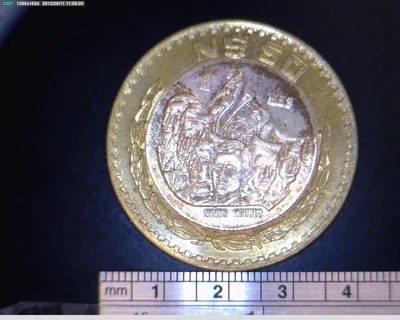
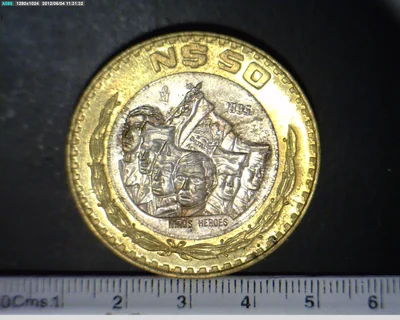
Reverse of the 50 Bimetallic 1994 piece. Die detail cataloged by Banxico in its Numismatic Collection.
Obverse
Obverse with the Mexican National Coat of Arms and the legend "ESTADOS UNIDOS MEXICANOS" per official convention. Struck by the Mexican Mint under Banxico decree.
How much is the 50 Nuevos Pesos 1994 Bimetallic Coin: Value & Facts worth?
The market value of the 50 Nuevos Pesos 1994 Bimetallic Coin: Value & Facts is not yet documented with enough data to give a firm range. Weigh and measure your piece, compare it against the specifications, and check the forum for a second opinion.
The real price depends on four factors: the grade of preservation (a circulated piece is worth the low end of the range; an uncirculated one, or one still in its official blister pack, the high end), the finish (satin vs mirror/proof), the rarity within the series based on the mintage, and the metal spot price on the day of the deal when the piece is silver or gold. Check the value-by-grade table above and compare with equivalent pieces before buying or selling.
Where to buy or sell this coin?
Browse the national directory of numismatic shops or the community forum to trade directly with other collectors.
Description
If you inherited or found a Mexican 50 Nuevos Pesos coin dated 1994, here is the honest answer first: most circulated examples are worth a few dollars, close to their metal and face value. Certified high-grade pieces trade for more, but this is not a rare coin that will fund your retirement. Below are the real specs, what actually moves its price, and where to sell it.
What this coin actually is
The 50 Nuevos Pesos of 1994 is a bimetallic circulating coin, meaning it has two metals: a center core surrounded by an outer ring of a different alloy (the same construction you see on a US 2 dollar coin design or a Euro coin). It belongs to the Nuevos Pesos 1992-1995 series, issued after Mexico revalued its currency and dropped three zeros. "Nuevos Pesos" (new pesos) was the temporary name for that reform.
Here are the technical specs, which matter for spotting fakes:
| Attribute | Detail |
|---|---|
| Denomination | 50 Nuevos Pesos |
| Year | 1994 (single year of issue) |
| Weight | 33.967 grams |
| Diameter | 39 millimeters |
| Composition | Bimetallic (two-metal) |
| Edge | Interrupted reeding |
| Mint | Casa de Moneda de México |
| Finish | Satin |
Obverse (front): The Mexican national coat of arms (the eagle on a cactus devouring a snake) with the legend "ESTADOS UNIDOS MEXICANOS."
Reverse (back): The denomination and design cataloged by Banco de México (Banxico) in its numismatic collection.
What it's actually worth
Let's set expectations. This is not one of Mexico's record-breaking coins. The 50 Nuevos Pesos 1994 is a modern circulating issue, so value comes almost entirely from condition (grade), whether it still sits in its original Banxico blister pack, and whether it has been professionally certified.
- Circulated, worn: a few dollars over face value at most.
- Uncirculated, still bright: a modest premium, often in the range of a few dollars to low double digits.
- Certified high grade (NGC or PCGS, MS-66 and up): the strongest examples can pull a real premium above raw coins, but you need a top grade to justify the certification cost.
We do not publish an invented exact figure because prices for a coin like this swing with demand and grade. If you want a firm number, check the grade ranges in our coin condition grading guide and compare recent sold listings.
The mint figure question
A precise mintage for this specific issue is not published in Banxico's official records. When a mint does not release a number, it usually means the coin came out in limited numismatic sets or as a short, targeted issue. Collector forums throw around figures, but none are confirmed, so treat any "exact mintage" you see online as speculation.
Errors: usually not what people think
Genuine mint errors (off-center strikes, die rotation, double strikes) can multiply the value of any coin if they are real and verifiable. The catch: most "errors" people post online are post-mint damage, dings, scratches, or corrosion, not factory mistakes. Those add nothing. If you think you have a true error, post clear photos in the Pesoteca forum and let the community weigh in before you get your hopes up.
How to tell if yours is genuine
- Weigh it. A real coin weighs 33.967 grams. If yours is off by more than a fraction, be suspicious.
- Measure it. Diameter should be 39 millimeters.
- Check the edge. It should show interrupted reeding.
- Compare the relief. Counterfeits tend to have flat, mushy detail. Compare against official Banxico images.
- For anything valuable, certify it. NGC and PCGS grading is the definitive proof of authenticity and grade, and it also protects your value when you sell.
Where to sell it
Your safest options, in order:
- A verified numismatic dealer from the Pesoteca directory, who can appraise it on the spot.
- The Pesoteca buy-and-sell forum, where you deal with actual collectors.
- Established coin shops, which charge more but offer real appraisals.
Before you sell anything, photograph the obverse, reverse, and edge, and check the grade ranges on this page. Avoid dumping it to the first offer on a general social media marketplace, and never sell to a buyer who won't ask about weight and edge, because that's how fakes change hands.
Historical context
The Nuevos Pesos family was born from the decree of June 22, 1992, published in the Diario Oficial de la Federacion, which reorganized Mexican currency by removing three zeros from the peso then in use. The transition took effect on January 1, 1993, and lasted three years. The pieces carried the N$ prefix to distinguish them from the earlier peso, until in 1996 Banxico removed the prefix and they circulated again simply as the Mexican peso.
This N$50 Bimetallic piece struck in 1994 is part of the peso transition. Banxico documented the annual mintages in its Monetary Circular CM10, though for some years the coverage is uneven. For the specific piece it's worth verifying the exact mintage against the official Banxico catalog before appraising it. Pesoteca catalogs each piece by minting year rather than grouping them by design, following the PSM System convention.
This piece belongs to the era
Nuevos Pesos y actualidad →Explore all the Mexican coins of this era, their historical context and how they connect to the monetary system of the period.
Value range of this piece
Value range without enough data for this piece.
See the full breakdown by grade (VG, F, VF, EF, AU, MS-60, MS-63, MS-65) for the whole series →
Other denominations from 1994
Nuevos Pesos 1992-1995 · Bimetálica
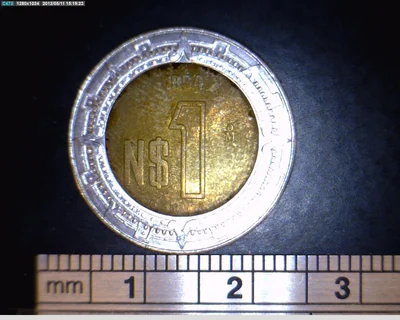
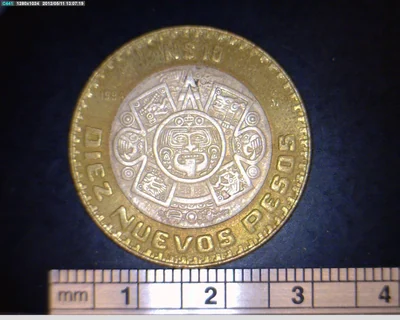
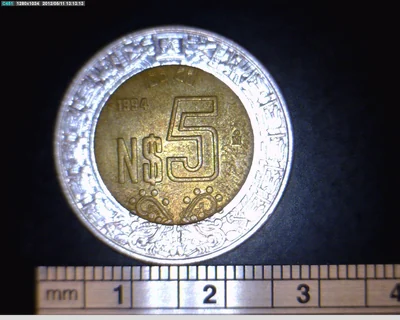
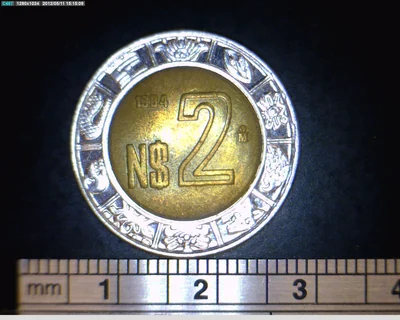
Same denomination, other years
50 pesos Bimetálica · Nuevos Pesos 1992-1995
Frequently asked questions
How much is the 50 Nuevos Pesos 1994 worth?
Circulated examples are worth a few dollars over face value. Uncirculated coins carry a modest premium, and only certified high-grade pieces (NGC or PCGS MS-66 and above) command a real premium. Condition and certification are what move the price, so grade yours before assuming it's rare.
Is the 50 Nuevos Pesos 1994 rare?
It is not a rare coin. Banxico never published an exact mintage, which usually points to a limited or set-based issue, but it remains a modern circulating coin, not a record-breaker. Value comes from grade and original packaging, not scarcity alone.
How can I tell if my 50 Nuevos Pesos 1994 is genuine?
A real coin weighs 33.967 grams and measures 39 millimeters with interrupted reeding on the edge. If your piece misses those specs, be suspicious. Counterfeits show flat, weak relief. For anything you think is valuable, NGC or PCGS certification is the definitive check.
Where can I sell my 50 Nuevos Pesos 1994?
Your safest options are a verified dealer from the Pesoteca directory, the Pesoteca buy-and-sell forum, or an established coin shop for an in-person appraisal. Photograph the obverse, reverse, and edge, check the grade ranges here, and don't accept the first lowball offer online.
Conversation
0 comments
Sources
- Ejemplar de la Coleccion Numismatica Banco de Mexico . inv. 18583
- Ejemplar de la Coleccion Numismatica Banco de Mexico . inv. 18584
- Ejemplar de la Coleccion Numismatica Banco de Mexico . inv. 18585
- Ejemplar de la Coleccion Numismatica Banco de Mexico . inv. 18586
- Ejemplar de la Coleccion Numismatica Banco de Mexico . inv. 18587
Images for informational and educational purposes, attributed to their original source. Reference values; the real price depends on the grade, the specific variant and demand.
Loading comments…