
50 Centavos 2014 Stainless Steel: What It's Worth
Prices updated: August 2026
Centavos stainless steel 2014.
Centavos stainless steel 2014.
Design
Banxico
Reverse
Reverse of the 50 stainless-steel 2014 piece. Detail of the die cataloged by Banxico in its Numismatic Collection.
Obverse
Obverse with the Mexican National Coat of Arms and the legend "ESTADOS UNIDOS MEXICANOS" per official convention. Struck by the Mint of Mexico under Banxico decree.
How much is the 50 Centavos 2014 Stainless Steel: What It's Worth worth?
The market value of the 50 Centavos 2014 Stainless Steel: What It's Worth is not yet documented with enough data to give a firm range. Weigh and measure your piece, compare it against the specifications, and check the forum for a second opinion.
The real price depends on four factors: the grade of preservation (a circulated piece is worth the low end of the range; an uncirculated one, or one still in its official blister pack, the high end), the finish (satin vs mirror/proof), the rarity within the series based on the mintage, and the metal spot price on the day of the deal when the piece is silver or gold. Check the value-by-grade table above and compare with equivalent pieces before buying or selling.
Where to buy or sell this coin?
Browse the national directory of numismatic shops or the community forum to trade directly with other collectors.
Description
If you found a Mexican 50 centavos coin dated 2014, here's the honest answer: circulated, it's worth its face value, a few US cents. There is no rare date, no precious metal, no fortune hiding in this one. The only version worth setting aside is a flawless uncirculated piece, and even that is a modest collector item, not a payday.
We say this plainly because a lot of sites hint that any old-looking Mexican coin might be valuable. This one is common circulating currency, struck by the Casa de Moneda de México (the Mexican Mint). Millions went into everyday change. Age alone does not make a coin rare, and 2014 is recent by any measure.
What this coin actually is
The 2014 50 centavos is part of Mexico's modern fractional coinage, the small change that circulates alongside the peso. What makes this year notable is the metal: stainless steel, which replaced the earlier aluminum-bronze alloy. The switch was practical, cheaper to produce and more durable for a coin that changes hands constantly.
Specifications:
| Feature | Detail |
|---|---|
| Denomination | 50 centavos (half a peso) |
| Year | 2014 |
| Metal | Stainless steel |
| Weight | 3.103 g |
| Diameter | 17 mm |
| Edge | Plain (smooth) |
| Obverse | National coat of arms (eagle devouring a serpent) |
| Reverse | Face value and year |
| Mint | Casa de Moneda de México |
How much is it worth in USD?
Here is the reality by condition:
- Circulated (worn, scratched, spotted): face value only, roughly 3 US cents. Not worth selling individually.
- Uncirculated (bright, no handling marks, no spots): a small premium, typically a dollar or two among collectors who are completing a set. Nothing more.
The stainless steel scratches and spots easily, so a genuinely mint-state 2014 piece is harder to find than you'd expect. That is the only angle that gives it any collector value: quality, not rarity. If you're building a year-by-year run of the stainless steel series, a pristine 2014 is worth keeping. Otherwise, it's pocket change.
Coins people confuse this with
Mexican fractional coins are easy to mix up. A worn 50 centavos looks a lot like other small-denomination pieces, and none of the modern stainless steel fractionals carry real value in circulated grades. If you have a whole jar of them, sort by condition first: only the crisp, unhandled examples are worth a second look. The value driver is grade, not the date on the coin.
Are there valuable minting errors?
Genuine mint errors (off-center strikes, die rotation, double strikes) can multiply the value of an otherwise common coin. The catch: most of the "errors" people post online are post-mint damage, dings, corrosion, or contact marks from circulation, not factory mistakes. Steel corrodes and dents readily, which fools a lot of people. If you think you have a real error, photograph the obverse, reverse, and edge and post it on the Pesoteca forum for a second opinion before assuming it's worth money.
How to check what yours is worth
- Check condition first. Bright, mark-free, no spots equals uncirculated. Any wear or scratching drops it to face value.
- Confirm it's genuine. Weigh it on a jewelry scale (should be 3.103 g) and measure the diameter (17 mm) with calipers. Counterfeits usually miss on weight or diameter, or show flat relief. Fakes of a coin this low in value are rare, though, since there's no profit in copying pocket change.
- Photograph both sides and the edge if you plan to sell or ask for an opinion.
Where to sell it
Honestly, a single circulated 50 centavos isn't worth the effort to sell. If you have an uncirculated piece or a lot of coins to move, use a verified numismatic shop from the Pesoteca directory, which can appraise on the spot, or the Pesoteca buy-and-sell forum to reach collectors directly. Check condition and current asking ranges before you list, and don't dump a collection to the first buyer on social media.
Have a jar of Mexican coins and want to know if any of them are actually worth something? Post clear photos on the Pesoteca forum and let the community sort the keepers from the pocket change.
Historical context
This 50 centavos piece from 2014 belongs to the C family with a dodecagonal profile issued by Banxico. The 50 centavos is the link between the fractions and the whole peso. In low-cost urban transport, markets, and tortillerías it is the typical coin for making change. It turns exact payment into a quick act at the register.
Renewed in 2009 with stainless steel and a dodecagonal profile as part of the C family. The previous issue (KM#549, gilt brass) circulated from 1992 until the change of material.
In 2014 annual inflation closed at 4.1% according to INEGI and the average exchange rate was 13.30 pesos per dollar according to Banxico's FIX. The year of the disappearance of the 43 students from Ayotzinapa in September. The drop in oil prices in the second half hit public finances. The peso began its sustained depreciation. The country was under the presidency of Enrique Peña Nieto (PRI).
Catalog reference: KM#936. The piece is part of the official Banxico Numismatic Collection catalog and follows the convention of the PSM System, one ID per distinct physical piece, not per design shared with other years of the same series.
This piece belongs to the era
Nuevos Pesos y actualidad →Explore all the Mexican coins of this era, their historical context and how they connect to the monetary system of the period.
Value range of this piece
Value range without enough data for this piece.
See the full breakdown by grade (VG, F, VF, EF, AU, MS-60, MS-63, MS-65) for the whole series →
Same denomination, other years
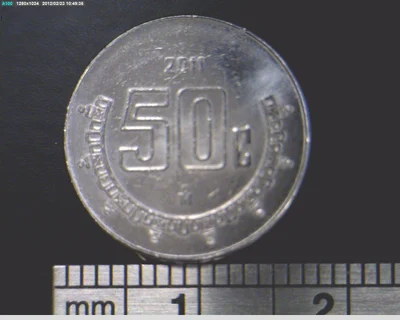
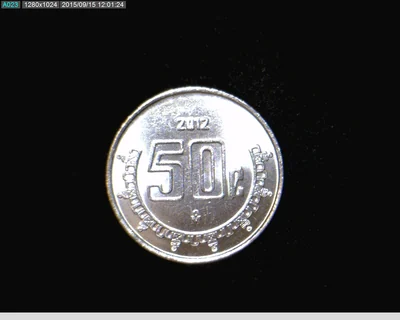
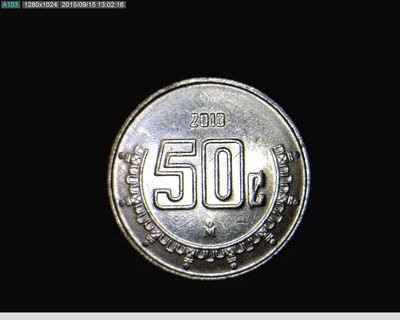
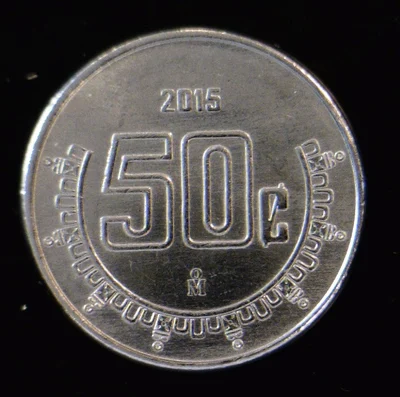
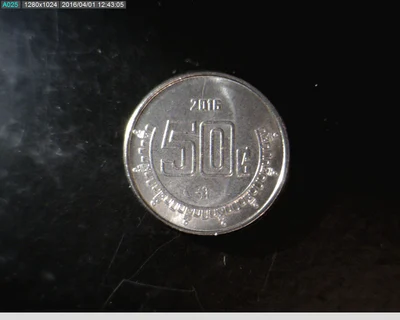
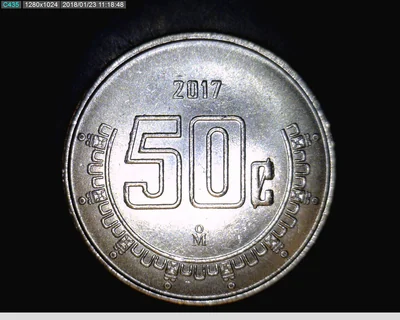
50 centavos Acero inoxidable · 50 Centavos Acero Inoxidable
Frequently asked questions
How much is the 2014 Mexican 50 centavos worth?
Circulated, it's worth face value, roughly 3 US cents. A flawless uncirculated example brings a small premium among collectors, usually a dollar or two. It is common currency, not a rare or valuable coin.
Is the 2014 50 centavos stainless steel coin rare?
No. It's common modern circulating coinage struck by the Casa de Moneda de México in large numbers. The only version worth keeping is one in pristine uncirculated condition, since stainless steel scratches and spots easily, making mint-state pieces harder to find.
Where can I sell the 2014 50 centavos coin?
A single circulated coin isn't worth selling. For an uncirculated piece or a larger lot, use a verified shop from the [Pesoteca directory](/tiendas) for an on-the-spot appraisal, or the [buy-and-sell forum](/foro/compra-venta) to reach collectors. Photograph the obverse, reverse, and edge first.
How can I tell if my 2014 50 centavos is genuine?
Weigh it (should be 3.103 g) and measure the diameter (17 mm) against the specs above. Counterfeits usually have the wrong weight or diameter, flat relief, or uneven finish. Fakes are uncommon for a coin this low in value since there's no profit in copying it.
Conversation
0 comments
Sources
- Ejemplar de la Coleccion Numismatica Banco de Mexico . inv. 23206
- Ejemplar de la Coleccion Numismatica Banco de Mexico . inv. 23204
- Ejemplar de la Coleccion Numismatica Banco de Mexico . inv. 23205
- Ejemplar de la Coleccion Numismatica Banco de Mexico . inv. 23207
- Ejemplar de la Coleccion Numismatica Banco de Mexico . inv. 23208
Images for informational and educational purposes, attributed to their original source. Reference values; the real price depends on the grade, the specific variant and demand.
Loading comments…