
50 Centavos 2010 (Stainless Steel): Value Guide
Prices updated: August 2026
Centavos stainless steel 2010.
Centavos stainless steel 2010.
Design
Banxico
Reverse
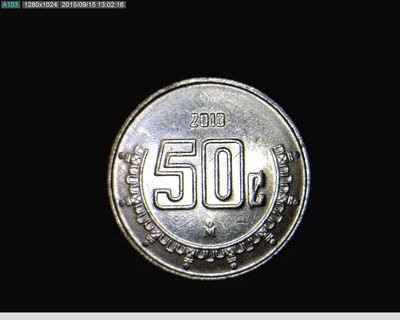
Reverse of the 50 Stainless Steel 2010 piece. Detail of the die cataloged by Banxico in its Numismatic Collection.
Obverse
Obverse with the Mexican National Coat of Arms and the legend "ESTADOS UNIDOS MEXICANOS" per official convention. Struck by the Mexican Mint under Banxico decree.
How much is the 50 Centavos 2010 (Stainless Steel): Value Guide worth?
The market value of the 50 Centavos 2010 (Stainless Steel): Value Guide is not yet documented with enough data to give a firm range. Weigh and measure your piece, compare it against the specifications, and check the forum for a second opinion.
The real price depends on four factors: the grade of preservation (a circulated piece is worth the low end of the range; an uncirculated one, or one still in its official blister pack, the high end), the finish (satin vs mirror/proof), the rarity within the series based on the mintage, and the metal spot price on the day of the deal when the piece is silver or gold. Check the value-by-grade table above and compare with equivalent pieces before buying or selling.
Where to buy or sell this coin?
Browse the national directory of numismatic shops or the community forum to trade directly with other collectors.
Description
If you found a 50 centavos coin dated 2010 from Mexico, here's the honest answer up front: in circulated condition it's worth face value, which is half a Mexican peso, roughly 3 US cents. This is a common circulation coin, not a rare one. A pristine uncirculated example might fetch a couple of US dollars from a collector, and nothing close to the "worth thousands" claims you see online.
That doesn't mean you should toss it. There are specific conditions and errors that add real value, and it's worth two minutes to check. Below is exactly what this coin is, what it's actually worth by grade, and how to tell if yours is one of the rare exceptions.
What this coin is
The 2010 50 centavos is part of Mexico's stainless steel 50 centavos series, struck by the Casa de Moneda de México (the Mexican Mint) under Banco de México (Banxico) decree. "Centavos" are cents; 50 centavos equals half a peso.
Here are the exact specifications:
| Feature | Detail |
|---|---|
| Denomination | 50 centavos (half peso) |
| Year | 2010 |
| Metal | Stainless steel |
| Weight | 3.103 grams |
| Diameter | 17 mm |
| Edge | Smooth (plain) |
| Finish | Satin |
Obverse (front): The Mexican national coat of arms (an eagle on a cactus with a serpent) surrounded by the legend "ESTADOS UNIDOS MEXICANOS," the official name of the country.
Reverse (back): The denomination and mint detail cataloged by Banxico in its numismatic collection.
One thing that matters for value: this coin contains no silver and no gold. It's stainless steel, so there is no precious-metal floor. Its value comes purely from condition and collector demand, both of which are low for a modern circulation issue.
What it's actually worth
Be realistic. Millions of these were struck for everyday use.
| Condition | Approximate value (USD) |
|---|---|
| Circulated (worn) | Face value, about 3 cents |
| Uncirculated, loose | Under 1 dollar |
| Uncirculated, top grade / graded | 1 to 3 dollars |
The higher end applies only to coins in genuinely uncirculated condition, ideally still in the original Banxico blister pack or professionally graded. A worn coin from your change jar is worth what it says on the face.
The exception that can add value: mint errors
The one scenario where a common coin like this jumps in price is a genuine mint error: an off-center strike, a die rotation, a double strike, or a documented variety. Verified errors can multiply the value several times over.
Here's the catch. Most "errors" people post online are not errors at all. They're post-mint damage: dings, scratches, corrosion, or wear that happened after the coin left the mint. Those add nothing. A real error happened during striking and shows specific, repeatable characteristics.
If you think you have one, don't guess. Post clear photos to the Pesoteca forum and let collectors weigh in before you assume it's valuable.
How to tell if yours is genuine
Modern low-denomination coins are rarely counterfeited because there's no profit in it, but it's still smart to verify:
- Weigh it. A genuine coin weighs 3.103 grams. Use a jewelry scale.
- Measure it. The diameter should be exactly 17 mm. Use calipers.
- Check the edge. It should be smooth (plain), not reeded.
- Look at the relief. Genuine coins have crisp, well-defined detail. Flat, mushy relief or oddly distributed coloring can signal a fake or a damaged piece.
Compare your measurements against the specification table above. Wrong weight or diameter is the fastest tell.
Where to sell it
For a coin in this value range, keep expectations grounded and avoid getting shortchanged:
- A verified numismatic shop in the Pesoteca directory can appraise it on the spot, sorted by city.
- The Pesoteca buy-and-sell forum connects you directly with collectors.
- Photograph the obverse, reverse, and edge before you sell, and check the grade against the coin grading guide.
Don't dump it to the first bidder on social media. For a common coin the difference is small in dollars, but the habit protects you when you eventually handle something that actually is worth real money.
Got a 2010 50 centavos you think might be an error, or a whole box of Mexican coins to sort through? Post your photos in the Pesoteca forum and get a straight answer from people who actually grade these.
Historical context
This 50 centavos piece from 2010 belongs to family C with a dodecagonal profile issued by Banxico. The 50 centavos is the link between the fractions and the whole peso. On low-cost urban transit, in markets and tortilla shops it is the typical coin for making change. It turns exact payment into a quick act at the register.
Redesigned in 2009 with stainless steel and a dodecagonal profile as part of family C. The previous issue (KM#549, golden brass) circulated from 1992 until the change of material.
In 2010 annual inflation closed at 4.4% according to INEGI and the average exchange rate was 12.64 pesos per dollar according to Banxico's FIX. Year of the Bicentennial of Independence and the Centennial of the Revolution. Banxico issued the commemorative series of 5 pesos featuring national heroes. Economic recovery with growth of 5.1%. The country was under the Presidency of Felipe Calderon Hinojosa (PAN).
Catalog reference: KM#936. The piece is part of the official Banxico Numismatic Collection catalog and follows the convention of the PSM System, one ID per distinct physical piece, not per design shared with other years of the same series.
This piece belongs to the era
Nuevos Pesos y actualidad →Explore all the Mexican coins of this era, their historical context and how they connect to the monetary system of the period.
Value range of this piece
Value range without enough data for this piece.
See the full breakdown by grade (VG, F, VF, EF, AU, MS-60, MS-63, MS-65) for the whole series →
Same denomination, other years
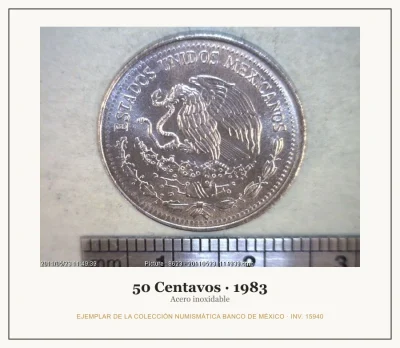
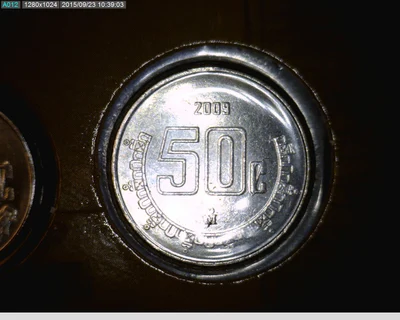
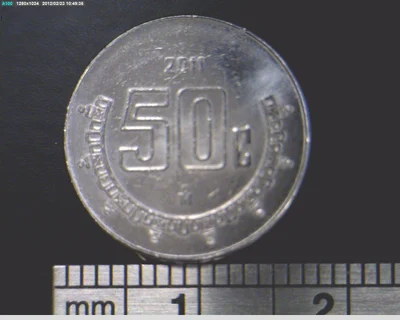
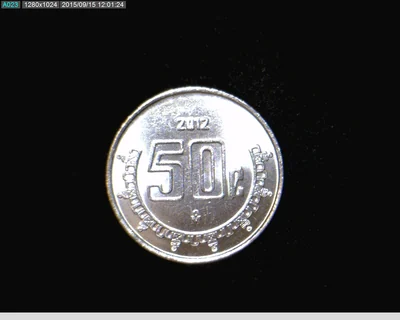
50 centavos Acero inoxidable · 50 Centavos Acero Inoxidable
Frequently asked questions
How much is a 2010 Mexican 50 centavos coin worth?
In circulated condition it's worth face value, about 3 US cents. An uncirculated example in top grade or in the original Banxico blister pack might sell for 1 to 3 US dollars to a collector. It contains no silver or gold, so there's no metal value beyond that.
Is the 2010 50 centavos coin rare?
No. It's a common circulation coin struck in large numbers for everyday use. The only versions worth more than a couple of dollars are pristine uncirculated pieces or coins with a genuine, verifiable mint error such as an off-center strike or die rotation.
Where can I sell my 2010 50 centavos coin?
For a fair valuation, use a verified numismatic shop in the Pesoteca directory (sorted by city) or the Pesoteca buy-and-sell forum among collectors. Photograph the obverse, reverse, and edge, and check the grade first. Avoid selling to the first bidder on social media.
How do I know if my 2010 50 centavos coin is genuine?
Weigh it (it should be 3.103 grams) and measure the diameter (17 mm) with a jewelry scale and calipers, then compare to the official specifications. The edge should be smooth. Counterfeits often have the wrong weight or diameter, flat relief, or poorly distributed coloring.
Conversation
0 comments
Sources
- Ejemplar de la Coleccion Numismatica Banco de Mexico . inv. 22645
- Ejemplar de la Coleccion Numismatica Banco de Mexico . inv. 22644
- Ejemplar de la Coleccion Numismatica Banco de Mexico . inv. 22646
- Ejemplar de la Coleccion Numismatica Banco de Mexico . inv. 22647
- Ejemplar de la Coleccion Numismatica Banco de Mexico . inv. 22648
Images for informational and educational purposes, attributed to their original source. Reference values; the real price depends on the grade, the specific variant and demand.
Loading comments…