
1981 Mexican 50 Centavos (Cuauhtémoc): Value & Facts
Prices updated: August 2026
Centavos cupronickel 1981.
Centavos cupronickel 1981.
Design
Banxico
Reverse
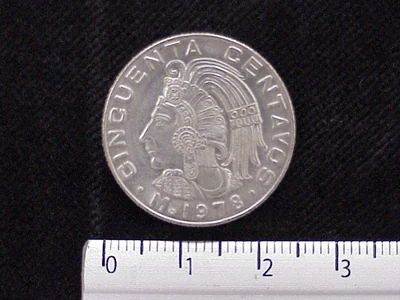
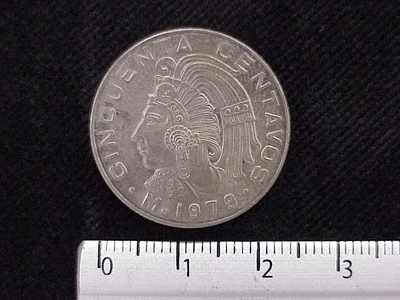
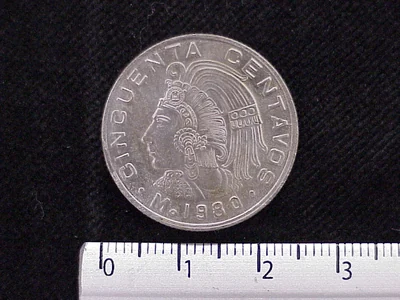
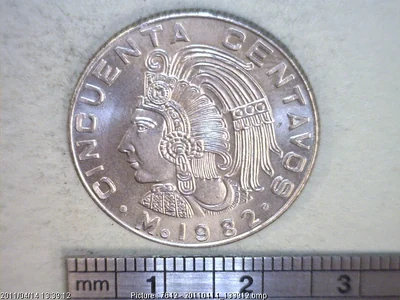
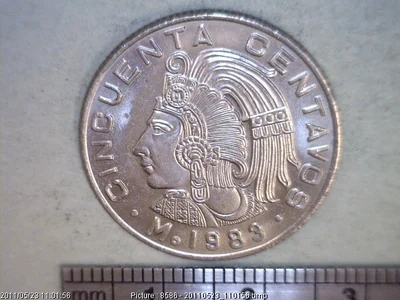
Bust of Cuauhtemoc, the last Mexica tlatoani, with a ceremonial feather headdress, facing left. Around it the legend with the denomination "50 centavos" and the year. This design (cupronickel, Cuauhtemoc) was struck from 1970 to 1982; in 1983 it was changed to stainless steel with the profile of Pakal.
Obverse
Obverse with the Mexican National Coat of Arms and the legend "ESTADOS UNIDOS MEXICANOS" per official convention. Struck by the Mexican Mint under Banxico decree.
How much is the 1981 Mexican 50 Centavos (Cuauhtémoc): Value & Facts worth?
The market value of the 1981 Mexican 50 Centavos (Cuauhtémoc): Value & Facts is not yet documented with enough data to give a firm range. Weigh and measure your piece, compare it against the specifications, and check the forum for a second opinion.
The real price depends on four factors: the grade of preservation (a circulated piece is worth the low end of the range; an uncirculated one, or one still in its official blister pack, the high end), the finish (satin vs mirror/proof), the rarity within the series based on the mintage, and the metal spot price on the day of the deal when the piece is silver or gold. Check the value-by-grade table above and compare with equivalent pieces before buying or selling.
Where to buy or sell this coin?
Browse the national directory of numismatic shops or the community forum to trade directly with other collectors.
Description
If you found a 1981 Mexican 50 centavos with the feathered warrior on the back, here is the honest answer: a worn one is worth a few cents to about a dollar. It is copper-nickel, not silver, so there is no metal value to fall back on. Only crisp, uncirculated examples bring a modest premium. In 2026, this remains a common, low-value circulating coin, and knowing why saves you from overpaying or overselling.
Quick answer: what is a 1981 50 Centavos worth?
Most 1981 50 centavos coins are worth almost nothing beyond curiosity value: cents to roughly one dollar in circulated condition. There is no rarity here. Millions of these were made and they sat in drawers and jars for decades. The only versions worth a small premium are truly uncirculated pieces with full original luster, and even those are pocket change to a serious collector, not a windfall.
This is not a coin that breaks auction records. If a website tells you a common 1981 Mexican coin is worth hundreds or thousands of dollars, that is clickbait. What actually moves the needle on this piece is condition, and only at the very top end.
What you actually have
The 1981 50 centavos is a copper-nickel coin showing the profile of Cuauhtémoc, the last Aztec (Mexica) ruler, wearing a ceremonial feather headdress and facing left. The obverse carries the Mexican coat of arms, the eagle on a cactus devouring a serpent.
Physical specs (exact):
- Metal: Copper-nickel (cupronickel). A silver-colored alloy of copper and nickel. No silver content.
- Weight: 6.5 grams
- Diameter: 25 mm
- Edge: Plain (smooth)
- Mint: Casa de Moneda de México (Mexican Mint)
- Design in use: 1970 to 1982
The term "centavos" simply means cents. This was a fraction of the old Mexican peso, in everyday use before Mexico's later monetary reform. Because 50 centavos changed hands constantly, worn examples are the norm.
Is it silver? No.
This trips people up, so let it be clear: the 1981 50 centavos contains no silver. It is copper-nickel, which looks silvery but is worth nothing at the melt counter. Mexico did make silver 50 centavos coins, but those belong to much older series, not this 1970 to 1983 type. That is why the value of your coin is purely numismatic (collector-driven) and does not rise or fall with silver prices.
Is it rare?
No, not in any strict sense. The 1981 50 centavos circulated heavily and survives in large numbers. The one thing that makes it mildly interesting to collectors is timing: 1981 sits near the end of the copper-nickel Cuauhtémoc type. In 1983, the Bank of Mexico switched the alloy to stainless steel and replaced Cuauhtémoc with K'inich Janaab' Pakal, the Maya ruler of Palenque. So the 1981 belongs to the older, soon-to-end design family. That is trivia, not rarity. The real rarity of your specific coin depends entirely on how well it survived.
Value by condition
| Condition | What it looks like | Approximate value (USD) |
|---|---|---|
| Heavily circulated | Flat headdress, no luster, worn eagle | A few cents |
| Circulated (fine) | Readable detail, some wear | Under 1 dollar |
| About uncirculated | Sharp detail, minor rub | 1 to 3 dollars |
| Uncirculated with full luster | Complete relief, original shine | A few dollars, occasionally more for top grades |
These are collector ranges, not guarantees. A coin only reaches the higher figures if it is genuinely well preserved and, ideally, verified.
The ones people think are worth a fortune (and why this isn't one)
Inherited-coin sellers often assume any old Mexican coin equals money. Almost never. Value comes from real rarity (low mintage or few survivors), strong collector demand, high grade, or precious-metal content. The 1981 50 centavos fails on rarity, has no silver or gold, and exists by the millions. It is a fine starter piece for building a year-by-year set of Mexican centavos, but it is not a hidden jackpot.
How to tell what yours is worth
- Check the wear on the high points. Look at Cuauhtémoc's headdress and the eagle's feathers on the obverse. If the relief is complete and there is original mint shine (luster), you are heading toward uncirculated (SC in Spanish catalogs). If the high points are flattened and dull, it is a low-value circulated coin.
- Confirm the date and metal. 1981, copper-nickel, 6.5 g, 25 mm, plain edge. If yours is stainless steel with a different portrait, it is a later type (1983 onward).
- Compare multiple offers. Never anchor on a single listing. Prices online swing wildly, both too high and too low.
How to tell if it's genuine
Counterfeiting a low-value copper-nickel coin is not worth anyone's effort, so fakes are rare here. Still, weigh it (should be 6.5 g) and confirm the diameter (25 mm) and plain edge. If the weight or size is off, or the edge has reeding (grooves), something is wrong. For any coin you think might be high-grade and worth grading, a professional service like NGC or PCGS can verify authenticity and assign a grade, though for a coin at this value level, grading fees usually exceed the payoff.
Where to buy or sell it
Because values are low, your best move is to compare several buyers rather than trust one price. Pesoteca maintains a directory of numismatic shops and dealers where you can contact sellers to gauge real prices, whether you are buying to complete a set or offering your own coin. Comparing multiple offers keeps you from getting steered by a single inflated or lowball number.
Got a jar of these and other old Mexican coins? Post clear photos of the best-preserved ones in the Pesoteca forum and let the community tell you which, if any, are worth setting aside.
Historical context
Centavo coins form the base of the Mexican monetary system. Banxico has modified their diameters, materials and alloys several times over the last decades to optimize minting costs. The 50 centavos Cupronickel piece struck in 1981 belongs to the Banxico Numismatic Collection catalog documented on its official site.
For Mexican collectors, centavo pieces have value when they capture a material change, a die error or an atypically low mintage. Banxico publishes the annual mintages in CM10 starting from the year 2000. For earlier pieces the data may not be available. This entry follows the convention of the PSM System, one ID per distinct physical piece, not per shared design.
This piece belongs to the era
México Moderno (pre-1992) →Explore all the Mexican coins of this era, their historical context and how they connect to the monetary system of the period.
Value range of this piece
Value range without enough data for this piece.
See the full breakdown by grade (VG, F, VF, EF, AU, MS-60, MS-63, MS-65) for the whole series →
Other denominations from 1981
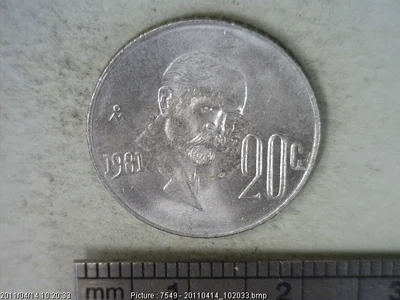
Centavos Mexicanos · Cuproníquel
Same denomination, other years
50 centavos Cuproníquel · Centavos Mexicanos
Frequently asked questions
How much is the 1981 Mexican 50 centavos worth?
In circulated condition, a few cents to under one dollar. It has no metal value because it is copper-nickel, not silver, so condition sets the price. An uncirculated example with full original luster brings a few dollars, occasionally a bit more for top grades. Compare several offers before buying or selling instead of trusting a single listing.
Is the 1981 50 centavos rare or valuable?
No, it is not rare. It circulated heavily and survives by the millions in jars and drawers. Its only mild interest is that 1981 is near the end of the copper-nickel Cuauhtémoc type, before Mexico switched to stainless steel in 1983. The real value of your specific coin depends entirely on how well it was preserved.
Does the 1981 50 centavos contain any silver?
No. It is copper-nickel, an alloy of copper and nickel that looks silvery but has no silver content. Weight is 6.5 grams, diameter 25 mm, with a plain edge. Silver 50 centavos coins exist, but they belong to much older series, not this 1970 to 1983 type, so its value is collector-driven, not tied to silver prices.
Where can I sell my 1981 Mexican 50 centavos?
Pesoteca keeps a directory of numismatic shops and dealers where you can contact buyers and compare prices before selling or buying. Because these coins are common and low-value, getting several offers is the best way to avoid a lowball or an inflated single quote.
Conversation
0 comments
Sources
- Ejemplar de la Coleccion Numismatica Banco de Mexico . inv. 15833
- Ejemplar de la Coleccion Numismatica Banco de Mexico . inv. 15845
- Ejemplar de la Coleccion Numismatica Banco de Mexico . inv. 15836
- Ejemplar de la Coleccion Numismatica Banco de Mexico . inv. 15835
- Ejemplar de la Coleccion Numismatica Banco de Mexico . inv. 15834
Images for informational and educational purposes, attributed to their original source. Reference values; the real price depends on the grade, the specific variant and demand.
Loading comments…