
Mexican 50 Centavos 1976 (Cuauhtémoc): What It's Worth
Prices updated: August 2026
Centavos cupronickel 1976.
Centavos cupronickel 1976.
Design
Banxico
Reverse
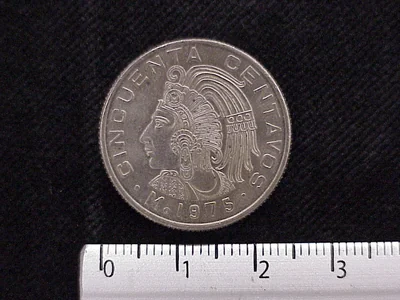
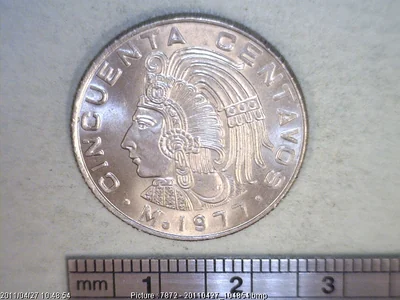
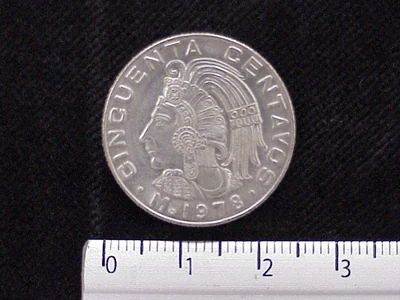
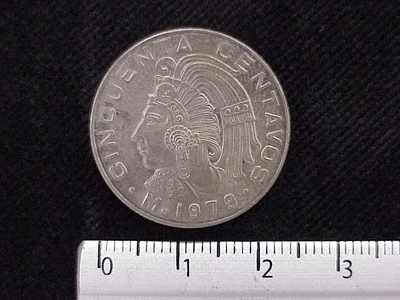
Bust of Cuauhtemoc in left profile with a feather headdress. Around the top, the legend "CINCUENTA CENTAVOS". The "Mo" mint mark (Mexican Mint) is integrated into the headdress and beneath the bust next to the year. Two variants exist: with dots and without dots (three dots over the feathers of the headdress).
Obverse
Obverse with the Mexican National Coat of Arms and the legend "ESTADOS UNIDOS MEXICANOS" per official convention. Struck by the Mexican Mint under Banxico decree.
How much is the Mexican 50 Centavos 1976 (Cuauhtémoc): What It's Worth worth?
The market value of the Mexican 50 Centavos 1976 (Cuauhtémoc): What It's Worth is not yet documented with enough data to give a firm range. Weigh and measure your piece, compare it against the specifications, and check the forum for a second opinion.
The real price depends on four factors: the grade of preservation (a circulated piece is worth the low end of the range; an uncirculated one, or one still in its official blister pack, the high end), the finish (satin vs mirror/proof), the rarity within the series based on the mintage, and the metal spot price on the day of the deal when the piece is silver or gold. Check the value-by-grade table above and compare with equivalent pieces before buying or selling.
Where to buy or sell this coin?
Browse the national directory of numismatic shops or the community forum to trade directly with other collectors.
Description
If you inherited or found a 1976 Mexican 50 Centavos coin with a Native profile on it, here is the honest answer: in worn condition it is worth almost nothing, a few cents at most. It contains no silver, and over 37 million were made. Only a pristine, uncirculated example brings a few dollars. In 2026, that has not changed.
Quick answer: what it's worth
The 1976 50 Centavos is one of the most common Mexican coins from that era. Its value comes only from condition, not from metal or scarcity.
| Condition | What it means | Approximate value (USD) |
|---|---|---|
| Circulated, worn | Passed through pockets, visible wear | A few cents (bulk value) |
| Extra Fine (XF) | Light wear, clear detail | Under 1 dollar |
| Uncirculated (UNC) | No wear, original luster | 1 to 5 dollars |
| Certified MS-65+ | Graded by NGC/PCGS, top grade | 5 to 20 dollars |
These are collector-market figures. On Mexican listing sites like MercadoLibre, uncirculated pieces are often priced from about 100 pesos up to several hundred pesos (roughly 5 to 20 USD), and worn ones sell for a handful of pesos or get lumped into junk lots.
Why it's not silver (and why that matters)
Here is the point most people miss. This coin looks old and it carries a classic design, so it feels like it should be silver. It is not.
The 1976 50 Centavos is struck in cupronickel, an alloy of roughly 75% copper and 25% nickel. It weighs 6.5 grams and measures 25 mm in diameter with a plain (smooth) edge. Because there is no precious metal, it has no melt value floor. A silver coin has a bullion price you can always fall back on. This one does not.
The design itself dates back to an older series. The same 50 Centavos with the profile of Cuauhtémoc (the last Aztec emperor, shown wearing a feathered headdress) was originally minted in silver during the 1940s and 1950s. By the mid-1970s the artwork survived but the silver was gone: rising metal prices had pushed the value of the silver above the coin's face value, so Mexico switched to cheap, durable cupronickel. Same face, different metal, and that swap is exactly why your 1976 coin is worth pocket change and the 1940s silver versions are worth more.
Is it rare? No
The 1976 mintage was 37,480,000 pieces according to Numista, one of the highest figures in the entire series. This is a common coin. Millions survive, and finding one is easy. The only version that carries any premium is a truly uncirculated, well-struck example, because most surviving coins are worn.
If you are checking a box of inherited coins, do not expect this one to be the payoff. It is a filler coin for a Mexican type set, not a rarity.
The dots variety collectors look for
The 1976 date comes in two types, separated by a small detail: three dots above the feathers of Cuauhtémoc's headdress.
- With dots (con puntos)
- Without dots (sin puntos)
For a specialist building a variety set, telling these apart is where the interest lies. It does not turn a common coin into a valuable one, but among collectors of the Cuauhtémoc series it is a recognized distinction worth checking with a magnifier.
How to tell if yours is genuine
Counterfeiting a low-value cupronickel coin makes no economic sense, so fakes are rare. Still, a quick check:
- Weight and size. It should weigh 6.5 grams and measure 25 mm across. A digital scale settles most doubts.
- Reverse design. Cuauhtémoc in left-facing profile with a feathered headdress, the legend CINCUENTA CENTAVOS, the mint mark Mo (Mexico City Mint), and the year.
- Obverse design. The Mexican national coat of arms with the stylized eagle.
If the weight is off or the design looks soft and blurry, take it to a coin shop. They can weigh and measure it in seconds.
Where to sell it
Because it is a common coin, condition sets the price and there is no premium market chasing it. Realistic options:
- Coin shops. Best for selling in bulk or getting a quick appraisal. Use the Pesoteca directory of Mexican coin shops to find one.
- Online marketplaces. eBay or MercadoLibre work for uncirculated singles, but shipping and fees can eat the value on a coin this cheap.
- Type-set collectors. If you have a high-grade example, a collector building the Cuauhtémoc series is your best buyer.
Be realistic about expectations. If yours is worn, its value is sentimental, not financial. If it is pristine and uncirculated, you might get a few dollars from the right buyer.
Have a 1976 50 Centavos and not sure which dot variety you're holding, or whether it's worth grading? Post a clear photo of both sides in the Pesoteca forum and we'll help you pin it down.
Historical context
Cent coins form the base of the Mexican monetary system. Banxico has changed their diameters, materials, and alloys several times over the past few decades to optimize minting costs. The 50-centavo Cupronickel piece struck in 1976 belongs to the Banxico Numismatic Collection catalog documented on its official site.
For Mexican collectors, cent pieces carry value when they capture a change of material, a die error, or an unusually low mintage. Banxico has published annual mintages in CM10 since the year 2000. For earlier pieces the data may not be available. This entry follows the convention of the PSM System, one ID per distinct physical piece, not per shared design.
This piece belongs to the era
México Moderno (pre-1992) →Explore all the Mexican coins of this era, their historical context and how they connect to the monetary system of the period.
Value range of this piece
Value range without enough data for this piece.
See the full breakdown by grade (VG, F, VF, EF, AU, MS-60, MS-63, MS-65) for the whole series →
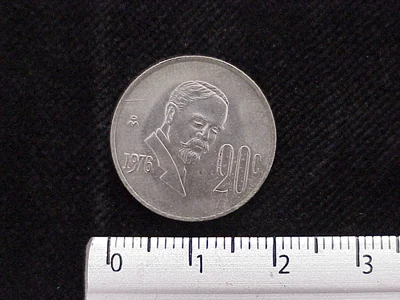
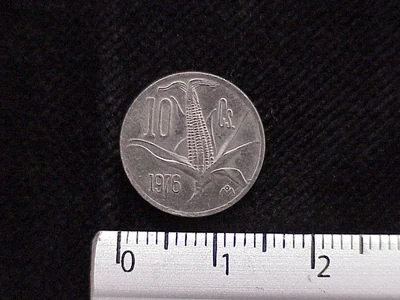
Other denominations from 1976
Centavos Mexicanos · Cuproníquel
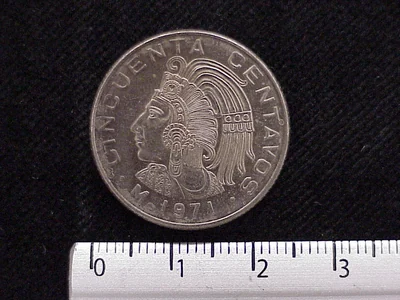
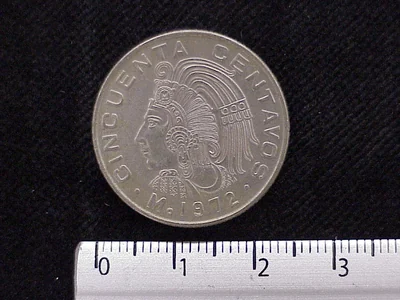
Same denomination, other years
50 centavos Cuproníquel · Centavos Mexicanos
Frequently asked questions
How much is a 1976 Mexican 50 Centavos worth?
It depends entirely on condition, because the coin is cupronickel with no silver and no melt value. Worn, circulated examples are worth only a few cents. Uncirculated coins in top condition typically sell for 1 to 5 dollars, and certified high grades can reach 10 to 20 dollars from the right collector.
Is the 1976 50 Centavos rare?
No. The 1976 mintage was 37,480,000 coins according to Numista, one of the highest in the series. It is one of the most common Mexican coins of its era and easy to find. Only a flawless uncirculated example carries any real premium.
Does the 1976 50 Centavos contain silver?
No. It is struck in cupronickel, roughly 75% copper and 25% nickel. Earlier versions of this same Cuauhtémoc design from the 1940s and 1950s were silver, but by 1976 the silver had been replaced, which is why the 1976 coin has no precious-metal value.
Where can I sell my 1976 Mexican 50 Centavos?
Since it is a common coin, your best options are a local coin shop for a quick appraisal or bulk sale, or an online marketplace like eBay if you have a high-grade example. You can find Mexican coin dealers in the Pesoteca shop directory at /tiendas. Expect condition, not age, to drive the price.
Conversation
0 comments
Sources
- Ejemplar de la Coleccion Numismatica Banco de Mexico . inv. 11935
- Ejemplar de la Coleccion Numismatica Banco de Mexico . inv. 11936
- Ejemplar de la Coleccion Numismatica Banco de Mexico . inv. 11937
- Ejemplar de la Coleccion Numismatica Banco de Mexico . inv. 11938
- Ejemplar de la Coleccion Numismatica Banco de Mexico . inv. 11939
Images for informational and educational purposes, attributed to their original source. Reference values; the real price depends on the grade, the specific variant and demand.
Loading comments…