
5 Pesos Pedro Moreno 2009 (Bicentenario): Value & Prices
The 5 Pesos Pedro Moreno 2009 : Value & Prices is worth between $40 and $100 MXN depending on its grade of preservation.
Prices updated: August 2026
Bicentennial of Independence. Insurgent landowner, killed at Fuerte del Sombrero.
Bicentennial of Independence. Insurgent landowner, killed at Fuerte del Sombrero.
The 5 Pesos Pedro Moreno 2009 : Value & Prices is worth between $40 and $100 MXN depending on its grade of preservation.
Prices updated: August 2026
How much is the 5 Pesos Pedro Moreno 2009 (Bicentenario): Value & Prices worth?
The estimated value of the 5 Pesos Pedro Moreno 2009 (Bicentenario): Value & Prices ranges from $40 (circulated, XF) up to $100 (official blister pack), with $78 as a reference for an uncirculated (UNC) piece. The estimate is based on the official mintage and the historical behavior of the family.
The real price depends on four factors: the grade of preservation (a circulated piece is worth the low end of the range; an uncirculated one, or one still in its official blister pack, the high end), the finish (satin vs mirror/proof), the rarity within the series based on the mintage, and the metal spot price on the day of the deal when the piece is silver or gold. Check the value-by-grade table above and compare with equivalent pieces before buying or selling.
Where to buy or sell this coin?
Browse the national directory of numismatic shops or the community forum to trade directly with other collectors.
Description
If you inherited or found a Mexican 5 peso coin with "Pedro Moreno" and the year 2009, here's the honest answer: the ordinary circulated version is worth around 25 to 50 cents USD, barely above face value. The one that carries real money is the silver proof, sealed in a Banxico case. In 2026, that's the split you need to understand before you sell.
This coin is a bimetallic 5 peso commemorative struck by Banco de México (Banxico, the central bank) in 2009. It's part of a large series marking the Bicentennial of Mexican Independence. Pedro Moreno was an insurgent landowner who died defending the Fuerte del Sombrero. Mexico issued dozens of these 5 peso designs honoring different independence figures, and most of them entered normal circulation. That's the key to their value.
Two very different coins, two very different values
There are two versions of the Pedro Moreno 5 peso, and telling them apart is the whole ballgame.
1. The circulating version (the common one). This is the coin you'll actually find in an old drawer, a jar, or leftover from a trip. The ring is aluminum-bronze and the center is a plain metal core, not silver. It saw regular use. In circulated condition it's worth close to face value, roughly 25 to 50 cents USD. A crisp, uncirculated example from a roll might bring 2 to 5 dollars to a collector filling a set, and no more. There were roughly 30 different designs in this circulating Bicentennial series, so completing the whole set is a popular, affordable hobby, which keeps single-coin prices low.
2. The silver proof version (the valuable one). Banxico also struck a proof edition where the center core is .925 sterling silver and the coin comes sealed in an official presentation case. This one was sold to collectors in limited numbers, not spent as money. It's the version that carries genuine value, typically in the range of 20 to 60 dollars USD depending on the specific piece and whether it's still in its original Banxico capsule and box. Proofs sold loose, out of the case, lose a chunk of that premium.
If your coin came out of pocket change or a general coin jar, it is almost certainly the common circulating type. The silver proof came in a case and was bought deliberately.
Specifications
| Feature | Detail |
|---|---|
| Denomination | 5 pesos |
| Year | 2009 |
| Issuer | Banco de México (Banxico) |
| Weight | 9.76 g |
| Diameter | 30.52 mm |
| Edge | Plain (smooth) |
| Composition | Aluminum-bronze ring; center core plain metal (circulating) or .925 silver (proof) |
| Finish | Proof (encapsulated) and regular circulation |
The myth: "it's a Bicentennial coin, so it must be rare"
A commemorative label does not make a coin rare. Banxico produced these 5 peso pieces in large quantities specifically so people would find them in circulation. Age and a special design are not the same thing as scarcity. What actually drives value here is composition (silver vs. plain metal), whether it's a proof in its original case, and grade. A worn circulating Pedro Moreno is a nice keepsake, not a payday.
The same logic dismantles most "my old Mexican coin is worth thousands" claims online. Genuine four-figure Mexican coins exist, but they are old silver and gold pieces or true low-mintage rarities, not modern circulating commemoratives from 2009.
Mint errors: real ones exist, most "errors" don't
Genuine striking errors (off-center strikes, die rotation, double strikes, and recognized die varieties) can multiply the value of a modern coin if they're authentic and verifiable. The catch: the overwhelming majority of "errors" people post online are post-mint damage, meaning dings, scratches, and corrosion that happened after the coin left the mint. That kind of damage lowers value, it doesn't raise it. If you think you have a true error, get a second opinion before you get excited.
How to check what yours is worth
- Identify the version first. Case and certificate? Likely the silver proof. Loose coin from change? Almost certainly the common circulating type.
- Weigh and measure it. Use a jewelry scale and a caliper. It should weigh 9.76 g and measure 30.52 mm. Fakes usually miss the weight or diameter, or show flat, mushy relief.
- Grade it honestly. Circulated (worn) coins sit at the bottom of the range. Sharp, lustrous, uncirculated coins bring the premium. For a coin in this price tier, professional grading (NGC or PCGS) usually costs more than the coin is worth unless it's a top-grade proof.
- Compare recent sales. Check completed listings and dealer prices rather than asking prices, which are often wishful.
For context on other pieces in the same program, see our guides to the Bicentennial 5 peso series and how silver content sets a price floor. If you're new to Mexican coinage, our beginner's overview covers the terms.
Where to sell it
If it's the common circulating version, honestly, it's worth keeping as a memento more than shipping off for a dollar. If it's the silver proof in its case, treat it like a real collectible: photograph the front, back, and edge, confirm the case and certificate, and take it to a verified dealer for an in-person valuation, or list it among collectors. Avoid dumping it on social media at the first offer.
Got a Pedro Moreno 2009 and not sure which version you're holding? Post clear photos of both sides (and the case if you have one) in the Pesoteca forum and the community will tell you whether you've got the common coin or the silver proof.
Historical context
Pedro Moreno Gonzalez: landowner and insurgent leader of the Fort of El Sombrero
Pedro Moreno Gonzalez (1775-1817) was a landowner and insurgent leader of the Fort of El Sombrero during the War of Independence.
Moreno left his estate in 1814 to take up arms and fortified the hill of El Sombrero, in the highlands of Jalisco, as an insurgent stronghold. There he joined the expedition of Francisco Xavier Mina in 1817. He died in combat on October 27, 1817 defending the Venadito ranch, where Mina was also captured.
Context of the year. The piece is from 2009 and gives visibility to the regional leaders who sustained the struggle into its final stage. In 1817, with the insurgency nearly extinguished, the Fort of El Sombrero was a key point of resistance.
The reverse of the coin. The reverse of this 5-peso piece shows the portrait of Pedro Moreno Gonzalez, his engraved signature and the year 2009, in accordance with the official Bank of Mexico catalog for the commemorative series of the Bicentennial of the start of Independence (1810-2010).
Legacy. The city of Lagos de Moreno, in Jalisco, adopted his name in 1829. His remains rest in the Rotunda of Illustrious Jaliscienses in Guadalajara.
This piece belongs to the era
Nuevos Pesos y actualidad →Explore all the Mexican coins of this era, their historical context and how they connect to the monetary system of the period.
Value range of this piece
Market estimate: $40 - $100 MXN depending on the grade of preservation (typical range between a circulated and an uncirculated piece).
See the full breakdown by grade (VG, F, VF, EF, AU, MS-60, MS-63, MS-65) for the whole series →
Other denominations from 2009
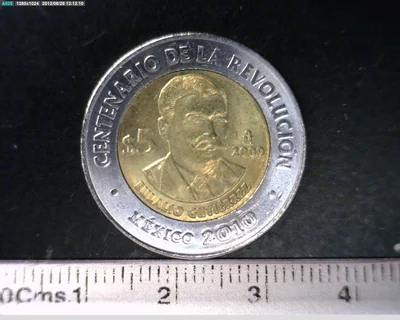
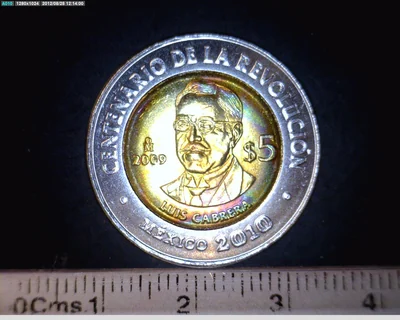
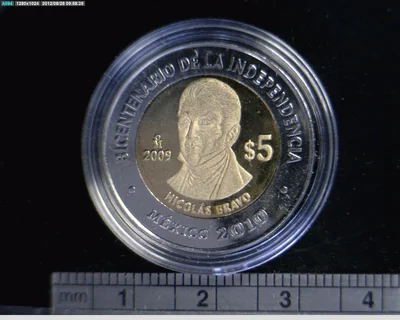
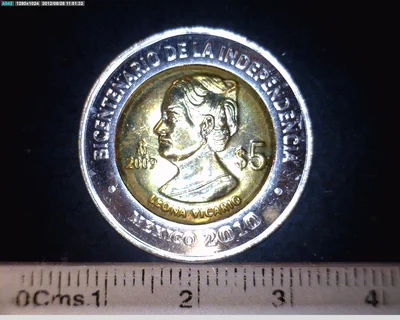
5 Pesos Bicentenario Independencia y Centenario Revolución · Bimetálica
Same denomination, other years
5 pesos Bimetálica · 5 Pesos Bicentenario Independencia y Centenario Revolución
5 Pesos Bicentenario de la Independencia de México: Carlos María de Bustamante
2008
5 Pesos Bicentenario de la Independencia de México: Miguel Ramos Arizpe
2008
5 Pesos Bicentenario de la Independencia de México: Francisco Primo de Verdad y Ramos, sin puntos
2008
5 Pesos Bicentenario de la Independencia de México: Miguel Hidalgo y Costilla
2010
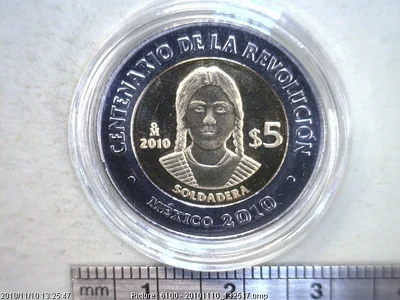
5 Pesos Centenario de la Revolución Mexicana: Soldadera
2010
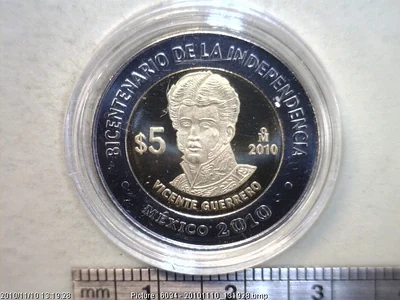
5 Pesos Bicentenario de la Independencia de México: Vicente Guerrero
2010
Official sources
Frequently asked questions
How much is the 2009 Pedro Moreno 5 peso coin worth?
It depends on the version. The ordinary circulating coin is worth about 25 to 50 cents USD in worn condition, or 2 to 5 dollars uncirculated. The .925 silver proof in its original Banxico case is worth roughly 20 to 60 dollars USD depending on condition and packaging.
Is the Pedro Moreno 2009 5 peso coin rare?
The circulating version is not rare. Banxico issued it in large numbers as part of a roughly 30-coin Bicentennial series meant for everyday use, so single coins stay near face value. Only the limited silver proof edition carries real collector value.
Where can I sell my Pedro Moreno 5 peso coin?
For the silver proof, use a verified coin dealer who will appraise it on the spot, or sell to collectors through a numismatic forum. Photograph the front, back, and edge (plus the case if you have one) and check the value range above first. If it's the common circulating coin, it's usually worth more as a keepsake than as a sale.
How can I tell if my Pedro Moreno 5 peso is genuine?
Weigh and measure it: it should be 9.76 grams and 30.52 mm across, with a plain (smooth) edge. Counterfeits typically have the wrong weight or diameter, flat relief, or off colors between the ring and center. The silver proof should come sealed in an official Banxico capsule and case.
Conversation
0 comments
Loading comments…