
5 Centavos 1973 (Josefa Ortiz de Domínguez): Value & Facts
Prices updated: August 2026
Old peso era · Brass
Old peso era · Brass
Design
Banxico
Reverse
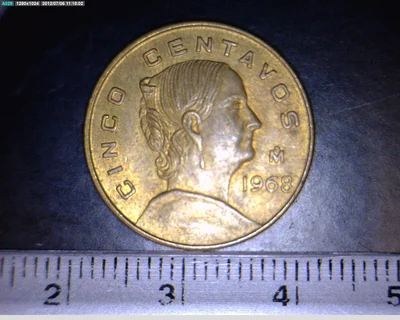
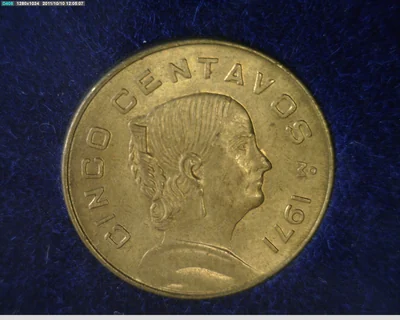
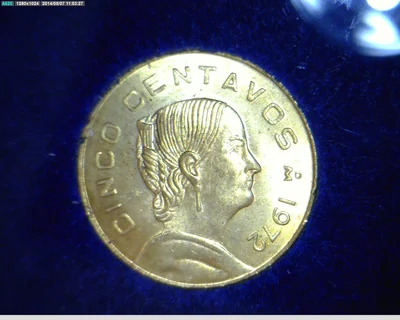
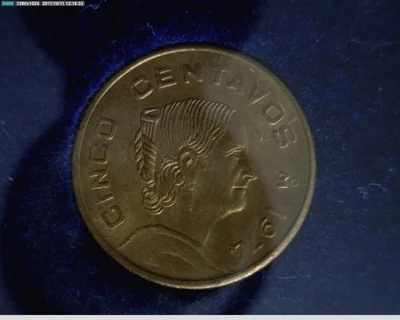
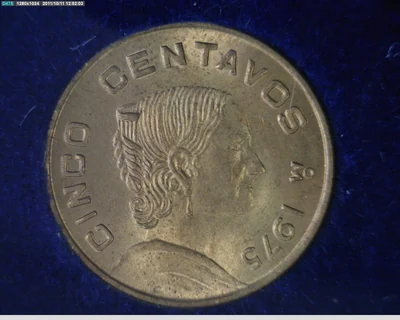
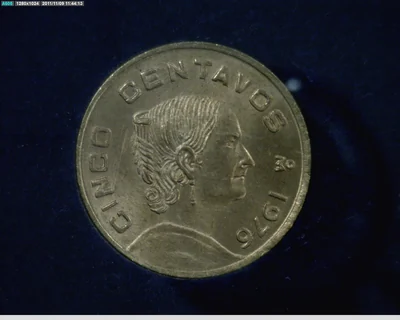
Bust of Josefa Ortiz de Domínguez (La Corregidora) facing right, with the legend "CINCO CENTAVOS", the year 1973, and the Mo mint mark (Mexican Mint). Catalog KM 427.
Obverse
Mexican National Coat of Arms with the inscription "ESTADOS UNIDOS MEXICANOS".
How much is the 5 Centavos 1973 (Josefa Ortiz de Domínguez): Value & Facts worth?
The market value of the 5 Centavos 1973 (Josefa Ortiz de Domínguez): Value & Facts is not yet documented with enough data to give a firm range. Weigh and measure your piece, compare it against the specifications, and check the forum for a second opinion.
The real price depends on four factors: the grade of preservation (a circulated piece is worth the low end of the range; an uncirculated one, or one still in its official blister pack, the high end), the finish (satin vs mirror/proof), the rarity within the series based on the mintage, and the metal spot price on the day of the deal when the piece is silver or gold. Check the value-by-grade table above and compare with equivalent pieces before buying or selling.
Where to buy or sell this coin?
Browse the national directory of numismatic shops or the community forum to trade directly with other collectors.
Description
If you inherited or found a 1973 Mexican 5 centavos coin with a woman's profile on the back, here's the honest answer: in circulated condition it's worth a few dollars at most, often less. Nearly 595 million were minted in 1973 alone, making it one of the most common Mexican coins of its era. Real value only appears in top uncirculated grade.
What is this coin?
The 1973 5 centavos is a small brass coin struck by the Casa de Moneda de México (the Mexican Mint). The reverse shows Josefa Ortiz de Domínguez, known as La Corregidora, a heroine of Mexico's War of Independence, in profile facing right, with the words CINCO CENTAVOS (five centavos), the year, and the mint mark Mo (for México City). The obverse carries the Mexican national coat of arms: an eagle devouring a serpent, with the legend ESTADOS UNIDOS MEXICANOS.
It catalogs as KM# 427. It is part of the small 5 centavos series that circulated from 1970 to 1976.
What is it worth in USD?
Be realistic. A worn, circulated example is worth only its symbolic value, a fraction of a dollar to a couple of dollars. Online listings for ordinary pieces run roughly the equivalent of 3 to 15 USD depending on condition, and only a genuinely uncirculated coin with original luster justifies paying more.
This is not a rare coin, and no amount of age changes that. It contains no silver and no gold, so there is no metal value to fall back on.
| Condition | Approximate value (USD) |
|---|---|
| Circulated (worn) | Under 1 to 2 |
| Nice circulated | 2 to 5 |
| Uncirculated with original luster | 10 to 25 |
| Certified high grade (MS64+) | Higher, but demand is thin |
These are market ranges, not confirmed record sales. Because supply is enormous, buyers set the ceiling low.
Specifications
- Metal: brass (an alloy of about 85% copper and 15% zinc). No precious metal.
- Weight: 2.75 g
- Diameter: 18 mm
- Edge: plain (smooth)
- Mint: Casa de Moneda de México, mint mark Mo
- Catalog: KM# 427
- Mintage (1973): 595,070,000 pieces, one of the highest years of the series
Because it's brass, a coin that sticks to a magnet or weighs far off from 2.75 g is a red flag for authenticity.
The "worth a million" myth
You will find online listings claiming this coin, or a supposed error version (off-center strikes, double edges), is worth a million pesos or more. Those are asking prices, not sales. Anyone can list a common coin at a fantasy number. A real, certified mint error can add value, but the vast majority of these posts are inflated wishful thinking.
The blunt truth: with nearly 600 million struck in a single year, the ordinary 1973 5 centavos will never be a fortune. If you think you have a genuine error, get it examined by a specialist before believing a listing.
How to tell if yours is genuine
- Check the weight (2.75 g) and diameter (18 mm).
- Confirm the plain edge.
- Confirm the national coat of arms on the obverse and the profile of Josefa Ortiz de Domínguez with the Mo mint mark on the reverse.
- Test with a magnet: brass is not magnetic, so a magnetic coin is suspect.
How to check what yours is worth
Condition drives everything on a common coin like this. Brass tones and spots easily, so pieces with original luster and no oxidation stand out and command the small premium that exists. If yours looks pristine, it may be worth having graded.
To find a real buyer, you can browse the Pesoteca store directory at /tiendas for trusted dealers. Selling directly to a dealer or collector usually gets you a more honest price than chasing the inflated listings on marketplace apps.
Have a full box of old Mexican coins to go through? Ask the community in the Pesoteca forum which years and denominations are worth setting aside.
Historical context
The circulating cent coins in Mexico during the second half of the 20th century were struck in alloys that changed with the cost of the metals: copper, bronze, and brass for low denominations (1¢, 5¢, 20¢); cupronickel for intermediate denominations (25¢, 50¢, late 10¢); and .720 silver for some 25¢ and 50¢ pieces in the 1950s. Each change of alloy created a distinct variant of the same face value. 1973 corresponds to the period when this variant was in circulation, before the transition to Nuevos Pesos in 1992. The Mexican Mint kept the basic design of the National Coat of Arms on the obverse and the numeric value on the reverse throughout this era.
This piece belongs to the era
México Moderno (pre-1992) →Explore all the Mexican coins of this era, their historical context and how they connect to the monetary system of the period.
Value range of this piece
Value range without enough data for this piece.
See the full breakdown by grade (VG, F, VF, EF, AU, MS-60, MS-63, MS-65) for the whole series →
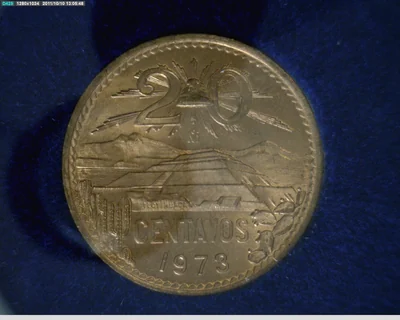
Other denominations from 1973
Centavos Mexicanos · Bronce
Same denomination, other years
5 centavos Bronce · Centavos Mexicanos
Frequently asked questions
How much is a 1973 Mexican 5 centavos coin worth?
In circulated condition its value is symbolic, under 1 to a few dollars. Ordinary examples list for roughly 3 to 15 USD depending on condition. Only a truly uncirculated piece with original luster brings more. It's a very common coin, so don't expect a high figure for a used one.
Is the 1973 5 centavos coin rare?
No. The 1973 mintage was 595,070,000 pieces, one of the highest years of the series. It is among the most common Mexican coins of that period, so its real rarity is low.
Where can I sell a 1973 5 centavos coin?
Browse the Pesoteca store directory at /tiendas to find trusted coin dealers. Selling directly to a dealer or collector usually gives you a more realistic price than chasing the inflated asking prices on marketplace apps.
How do I know if my 1973 5 centavos coin is genuine?
Check the weight (2.75 g) and diameter (18 mm), the plain edge, the national coat of arms on the obverse, and the profile of Josefa Ortiz de Domínguez with the Mo mint mark on the reverse. Since it's brass, a magnetic coin or one with a very different weight is suspect. When in doubt, consult an expert.
Conversation
0 comments
Sources
Images for informational and educational purposes, attributed to their original source. Reference values; the real price depends on the grade, the specific variant and demand.
Loading comments…