
5 Centavos 1965 (Josefa Ortiz): Value & How to Sell
Prices updated: August 2026
Old peso era · Brass
Old peso era · Brass
Design
Banxico
Reverse
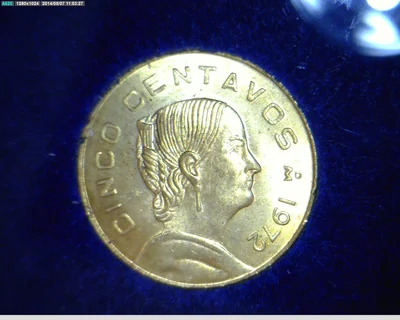
Bust of Josefa Ortiz de Domínguez facing right, with the legend "CINCO CENTAVOS", the year 1965 and the mint mark Mo (Mexican Mint) below the portrait. Plain border.
Obverse
Mexican National Coat of Arms with the inscription "ESTADOS UNIDOS MEXICANOS".
How much is the 5 Centavos 1965 (Josefa Ortiz): Value & How to Sell worth?
The market value of the 5 Centavos 1965 (Josefa Ortiz): Value & How to Sell is not yet documented with enough data to give a firm range. Weigh and measure your piece, compare it against the specifications, and check the forum for a second opinion.
The real price depends on four factors: the grade of preservation (a circulated piece is worth the low end of the range; an uncirculated one, or one still in its official blister pack, the high end), the finish (satin vs mirror/proof), the rarity within the series based on the mintage, and the metal spot price on the day of the deal when the piece is silver or gold. Check the value-by-grade table above and compare with equivalent pieces before buying or selling.
Where to buy or sell this coin?
Browse the national directory of numismatic shops or the community forum to trade directly with other collectors.
Description
If you found a 1965 Mexican 5 centavos coin with a woman's portrait, here is the honest answer: circulated, it is worth around 1 USD, sometimes a bit more from an optimistic seller. Mexico struck 155,720,000 of them, one of the highest mintages in the series, so it is common, not rare. Only a certified uncirculated example or a verified error variety brings real money.
Those viral headlines claiming this coin sells for "a million pesos" are clickbait. They do not apply to the ordinary coin sitting in your drawer. Mexico's central bank (Banco de México) has publicly stated it does not buy or sell coins from the public.
What this coin actually is
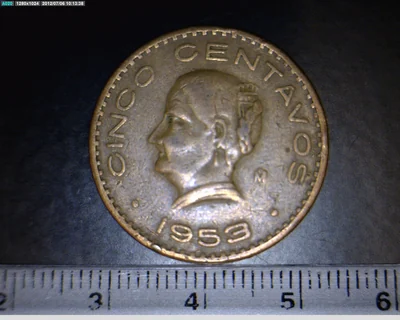
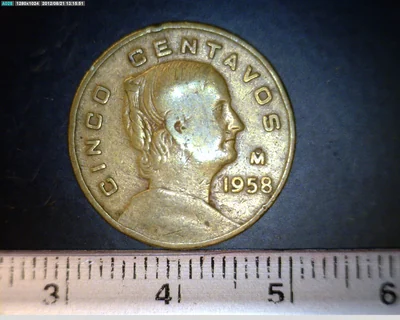
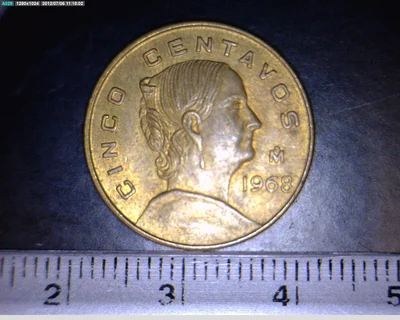
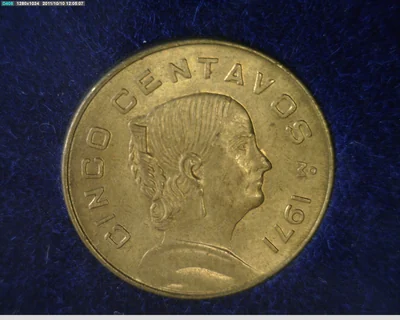
This is a 5 centavos piece, five cents of the old Mexican peso. The portrait facing right is Josefa Ortiz de Domínguez, known as "La Corregidora," a heroine of Mexican independence. Her bust appears across the entire 5 centavos series struck between 1954 and 1969, with the legend "CINCO CENTAVOS," the year, and the mint mark "Mo" for the Mexico City Mint (Casa de Moneda de México). The other side shows the Mexican coat of arms, an eagle with a serpent, and "ESTADOS UNIDOS MEXICANOS."
Despite older catalog listings calling it "bronce" (bronze), the coin is brass (latón): an alloy of 85% copper and 15% zinc. There is no silver and no gold, so it has no melt value. Any value it carries is purely numismatic and depends on condition.
Specifications
| Feature | Detail |
|---|---|
| Denomination | 5 centavos |
| Year | 1965 |
| Metal | Brass (85% copper, 15% zinc) |
| Weight | 4 grams |
| Diameter | about 20.5 mm |
| Edge | Plain (smooth) |
| Mint | Mexico City (Mo) |
| Mintage | 155,720,000 |
| Portrait | Josefa Ortiz de Domínguez |
This is the "medium" version of the Josefa series, larger than the small brass 5 centavos struck from 1970 onward, which weighs 2.75 grams and measures 18 mm. If your coin matches the 4 gram, 20.5 mm figures, you have the 1954 to 1969 type.
What it is worth in 2026
In circulated condition, this is an inexpensive coin. Reference catalogs like Numista place it around 5 to 6 pesos even in decent grade, which is roughly 30 cents to 1 USD. On Mexican marketplaces such as Mercado Libre, you will see listings from a few pesos up to a couple hundred pesos, but those higher numbers reflect seller optimism, not real sales.
The coin only climbs in value when it is uncirculated with full luster and sharp detail on Josefa's face, ideally graded and certified. A brass coin like this picks up wear and spotting quickly, so a bright, crisp example is genuinely harder to find than the worn ones. That said, even a nice uncirculated piece is a modest coin, not a windfall.
The "worth a fortune" myth
Every season, articles claim old Mexican coins like this sell for enormous sums. They hang the story on a supposed mint error or on a certified uncirculated example. The ordinary coin you pulled from a drawer does not come anywhere near those figures. A verified minting error, authenticated by a professional, is the only realistic path to a surprise, and those are rare and must be confirmed, not assumed.
How to tell if yours is genuine
Check the physical specs first, because measurements outside the range are the first sign something is off:
- Weight: 4 grams
- Diameter: about 20.5 mm
- Edge: plain and smooth
- Color: brass, a coppery yellow tone
- Reverse: Josefa's bust facing right, "CINCO CENTAVOS," the year, and mint mark "Mo"
- Obverse: the Mexican coat of arms with "ESTADOS UNIDOS MEXICANOS"
If all of that lines up, you have an authentic, common 1965 coin.
Where to sell or buy it
Because the coin is so common, the most practical route is a coin shop or numismatic dealer who will take it as part of a lot, or who can help you complete a date run of the series. If you have a whole box of old Mexican coins, a dealer is your fastest path. For private sales, Mexican platforms like Mercado Libre hold most of the supply, though listed prices tend to run high compared to what coins actually sell for.
If you are trying to build a full set, this is one of the best entry points into 20th century Mexican coinage: cheap, historic, and easy to find in good shape.
Historical context
Centavo coins circulating in Mexico during the second half of the 20th century were struck in alloys that changed according to the cost of metals: copper, bronze and brass in the low denominations (1¢, 5¢, 20¢); cupronickel for the intermediate denominations (25¢, 50¢, late 10¢); and .720 silver for some 25¢ and 50¢ pieces in the 1950s. Each change of alloy generated a distinct variant of the same face value. 1965 corresponds to the period when this variant was in circulation, before the transition to Nuevos Pesos in 1992. The Mexican Mint kept the basic design of the National Coat of Arms on the obverse and the numeric value on the reverse throughout this era.
This piece belongs to the era
México Moderno (pre-1992) →Explore all the Mexican coins of this era, their historical context and how they connect to the monetary system of the period.
Value range of this piece
Value range without enough data for this piece.
See the full breakdown by grade (VG, F, VF, EF, AU, MS-60, MS-63, MS-65) for the whole series →
Same denomination, other years
5 centavos Bronce · Centavos Mexicanos
Frequently asked questions
How much is the 1965 Mexican 5 centavos coin worth?
Circulated, it is worth roughly 30 cents to 1 USD. Catalogs like Numista list it around 5 to 6 pesos even in decent grade. It only brings more as a certified uncirculated example. The "million peso" headlines are clickbait and do not apply to the common coin.
Is the 1965 5 centavos coin rare?
No. Mexico struck 155,720,000 of them in 1965, one of the highest mintages in the series. Circulated examples are found by the dozen. Real scarcity applies only to uncirculated pieces or verified error varieties.
Is this coin made of silver?
No. It is brass, an alloy of 85% copper and 15% zinc. There is no silver and no gold, so it has no melt value. Any worth is purely numismatic and depends on condition.
How can I tell if my 1965 coin is genuine?
Check the weight (4 grams), diameter (about 20.5 mm), and plain edge, with a coppery yellow brass tone. The reverse should show Josefa Ortiz de Domínguez facing right, "CINCO CENTAVOS," the year, and the mint mark "Mo." The obverse carries the coat of arms and "ESTADOS UNIDOS MEXICANOS." Measurements outside these ranges are the first red flag.
Conversation
0 comments
Sources
Images for informational and educational purposes, attributed to their original source. Reference values; the real price depends on the grade, the specific variant and demand.
Loading comments…