
100 Pesos Tamaulipas Silver Coin (2007): Value & Facts
Prices updated: August 2026
Union of the States: Tamaulipas, second stage.
Union of the States: Tamaulipas, second stage.
Design
Banxico
Obverse
Union of the States: Tamaulipas, second stage.
How much is the 100 Pesos Tamaulipas Silver Coin (2007): Value & Facts worth?
The market value of the 100 Pesos Tamaulipas Silver Coin (2007): Value & Facts is not yet documented with enough data to give a firm range. Weigh and measure your piece, compare it against the specifications, and check the forum for a second opinion.
The real price depends on four factors: the grade of preservation (a circulated piece is worth the low end of the range; an uncirculated one, or one still in its official blister pack, the high end), the finish (satin vs mirror/proof), the rarity within the series based on the mintage, and the metal spot price on the day of the deal when the piece is silver or gold. Check the value-by-grade table above and compare with equivalent pieces before buying or selling.
Where to buy or sell this coin?
Browse the national directory of numismatic shops or the community forum to trade directly with other collectors.
States of the Federation
The 64 pieces of the 180th Anniversary series
This coin is part of the series that dedicated one piece to each Mexican state. Two phases: Heraldic (2003) and Cultural (2005-2007).
Description
If you inherited a large, heavy Mexican coin marked "100 Pesos" with an eagle on one side and a state emblem on the other, you likely have a 100 Pesos Tamaulipas from 2007. The honest answer up front: most examples trade for roughly 25 to 60 USD, driven mostly by the silver inside, not by extreme rarity.
This is one of the more interesting modern Mexican coins because it is not just base metal. The center ring is actual silver, which gives the coin a hard price floor no matter what condition it is in.
What this coin actually is
The full name is the 100 Pesos "Unión de los Estados en una Federación" (Union of the States in a Federation), Tamaulipas issue, second stage. Tamaulipas is one of Mexico's 31 states, and this coin belongs to a long commemorative series that honored each state on its own coin.
Mexico ran two versions of this state series. The important one for value is the silver version, and the Tamaulipas piece is part of it.
Key specifications:
- Denomination: 100 Pesos
- Year: 2007 (single year of issue for this design)
- Weight: 33.94 grams
- Diameter: 39 millimeters
- Composition: bimetallic, with a silver center ring
- Edge: discontinuous reeded (interrupted milling)
- Obverse theme: Tamaulipas state arms, second stage of the series
The silver content is what matters most to a US seller. The center core is .999 fine silver, and this is the coin that gives the series a bullion floor. Because of that silver, even a worn or scratched example is worth real money for the metal alone, unlike most modern circulation coins.
How much is it worth in USD
Value comes down to condition and whether you still have the original Banco de México packaging.
| Condition | Typical value (USD) | Notes |
|---|---|---|
| Circulated / handled | 25 to 35 | Silver floor holds it up |
| Uncirculated (no packaging) | 35 to 50 | Clean surfaces, full luster |
| Original Banxico blister/set | 45 to 60 | Sealed packaging adds a premium |
| Certified high grade (NGC/PCGS MS66+) | 60 to 100+ | Top graded examples pull the highest prices |
These are collector market ranges. The exact number moves with the silver spot price, since the coin carries a meaningful silver weight in its core. When silver rises, the floor on this coin rises with it.
Official mintage figures for this specific issue are not clearly published, which tells you it was struck in limited numbers, often for numismatic sets rather than heavy circulation. Low, undocumented mintages support the collector premium, but they have not turned this into a four-figure rarity. Anyone telling you a common 2007 Tamaulipas 100 Pesos is worth thousands is inflating it.
Is it rare?
Moderately collectible, not genuinely rare. The whole state series is popular with collectors who try to complete all 31 pieces, and that steady demand keeps prices firm. But it is not a key date, and it does not break records. Its real strength is the combination of steady collector interest plus the silver floor underneath it.
How to tell if yours is genuine
Start with the physical measurements. A real one weighs 33.94 grams and measures 39 millimeters across. Put it on a jewelry scale and a caliper. If your coin is lighter or a different diameter, be suspicious.
Other checks:
- Compare the relief against official Banco de México images. Counterfeits tend to look flat and mushy in the fine detail.
- Examine the two-tone metal. The silver center and the outer ring should be cleanly separated, not painted or plated.
- Check the edge. It should show the discontinuous reeding described above.
For a coin in this price range, professional certification from NGC or PCGS is the definitive answer. It confirms authenticity and grade in one step, and a certified coin sells faster and for more. For a single common example, careful measurement plus good photos is usually enough.
Where to sell it
Best options for a US or international seller:
- A verified numismatic dealer. Use the Pesoteca dealer directory to find one that appraises on the spot without a middleman markup.
- The Pesoteca buy-and-sell forum, where you deal directly with collectors who actually want the state series.
- Online marketplaces, but with caution. eBay and similar sites can bring good prices, but they also carry the most counterfeits, so buyers will scrutinize your photos.
Before listing, photograph the obverse, reverse, and edge, and weigh the coin so you can quote 33.94 grams. Avoid dumping it to the first Facebook offer. Because of the silver content, never sell it for less than its metal value.
Not sure which version of the state series you actually have, the silver one or the base-metal one? Post clear photos and the weight in the Pesoteca forum and the community will identify it for you.
Historical context
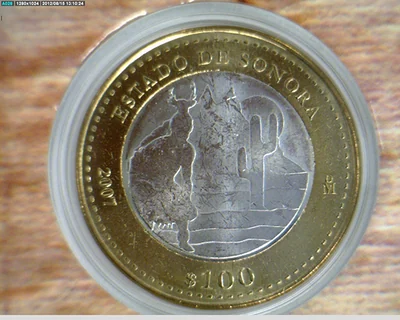
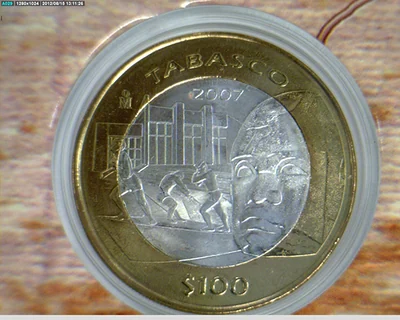
The entry dedicated to Tamaulipas came out in 2007 as part of the third and final wave of the Cultural phase, together with Sonora and Tabasco. Banxico called this second stage Emblematic Motifs and replaced the state coat of arms with a specific cultural symbol.
The reverse of the piece shows the Tamaulipas fisherman with a cast net facing the Laguna Madre, a lagoon-estuary system that is the second largest coastal lagoon on the American continent. The Laguna Madre runs 200 kilometers parallel to the Gulf of Mexico in the north of the state. Its hypersalinity makes it a refuge for migratory birds such as the northern pintail, the white-fronted goose, and the white pelican, and a fishing zone for shrimp, blue crab, and oyster. It was declared a Protected Natural Area in 2005 for its ecological and economic value to the communities of La Pesca and Matamoros.
State context: Tamaulipas was established as a state on February 7, 1824. Its capital, Ciudad Victoria, was founded by Jose de Escandon in 1750 as part of the colonization of Nuevo Santander. The state borders Texas for more than 370 kilometers and its main ports are Tampico and Altamira.
In the Mexican numismatic market the Cultural phase circulated less than the Escudo 2003 and today is usually found in higher grades because it reached the streets late. The official Banxico mintages for this piece are not always published in the Economic Information System, but the figure reported for circulation tends to be around 250,000 pieces per state in the Cultural phase. Always confirm against the catalog of the complete 100 pesos States series before closing a large purchase.
The sister Escudo 2003 of Tamaulipas is part of the first phase of the series, with the official state coat of arms on the reverse. Hunting both pieces completes the set dedicated to Tamaulipas.
This piece belongs to the era
Nuevos Pesos y actualidad →Explore all the Mexican coins of this era, their historical context and how they connect to the monetary system of the period.
Go deeper on this coin
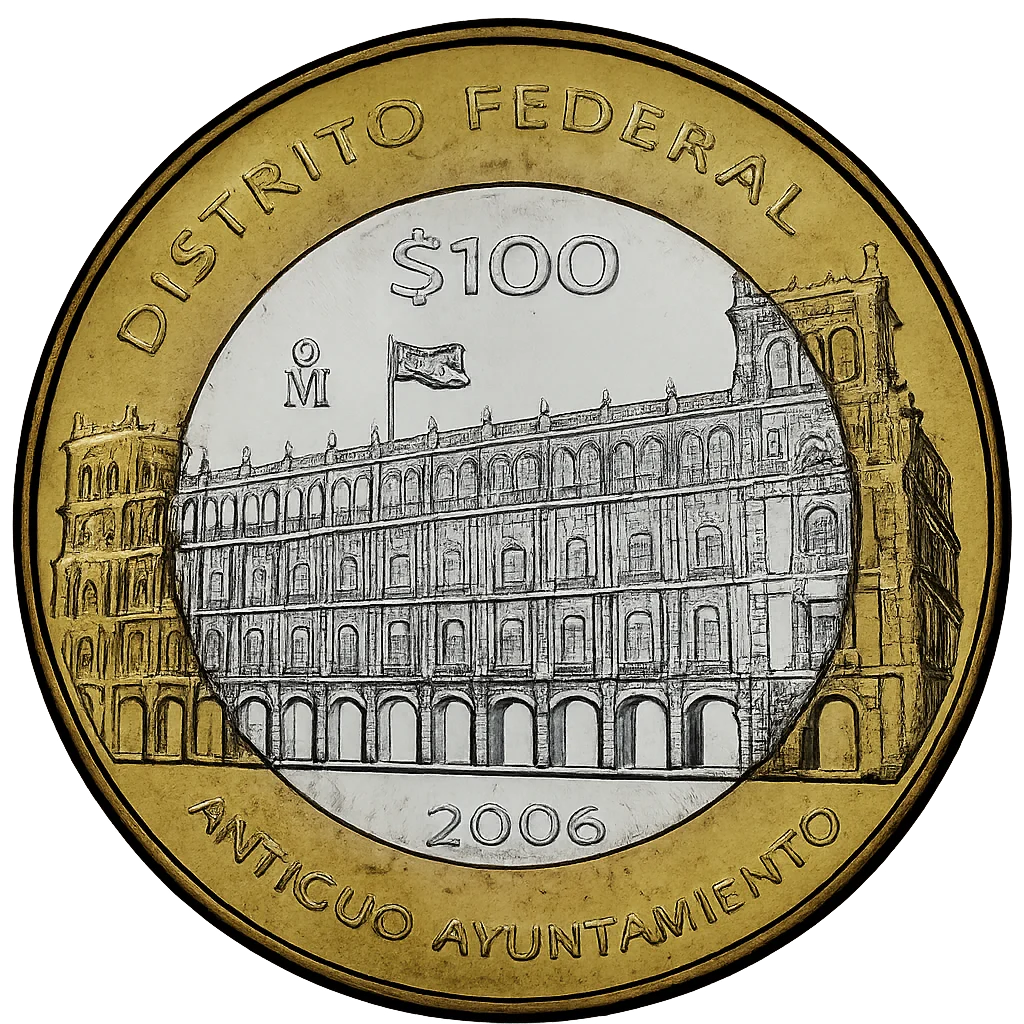
100 pesos de los Estados: la moneda de plata dedicada a tu estado (guía completa Escudo y Cultural)
Banxico acuñó una moneda de plata para cada uno de los 32 estados de México, y luego lo hizo dos veces. Aquí está la guía completa de las 100 pesos de los Estados: qué son, la diferencia entre la versión Escudo y la Cultural, por qué el centro de plata importa, cómo armar la colección y la lista de las 64 fichas para que caces la de tu tierra.
Read the full article →Value range of this piece
Value range without enough data for this piece.
See the full breakdown by grade (VG, F, VF, EF, AU, MS-60, MS-63, MS-65) for the whole series →
Other denominations from 2007
180 Aniversario de la Unión de los Estados en una Federación · Bimetálica
Same denomination, other years
100 pesos Bimetálica · 180 Aniversario de la Unión de los Estados en una Federación
Official sources
Frequently asked questions
How much is the 2007 100 Pesos Tamaulipas coin worth?
Most examples sell for 25 to 60 USD, driven largely by the silver center. Circulated pieces run about 25 to 35 USD, uncirculated examples 35 to 50 USD, and coins still in original Banco de México packaging or certified in high grade can reach 60 to 100 USD or more. The exact figure moves with the silver spot price.
Is the 2007 100 Pesos Tamaulipas coin rare?
It is moderately collectible rather than truly rare. Official mintage for this specific issue is not clearly documented, which suggests limited production, and collectors who want the full 31-state series keep demand steady. But it is not a key date, so it commands a modest premium, not a fortune.
How can I tell if my 100 Pesos Tamaulipas is genuine?
Weigh and measure it first: a real one is 33.94 grams and 39 millimeters in diameter. Check that the silver center and outer ring are two distinct metals, not plated or painted, and that the edge shows the discontinuous reeding. Counterfeits usually look flat in the detail. For certainty, submit it to NGC or PCGS for certification.
Where can I sell my 100 Pesos Tamaulipas coin?
A verified numismatic dealer from the Pesoteca directory will appraise it on the spot, or you can sell directly to collectors through the Pesoteca buy-and-sell forum. Online marketplaces work too but carry more counterfeits, so provide clear photos of both sides and the edge plus the weight. Because it contains silver, never sell below its metal value.
Conversation
0 comments
Sources
Images for informational and educational purposes, attributed to their original source. Reference values; the real price depends on the grade, the specific variant and demand.
Loading comments…