
100 Pesos Herencia Numismática IV (Pelucona) 2014
Prices updated: August 2026
Reproduction of the 8 escudos Ferdinand VI pelucona 1748. Matte-brilliant finish.
Reproduction of the 8 escudos Ferdinand VI pelucona 1748. Matte-brilliant finish.
How much is the 100 Pesos Herencia Numismática IV (Pelucona) 2014 worth?
The market value of the 100 Pesos Herencia Numismática IV (Pelucona) 2014 is not yet documented with enough data to give a firm range. Weigh and measure your piece, compare it against the specifications, and check the forum for a second opinion.
The real price depends on four factors: the grade of preservation (a circulated piece is worth the low end of the range; an uncirculated one, or one still in its official blister pack, the high end), the finish (satin vs mirror/proof), the rarity within the series based on the mintage, and the metal spot price on the day of the deal when the piece is silver or gold. Check the value-by-grade table above and compare with equivalent pieces before buying or selling.
Where to buy or sell this coin?
Browse the national directory of numismatic shops or the community forum to trade directly with other collectors.
Description
If you inherited or found a Mexican 100 Pesos coin marked "Herencia Numismática" from 2014 with a striking old-style Spanish shield design, here is the direct answer: it is a modern collector coin, not a circulating peso, and it carries real silver. Depending on condition, most sell in the range of USD 30 to USD 90, with sealed mint-blister examples at the top of that range.
This is not a case of "old coin equals fortune." The 2014 date makes it recent. Its value comes from the silver content and its status as a limited collector issue, not from age or rarity in the classic sense.
What this coin actually is
The 100 Pesos Herencia Numismática IV is part of the Herencia Numismática de México series, a run of collector coins issued by Banco de México (Banxico) that reproduce famous historical Mexican and Spanish colonial pieces.
This particular one, nicknamed the "Pelucona" (a Spanish term for the wigged portrait of the king), reproduces the design of the 8 escudos of Fernando VI dated 1748. The original 8 escudos was a gold colonial coin. This modern version is a tribute reproduction, not the original, and it is worth a small fraction of what a genuine 18th-century 8 escudos would bring at auction.
Specifications (verify yours against these)
| Feature | Detail |
|---|---|
| Face value | 100 Pesos (Mexican) |
| Year | 2014 |
| Weight | 33.96 grams |
| Diameter | 39 mm |
| Composition | Bimetallic (silver center) |
| Edge | Discontinuous reeded |
| Finish | Matte-brilliant (mate-brillo) |
| Series | Herencia Numismática de México IV |
These numbers matter. If your coin's weight or diameter is off, you may be holding a fake or a damaged piece.
What it is worth in 2026
Value tracks condition and whether the coin still sits in its original Banxico blister pack. A loose, handled example is worth less than a sealed one.
| Condition | Approximate value (USD) |
|---|---|
| Circulated / handled | 30 to 45 |
| Uncirculated, loose | 45 to 65 |
| Sealed in original Banxico blister | 65 to 90 |
Because the coin contains silver, it has a floor near its melt value, which moves with the silver market. That means it will almost never be "worth nothing," but it also will not soar the way genuinely scarce classic Mexican coins do. Check the coin grading guide before you assign a value to yours.
The myth to avoid
Because it copies a 1748 Fernando VI 8 escudos, some sellers list this piece as if it were the 18th-century original. It is not. A real Fernando VI 8 escudos in gold can bring several thousand dollars at auction. This 2014 reproduction is a modern Banxico product and trades at the ranges above. If someone offers you a "1748 Pelucona" for a bargain, look at the date on the coin: if it also says 2014 or carries the Herencia Numismática branding, it is the modern issue.
How to tell if yours is genuine
Weigh it on a jewelry scale and measure the diameter with calipers. Genuine examples hit 33.96 grams and 39 mm. Fakes usually miss on weight or diameter, show flat or mushy relief, or have the two metals colored unevenly. The edge should be reeded in a discontinuous pattern. If anything looks off, post clear photos of the front, back, and edge to the Pesoteca forum for a second opinion.
Where to sell it
For the best result, take it to a verified numismatic dealer from the Pesoteca directory, where you can get an on-the-spot appraisal, or list it on the Pesoteca buy-and-sell forum among collectors who understand the series. Photograph the front, back, and edge, and confirm the grade before you agree to a price. Avoid dumping it to the first bidder on a general marketplace, where reproduction collector coins are routinely underpriced.
Have one sitting in a drawer, or unsure whether yours is sealed or loose? Post your photos in the Pesoteca forum and let the community weigh in on grade and value.
Historical context
100 pesos silver Herencia Numismática de México series IV, 2014, reproduction of the 8 escudos Fernando VI pelucona 1748. A piece of the Bank of Mexico's Herencia project dedicated to the 1748 gold ounce of Fernando VI popularly called Pelucona for the portrait of the king with the long baroque wig of the courtly style of the period. The original 1748 piece corresponds to the second Fernando VI type that Krause references as KM#150, with the cross of the Golden Fleece under the fleece and a bust dressed in a tunic. It was issued at the Mexican Mint (Casa de Moneda de México) under the viceroyalty of Francisco de Güemes y Horcasitas, Count of Revillagigedo. The official weight of the Herencia reproduction is close to 31.10 grams with silver fineness .999. The matte-mirror finish combines a satin field with mirror relief. Under the administration of the Bank of Mexico led by Agustín Carstens. Series IV included six pieces in 2014. Pieces collectible for reproducing in silver the most emblematic colonial gold ounce of the reign of Fernando VI, an example of the mature phase of the Mexican Bourbon pillar type.
This piece belongs to the era
Nuevos Pesos y actualidad →Explore all the Mexican coins of this era, their historical context and how they connect to the monetary system of the period.
Go deeper on this coin
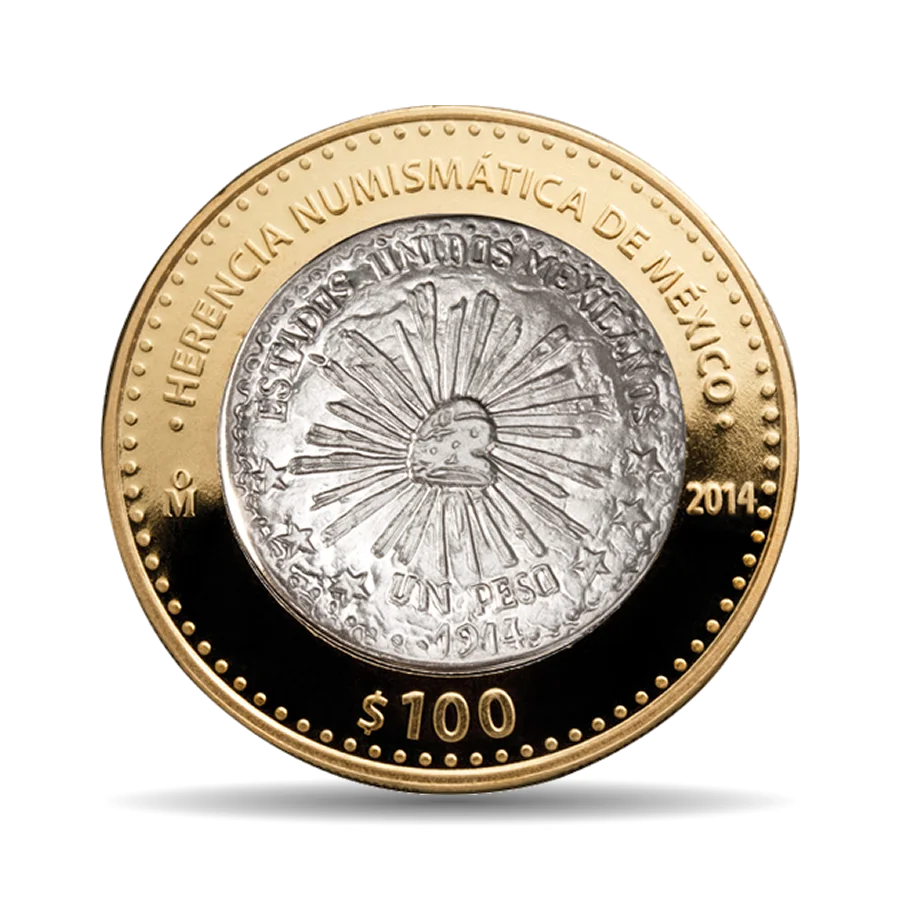
Herencia Numismática de México: la guía completa de la serie de 100 pesos de plata
La única serie mexicana de plata donde cada moneda reproduce otra moneda de nuestra historia: el Caballito, la Macuquina, el Columnario. Aquí te la explico completa, emisión por emisión, para que la caces sin que te vean la cara.
Read the full article →Value range of this piece
Value range without enough data for this piece.
See the full breakdown by grade (VG, F, VF, EF, AU, MS-60, MS-63, MS-65) for the whole series →
Other denominations from 2014
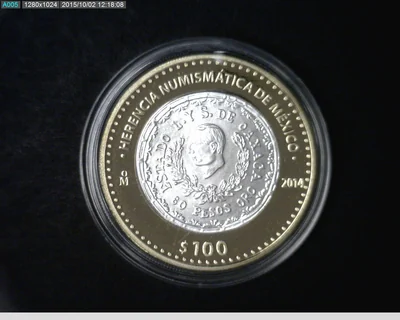
Herencia Numismática de México · Bimetálica
Same denomination, other years
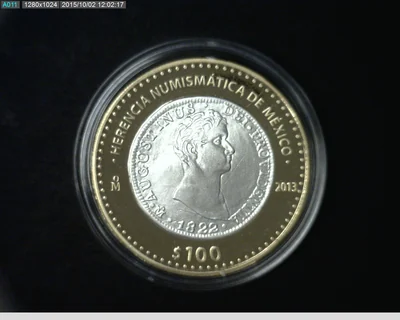
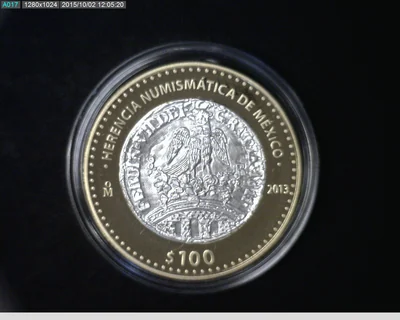
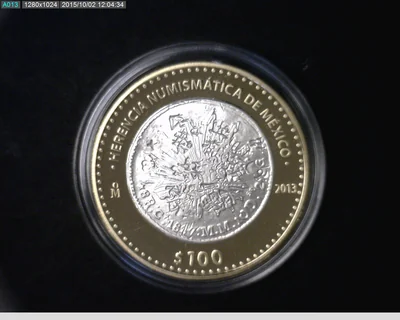
100 pesos Bimetálica · Herencia Numismática de México
Frequently asked questions
How much is the 2014 100 Pesos Pelucona worth?
Most examples sell for USD 30 to USD 90 depending on condition. Handled coins land around USD 30 to 45, uncirculated loose pieces around USD 45 to 65, and coins still sealed in the original Banxico blister pack reach USD 65 to 90. Because it contains silver, its value has a floor near melt.
Is the 100 Pesos Herencia Numismática IV a rare coin?
It is a limited modern collector issue from 2014, not a scarce classic rarity. It reproduces the 1748 Fernando VI 8 escudos design but is a recent Banxico product. Value comes from its silver content and collector demand for the series, not from age or extreme rarity.
Where can I sell my 2014 Pelucona coin?
Sell through a verified numismatic dealer from the Pesoteca directory for an immediate appraisal, or list it on the Pesoteca buy-and-sell forum among collectors. Photograph the front, back, and edge, and check the grade first. Avoid selling to the first bidder on a general marketplace.
How do I know if my Pelucona coin is genuine?
Weigh it (should be 33.96 grams) and measure the diameter (should be 39 mm) with a jewelry scale and calipers. Genuine coins are bimetallic with a discontinuous reeded edge and crisp relief. Fakes often miss on weight or diameter, show flat relief, or have unevenly colored metals.
Conversation
0 comments
Loading comments…