
Mexico 100 Pesos 2012 Numismatic Heritage II (Chopmarks & Manila Countermark)
Prices updated: August 2026
Reproduction of the 8 reales with Manila countermark. Matte-brilliant finish.
Reproduction of the 8 reales with Manila countermark. Matte-brilliant finish.
Design
Banxico
Obverse
Numismatic Heritage of Mexico II, coin with chops and Philippine countermark, matte-shine
How much is the Mexico 100 Pesos 2012 Numismatic Heritage II (Chopmarks & Manila Countermark) worth?
The market value of the Mexico 100 Pesos 2012 Numismatic Heritage II (Chopmarks & Manila Countermark) is not yet documented with enough data to give a firm range. Weigh and measure your piece, compare it against the specifications, and check the forum for a second opinion.
The real price depends on four factors: the grade of preservation (a circulated piece is worth the low end of the range; an uncirculated one, or one still in its official blister pack, the high end), the finish (satin vs mirror/proof), the rarity within the series based on the mintage, and the metal spot price on the day of the deal when the piece is silver or gold. Check the value-by-grade table above and compare with equivalent pieces before buying or selling.
Where to buy or sell this coin?
Browse the national directory of numismatic shops or the community forum to trade directly with other collectors.
Description
If you inherited or found a Mexican 100 pesos coin dated 2012 with strange Asian-looking stamps and an old-style design, here is the honest answer: in circulated condition it is worth roughly 5 to 30 US dollars, and a certified high-grade example can reach the low hundreds. It is not a fortune, but it is a real collector coin, not pocket change.
This is the 100 Pesos 2012 from the Herencia Numismática de México II series (Numismatic Heritage of Mexico II). The design reproduces a classic Spanish colonial 8 reales coin, complete with chopmarks (small merchant stamps used in Asian trade to verify silver) and a Manila countermark from the Philippines. Mexico issued it as a modern commemorative honoring that trade history, with a matte-and-brilliant finish.
What it actually is
During the colonial era, Mexican 8 reales silver coins circulated worldwide, including heavy use in Asia through the Manila galleon trade. Chinese and Philippine merchants stamped them to certify the silver, and Spanish authorities in Manila added official countermarks. This 2012 coin recreates that look on a modern bimetallic piece. It is a tribute design, not an antique.
Specifications
| Feature | Detail |
|---|---|
| Denomination | 100 pesos |
| Year | 2012 (single year of issue) |
| Weight | 33.967 grams |
| Diameter | 39 mm |
| Composition | Bimetallic (silver center ring in this series) |
| Edge | Interrupted reeded |
| Series | Herencia Numismática de México II |
The 100 pesos coins in this general family carry a silver core, which gives them a floor value tied to silver content. That is why even a worn example is worth more than face value: the metal is real silver, not base alloy.
What it is worth in USD
| Condition | Approximate value (USD) |
|---|---|
| Circulated, worn | 5 to 30 |
| Uncirculated (UNC) | 30 to 80 |
| Certified MS-65 or higher | 80 to 200+ |
| Original Banxico blister/set | Adds a premium |
These are collector ranges, not guarantees. Value climbs sharply with grade. A coin still sealed in its original Banco de México (Banxico) presentation packaging commands more than a loose piece.
Is it rare?
The exact mintage of this issue is not officially published by Banxico. When the mint does not release a number, it usually means the coin came out in limited numismatic sets rather than general circulation. Collector forums float various figures, but none are confirmed. Treat unverified mintage claims with caution.
What this means for you: it is scarce enough to have collector demand, but not a legendary rarity. Do not expect thousands of dollars for a common-grade example.
The myth to ignore
Because the coin shows chopmarks and a foreign countermark, some sellers pitch it as an "ancient" or "error" coin worth a fortune. It is neither. The stamps are part of the deliberate 2012 design, reproducing history on purpose. They do not add mystery value, and they are not manufacturing errors.
How to tell if yours is genuine
- Weigh it. A real one weighs 33.967 grams. Off by more than a fraction of a gram, be suspicious.
- Measure it. Diameter should be 39 mm.
- Check the relief. Compare the raised detail against official Banxico images. Counterfeits show flatter, mushy relief.
- Inspect the edge. The genuine coin has an interrupted reeded edge.
- Certify if valuable. For anything you plan to sell above roughly 50 to 100 dollars, professional grading from NGC or PCGS settles authenticity and grade at once.
Where to sell it
For a US seller, your realistic options are:
- Certified auction or dealer. If graded by NGC or PCGS, list it with a US coin dealer or an online auction platform that handles world coins.
- Pesoteca resources. Use a verified numismatic shop from the Pesoteca directory for an in-person appraisal, or the Pesoteca buy-and-sell forum to reach collectors directly.
- Marketplaces. eBay and similar sites work, but photograph the obverse, reverse, and edge clearly, and state the exact weight. Counterfeits circulate most on open marketplaces, so buyers want proof.
Photograph both faces and the edge before you sell, and check the grade ranges above so you do not accept a lowball offer.
Think you have an error variety or an unusually sharp example? Post clear photos in the Pesoteca forum and let the community weigh in before you set a price.
Historical context
100 pesos silver Numismatic Heritage of Mexico series II, 2012, reproduction of the 8 reales with Manila countermark. Piece of the Heritage project of the Bank of Mexico dedicated to the Mexican 8 reales with an oriental Manila counterstamp. These counterstamps were applied in the Philippines during the eighteenth and nineteenth centuries to authenticate the Mexican silver coin that arrived by way of the Manila galleon from Acapulco. The Manila countermark validated the currency for local use within the Hispanic colonial system in Asia and expanded the symbolic and practical reach of the Mexican coin in the Pacific. Official weight of the Heritage reproduction close to 31.10 grams with silver fineness of 0.999. The matte-shine finish combines a satin field with mirror relief. Under the administration of the Bank of Mexico headed by Agustin Carstens. Series II included six pieces in 2012. Collectible pieces for reproducing in modern format an example of the transpacific reach of the Mexican colonial monetary system and for documenting the practice of oriental counterstamps that attests to the first Hispanic commercial globalization between New Spain and the Philippines via the Manila galleon.
This piece belongs to the era
Nuevos Pesos y actualidad →Explore all the Mexican coins of this era, their historical context and how they connect to the monetary system of the period.
Go deeper on this coin
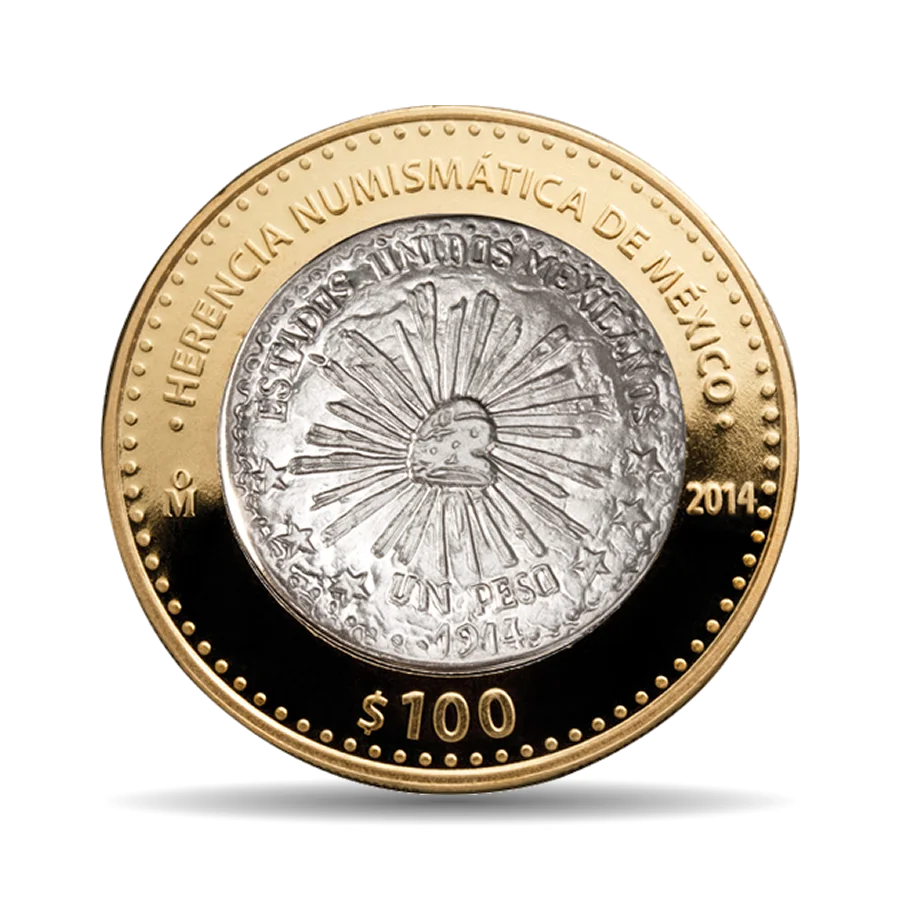
Herencia Numismática de México: la guía completa de la serie de 100 pesos de plata
La única serie mexicana de plata donde cada moneda reproduce otra moneda de nuestra historia: el Caballito, la Macuquina, el Columnario. Aquí te la explico completa, emisión por emisión, para que la caces sin que te vean la cara.
Read the full article →Value range of this piece
Value range without enough data for this piece.
See the full breakdown by grade (VG, F, VF, EF, AU, MS-60, MS-63, MS-65) for the whole series →
Other denominations from 2012
Herencia Numismática de México · Bimetálica
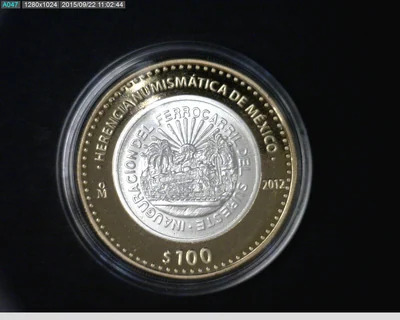
Same denomination, other years
100 pesos Bimetálica · Herencia Numismática de México
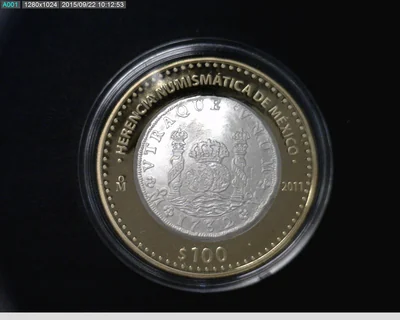
100 Pesos Herencia Numismatica I, Columnario
2011
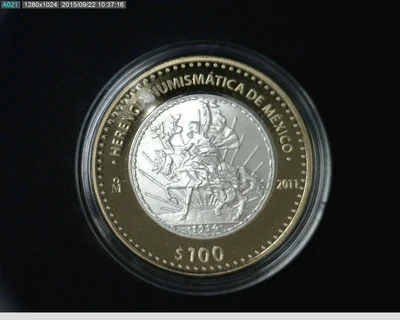
100 Pesos Herencia Numismatica I, Caballito
2011
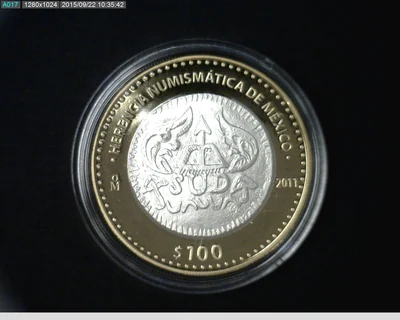
100 Pesos Herencia Numismática I, Morelos SUD
2011
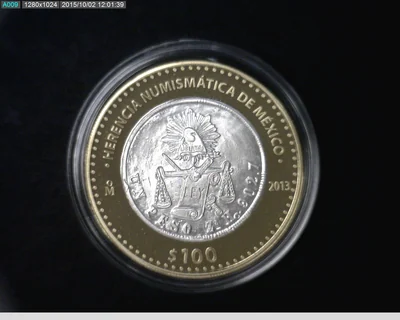
100 Pesos Herencia Numismática III, 1 Peso de Balanza
2013
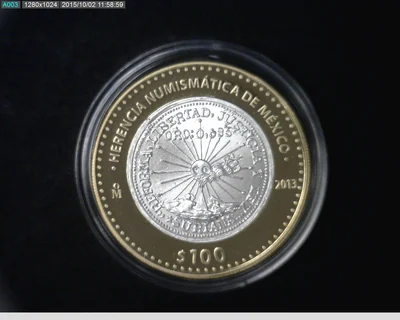
100 Pesos Herencia Numismática III, Suriana 2 Pesos
2013
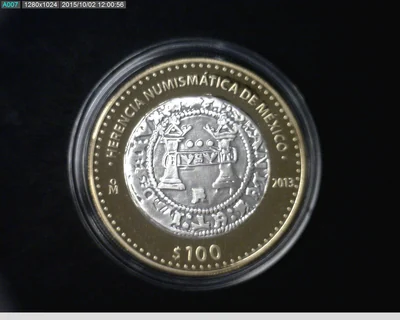
100 Pesos Herencia Numismática III, Carlos y Juana 3 Reales
2013
Official sources
Frequently asked questions
How much is the 2012 Mexico 100 pesos Numismatic Heritage II coin worth?
In circulated condition it is worth roughly 5 to 30 US dollars. Uncirculated examples run 30 to 80 dollars, and a certified MS-65 or higher can reach 80 to 200 dollars or more. Coins still sealed in original Banxico packaging command a premium. Grade drives the price, so a professional appraisal is worth it for high-grade pieces.
Is the 2012 Numismatic Heritage II 100 pesos coin rare?
It is scarce but not a legendary rarity. Banxico never published an official mintage, which usually signals a limited numismatic set rather than general circulation. It has genuine collector demand, but common-grade examples sell in the low tens of dollars, not thousands. Unverified mintage claims on forums should be taken with caution.
How do I know if my 2012 Mexico 100 pesos coin is genuine?
It should weigh exactly 33.967 grams and measure 39 mm across, with an interrupted reeded edge. Compare the raised detail to official Banxico images; fakes look flat and mushy. The chopmarks and Manila countermark are part of the real design, not damage. For anything worth over 50 to 100 dollars, NGC or PCGS certification confirms authenticity and grade.
Where can I sell my 2012 Numismatic Heritage II 100 pesos coin?
Options include US coin dealers or online world-coin auctions (best if the coin is NGC or PCGS graded), a verified shop from the Pesoteca directory for an in-person appraisal, or the Pesoteca buy-and-sell forum to reach collectors. On open marketplaces like eBay, always post clear photos of both faces and the edge plus the exact weight, since counterfeits circulate there.
Conversation
0 comments
Sources
Images for informational and educational purposes, attributed to their original source. Reference values; the real price depends on the grade, the specific variant and demand.
Loading comments…