
100 Pesos Baja California Sur 2005: Silver Value Guide
Prices updated: August 2026
Union of the States: Baja California Sur, second cultural stage
Union of the States: Baja California Sur, second cultural stage
Design
Banxico
Reverse
Cultural motif representative of Baja California Sur (architecture, fauna, flora, archaeological site, dance, or traditional dress). Reverse of the second stage of the Union of the States series. Verify the exact design against the Banxico catalog before cataloging your piece.
Obverse
Mexican National Coat of Arms with the eagle devouring a serpent atop a nopal cactus. Shared obverse of the $100 States series.
How much is the 100 Pesos Baja California Sur 2005: Silver Value Guide worth?
The market value of the 100 Pesos Baja California Sur 2005: Silver Value Guide is not yet documented with enough data to give a firm range. Weigh and measure your piece, compare it against the specifications, and check the forum for a second opinion.
The real price depends on four factors: the grade of preservation (a circulated piece is worth the low end of the range; an uncirculated one, or one still in its official blister pack, the high end), the finish (satin vs mirror/proof), the rarity within the series based on the mintage, and the metal spot price on the day of the deal when the piece is silver or gold. Check the value-by-grade table above and compare with equivalent pieces before buying or selling.
Where to buy or sell this coin?
Browse the national directory of numismatic shops or the community forum to trade directly with other collectors.
States of the Federation
The 64 pieces of the 180th Anniversary series
This coin is part of the series that dedicated one piece to each Mexican state. Two phases: Heraldic (2003) and Cultural (2005-2007).
Description
If you inherited or found a large two-tone Mexican 100 pesos coin dated 2005 with "Baja California Sur" on it, here is the honest answer: the version you want is the one with a silver center. That one carries real precious metal and trades among collectors for a modest premium. The plain circulation version is worth close to face value.
In 2026, this coin sits in a very practical range. It is not a rare six-figure piece, but the silver core gives it a real floor, and complete-set collectors keep steady demand for it.
What this coin actually is
Mexico's central bank (Banco de México) issued a series honoring each of the 31 states plus the Federal District. This is the Baja California Sur entry, dated 2005. It is a bimetallic (two-metal) coin: a large 39 mm diameter, weighing 33.94 g, with a discontinuous reeded edge. The center and the outer ring are different metals, giving that two-tone contrast collectors like in this family.
Here is the part that matters for value. The series came in two releases:
- First release: brass-and-copper-nickel, the version you actually find in circulation or in old change jars. Low value.
- Second release (the cultural version): the center is struck in .999 fine silver. This is the collector coin, made in far smaller numbers.
The silver in the core is what sets a price floor. Even if the coin is worn, the silver has a melt value that keeps it above face value.
What it is worth in USD
| Version | Metal (center) | Typical range (USD) | Notes |
|---|---|---|---|
| Circulation (first release) | Base metal | 5 to 12 dollars | Sold as a novelty, not for silver |
| Silver cultural version, circulated | .999 silver core | 15 to 30 dollars | Depends on silver spot price |
| Silver cultural version, in original case, uncirculated | .999 silver core | 30 to 60 dollars | Best case, complete-set demand |
These are collector-market ranges, not auction records. This coin does not set records. Anyone telling you a modern 2005 state coin is worth thousands is selling a myth. The value is driven by two things: the silver content and set-completion demand from collectors chasing all 32 designs.
Because silver moves with the market, the silver version's floor rises and falls with spot. If you want a quick sanity check, the silver center on the collector version is what carries the intrinsic value.
How to tell which version you have
This is the single most useful thing you can do. Look at the center of the coin:
- Silver-white, bright center that stays cool-toned, and a coin that came in a small presentation case, points to the collector silver version.
- Yellowish or plain gray center with no case, from pocket change, is almost always the base-metal circulation version.
Confirm it with a scale and calipers. The specs above (39 mm, 33.94 g) are exact. Fakes and misidentified coins usually miss on weight or diameter, or show flat, mushy relief.
The ones people think are worth a fortune (but aren't)
Large, heavy, two-tone Mexican coins look valuable, and social media posts push the idea that every one is worth thousands. For the 2005 state series, that is not true. These were made recently and in known quantities. The circulation version is worth a few dollars. The silver version is worth its silver plus a small collector premium. If you have the full set of all 32 in silver, in original cases, that complete set carries more weight than any single coin.
For context on Mexican coins that do command serious money, see our guide to the most valuable Mexican coins and how silver content sets a price floor.
Errors and varieties
Genuine mint errors (off-center strikes, die rotation, doubled strikes) can multiply the value if they are real and verifiable. Be careful: most "errors" circulating online are post-mint damage (scratches, hits, corrosion), not factory errors. If you think you have a true one, post clear photos in the Pesoteca forum and let the community check it.
Where to sell it
For a fair price, use a verified numismatic shop from the Pesoteca directory, which can appraise it on the spot, or the collector buy-and-sell forum. Photograph the obverse, reverse, and edge, and check the range in the table above before you sell. Skip dumping it to the first bidder on Facebook.
Working on the full state set, or trying to confirm your center is silver? Post a photo of your coin in the Pesoteca forum and we will help you place it.
Historical context
The listing dedicated to Baja California Sur belongs to the first wave of the Cultural phase, issued in 2005 along with most of the set. Banxico called this second stage Emblematic Motifs and replaced the state coat of arms with a specific cultural symbol.
The reverse of the piece shows the gray whale (Eschrichtius robustus) off the peninsular coast, a species that migrates each winter from the Bering Sea to the lagoons of Ojo de Liebre and San Ignacio. The gray whale migration to Baja California Sur is one of the longest biological cycles documented in marine mammals, around 20,000 kilometers round trip. The breeding lagoons lie within the El Vizcaíno Biosphere Reserve, a UNESCO World Heritage Site since 1993.
State context: Baja California Sur went from Territory to a free state on October 8, 1974, along with Quintana Roo. Its capital, La Paz, faces the Sea of Cortez, an ecosystem Cousteau called the aquarium of the world.
In the Mexican numismatic market the Cultural phase circulated less than the Escudo 2003 phase and today is usually found in higher grades because it reached the streets late. Banxico's official mintages for this piece are not always published in the Economic Information System, but the figure reported for circulation tends to hover around 250,000 pieces per state in the Cultural phase. Always confirm against the catalog of the complete 100 pesos States series before closing a large purchase.
The Escudo 2003 sister of Baja California Sur is part of the first phase of the series, with the state's official coat of arms on the reverse. Hunting down both pieces completes the set dedicated to Baja California Sur.
This piece belongs to the era
Nuevos Pesos y actualidad →Explore all the Mexican coins of this era, their historical context and how they connect to the monetary system of the period.
Go deeper on this coin
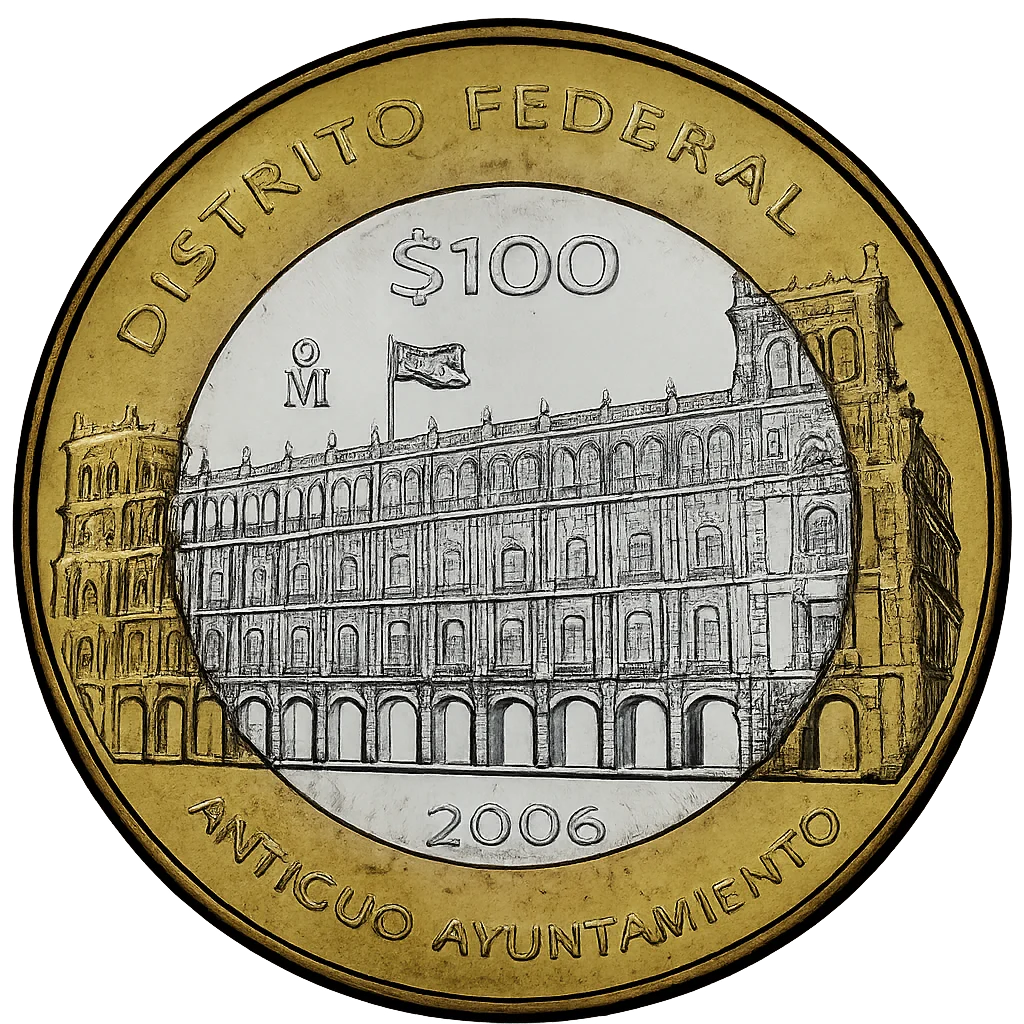
100 pesos de los Estados: la moneda de plata dedicada a tu estado (guía completa Escudo y Cultural)
Banxico acuñó una moneda de plata para cada uno de los 32 estados de México, y luego lo hizo dos veces. Aquí está la guía completa de las 100 pesos de los Estados: qué son, la diferencia entre la versión Escudo y la Cultural, por qué el centro de plata importa, cómo armar la colección y la lista de las 64 fichas para que caces la de tu tierra.
Read the full article →Value range of this piece
Value range without enough data for this piece.
See the full breakdown by grade (VG, F, VF, EF, AU, MS-60, MS-63, MS-65) for the whole series →
Other denominations from 2005
180 Aniversario de la Unión de los Estados en una Federación · Bimetálica
Same denomination, other years
100 pesos Bimetálica · 180 Aniversario de la Unión de los Estados en una Federación
Frequently asked questions
How much is the 2005 100 Pesos Baja California Sur worth?
The base-metal circulation version is worth about 5 to 12 dollars. The collector version with a .999 silver center runs roughly 15 to 30 dollars circulated, and 30 to 60 dollars uncirculated in its original case, depending on silver spot price. It is not a rare high-value coin.
Is this coin rare?
The circulation version is common. The silver cultural version was struck in far smaller numbers for collectors, so it is scarcer, but it is still a modern coin with known quantities. Its value comes from its silver content and demand from people completing the full 32-piece state series, not from rarity alone.
Where can I sell the 2005 100 Pesos Baja California Sur?
Use a verified numismatic shop from the Pesoteca directory, which will appraise it in person, or the collector buy-and-sell forum. Photograph the obverse, reverse, and edge, and compare against the value range above before selling. Avoid selling to the first online bidder.
How do I tell if it is genuine and which version I have?
Check weight and diameter with a jewelry scale and calipers: it should be 33.94 g and 39 mm. A bright, cool-toned silver center (usually sold in a small case) means the collector silver version; a yellowish center from pocket change is the base-metal version. Fakes miss on weight, diameter, or show flat relief.
Conversation
0 comments
Sources
Images for informational and educational purposes, attributed to their original source. Reference values; the real price depends on the grade, the specific variant and demand.
Loading comments…