
1 Kilo Silver Aztec Calendar 100 Pesos (2013): Value & How to Sell
The 1 Kilo Silver Aztec Calendar 100 Pesos : Value & How to Sell is worth between $33,765 and $36,981 MXN depending on its grade of preservation.
Prices updated: August 2026
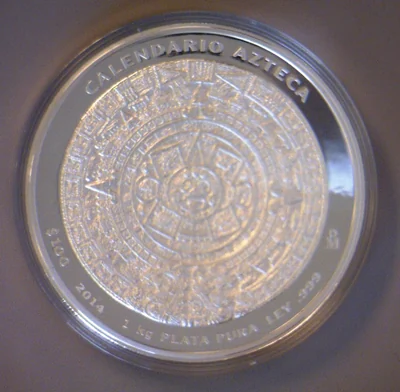
Aztec Calendar, one kilo, matte-brilliant
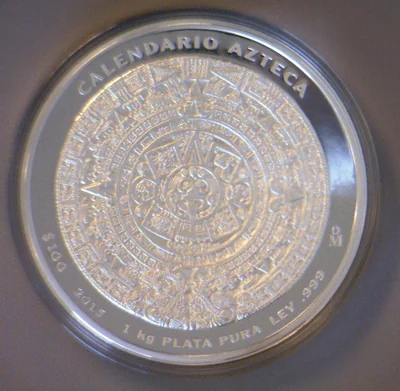
Aztec Calendar, one kilo, matte-brilliant
The 1 Kilo Silver Aztec Calendar 100 Pesos : Value & How to Sell is worth between $33,765 and $36,981 MXN depending on its grade of preservation.
Prices updated: August 2026
How much is the 1 Kilo Silver Aztec Calendar 100 Pesos (2013): Value & How to Sell worth?
The estimated value of the 1 Kilo Silver Aztec Calendar 100 Pesos (2013): Value & How to Sell ranges from $33,765 (circulated, XF) up to $36,981 (official blister pack), with $35,812 as a reference for an uncirculated (UNC) piece. The estimate is based on the official mintage and the historical behavior of the family.
The real price depends on four factors: the grade of preservation (a circulated piece is worth the low end of the range; an uncirculated one, or one still in its official blister pack, the high end), the finish (satin vs mirror/proof), the rarity within the series based on the mintage, and the metal spot price on the day of the deal when the piece is silver or gold. Check the value-by-grade table above and compare with equivalent pieces before buying or selling.
Where to buy or sell this coin?
Browse the national directory of numismatic shops or the community forum to trade directly with other collectors.
Description
If you inherited or found a heavy silver disc with the Aztec Calendar (Sun Stone) on the back and "100 Pesos" on the front, you have something with real weight behind it, literally. This is Mexico's one-kilo silver bullion coin from 2013. Its value starts at whatever a kilo of silver is worth on the day you sell, and climbs from there depending on condition and demand.
What it's worth right now
This coin is a bullion piece, which means its baseline value tracks the silver market. It contains one full kilogram of silver (32.15 troy ounces), so its melt value alone runs into the hundreds of dollars and moves every day with the spot price. To get your floor, multiply the current price of silver per troy ounce by 32.15.
Because it is a large, low-mintage silver piece rather than a mass-circulated coin, it usually trades at a premium over melt among collectors. A clean example in original mint condition, ideally still in its Banco de México capsule with certificate, sells for more than a scratched or handled one. In 2026, expect a range from spot silver at the low end to a meaningful markup for a pristine, certified example. Damaged, cleaned, or scratched pieces drop back toward melt.
This is not a rare-date rarity worth tens of thousands. It is a substantial silver asset. Anyone claiming it is worth "a fortune" beyond its silver content plus a collector premium is misleading you.
The specs that matter
| Feature | Detail |
|---|---|
| Denomination | 100 Pesos |
| Year | 2013 |
| Metal | Silver |
| Weight | 1,000 g (1 kilo, 32.15 troy oz) |
| Diameter | 110 mm |
| Edge | Plain (smooth) |
| Mint | Casa de Moneda de México |
| Catalog reference | KM#921 |
| Finish | Matte and brilliant (mate-brillo) relief |
The design pairs a value-side featuring the coat of arms with the reverse showing the Aztec Sun Stone, often called the Aztec Calendar. The two-tone matte-and-brilliant finish is intentional and part of how you tell a genuine strike from a cheap copy.
Is it rare?
Not in the way most people hope. This belongs to Mexico's modern silver bullion program under the "nuevo peso" (new peso) system, introduced in 1993 after a currency reform that dropped three zeros from the old unit. The one-kilo format is niche and expensive to produce, so mintages are low compared to circulating coins, and that scarcity supports a modest premium. But it is a deliberately issued collector and investor product, not an accidental error or a lost mintage.
The real driver of value here is the silver content first, then condition and completeness (capsule, certificate, box). A perfectly preserved example commands more from serious buyers who want the full presentation set.
Coins people confuse this with
Buyers sometimes mix this up with the Onza Libertad, Mexico's one-ounce silver bullion coin that also shows a national design and trades near melt plus a small premium. The kilo Aztec Calendar is a different animal: 32 times the silver, a much bigger diameter, and a higher collector premium. If you have several "silver Mexican coins," weigh each one. The kilo piece is unmistakable at 1,000 grams and 110 mm across.
How to check what yours is worth
Start with the metal. Weigh it on a jewelry scale. It should read very close to 1,000 grams. Measure the diameter with calipers: 110 mm. If those numbers are off, you may have a fake or a plated copy, and you should stop before paying anyone.
Next, judge condition honestly. Look for scratches, fingerprints, milk spots, and toning under good light. Never clean it. Cleaning silver destroys the surface and cuts the value. A coin still sealed in its original capsule with paperwork is worth more than a loose, handled one.
For a real number, get it graded or appraised. Third-party grading services like NGC and PCGS certify authenticity and assign a grade, which matters when you sell to collectors. For melt confirmation and a quick offer, a verified numismatic dealer will weigh it and quote you on the spot.
How to tell if it's genuine
Weight and diameter are your first defense. Counterfeits almost always miss on one or both, and 32 troy ounces of silver is hard to fake cheaply. Check the relief: genuine strikes have crisp detail and the intended matte-and-brilliant contrast, not flat, uniform surfaces. Be suspicious of any offer priced well below the current silver value. Nobody sells a kilo of real silver at a loss.
Where to sell it
Because this is a precious-metal piece, sell only to someone who will weigh it in front of you and quote against a live silver price. A verified numismatic dealer from the Pesoteca directory will value it on the spot without a middleman markup. For collector-to-collector sales at the best premium, list it in the Pesoteca buy-and-sell forum with clear photos of both faces and the edge. Avoid dumping it to the first buyer on social media, and never ship a kilo of silver before payment clears.
Have a whole box to sort through? Post photos in the Pesoteca forum and let the community help you figure out which pieces are silver and which are worth grading.
Value range of this piece
Market estimate: $33,765 - $36,981 MXN depending on the grade of preservation (typical range between a circulated and an uncirculated piece).
See the full breakdown by grade (VG, F, VF, EF, AU, MS-60, MS-63, MS-65) for the whole series →
Same denomination, other years
100 pesos Plata 0.999 · Conmem 100 Pesos Calendario Azteca
Frequently asked questions
How much is the 2013 one-kilo silver Aztec Calendar 100 Pesos worth?
Its floor is the value of one kilogram of silver (32.15 troy ounces), which changes daily with the spot price. Multiply the current silver price per troy ounce by 32.15 for the melt value. A pristine example with its original capsule and certificate sells for a premium above that; a scratched or cleaned one drops back toward melt.
Is this coin rare?
Not rare in the sense of a lost or error issue. It is a low-mintage modern silver bullion piece (KM#921) from Mexico's new-peso program. The kilo format is niche and expensive to produce, which supports a modest collector premium, but its main value is the silver content plus condition and completeness (capsule, box, certificate).
Where can I sell it?
Sell to a verified numismatic dealer from the Pesoteca directory, who will weigh it and quote against a live silver price, or list it in the Pesoteca buy-and-sell forum for a collector premium. Photograph both faces and the edge first, and never ship a kilo of silver before payment clears.
How do I know if it's genuine?
Weigh it (should be very close to 1,000 grams) and measure the diameter (110 mm) with calipers, then compare to the specs above. Fakes usually miss on weight or diameter, show flat relief, or lack the intended matte-and-brilliant contrast. Be wary of any price below the current silver value.
Conversation
0 comments
Loading comments…