
1985 Mexican 100 Pesos Coin: Value & What It's Worth
Prices updated: August 2026
Struck at Legaria.
Struck at Legaria.
How much is the 1985 Mexican 100 Pesos Coin: Value & What It's Worth worth?
The market value of the 1985 Mexican 100 Pesos Coin: Value & What It's Worth is not yet documented with enough data to give a firm range. Weigh and measure your piece, compare it against the specifications, and check the forum for a second opinion.
The real price depends on four factors: the grade of preservation (a circulated piece is worth the low end of the range; an uncirculated one, or one still in its official blister pack, the high end), the finish (satin vs mirror/proof), the rarity within the series based on the mintage, and the metal spot price on the day of the deal when the piece is silver or gold. Check the value-by-grade table above and compare with equivalent pieces before buying or selling.
Where to buy or sell this coin?
Browse the national directory of numismatic shops or the community forum to trade directly with other collectors.
Description
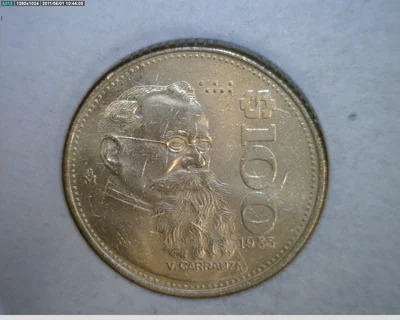
If you inherited or found a 1985 Mexican 100 pesos coin, here's the honest answer first: in worn, circulated condition it's worth under a dollar, usually just its face value as a collectible. This is a common circulation coin, not a rare treasure. But condition changes the picture, and a flawless uncirculated example can bring a few dollars from the right buyer.
What this coin actually is
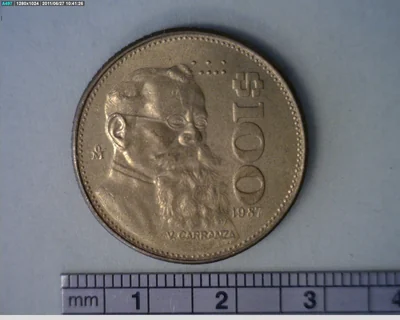
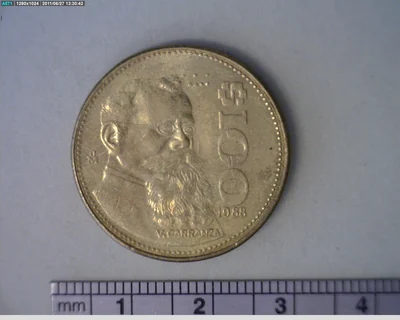
The 1985 100 pesos is a large bronze-aluminum coin from the old peso era, before Mexico's 1993 currency reform that created the "new peso" (nuevo peso) and lopped three zeros off the currency. So this is a pre-reform coin. It is not silver and it is not gold. It's an alloy of bronze and aluminum, which gives it a golden-yellow color that fools a lot of people into thinking it's precious metal. It isn't.
Key specs, straight from Banco de México:
- Metal: bronze-aluminum (aluminum bronze alloy)
- Weight: 11.8 grams
- Diameter: 26 mm
- Edge: interrupted reeding (segments of reeding around the rim)
- Mint: Casa de Moneda de México, the mint that has struck coins continuously since the 16th century
- Catalog reference: KM# 493
How much is a 1985 100 pesos worth in 2026?
Straight talk: this coin was minted in large numbers and millions survive, so rarity is not on your side. Metal content adds nothing here, aluminum bronze has no bullion value to speak of. What little value exists comes almost entirely from condition.
| Condition | What it looks like | Approximate value (USD) |
|---|---|---|
| Circulated (worn) | Scratches, dull, everyday wear | Under 1 dollar |
| About uncirculated | Light handling, most detail sharp | 1 to 2 dollars |
| Uncirculated (MS) | Full luster, no wear | 2 to 5 dollars |
| Certified high grade (MS65+) | Graded by NGC or PCGS, top pop | 10 to 25 dollars |
These are collector-market figures, not guarantees. A raw coin from a jar sells for pocket change. The only way it climbs is if it's genuinely uncirculated and, ideally, professionally graded. For most people who inherited a box of these, the realistic answer is that they're worth keeping as a curiosity, not cashing in for a windfall.
The "it's gold" myth
The golden color makes people assume this is a gold coin. It is not. Mexico does have famous gold coins, the Centenario (50 pesos gold) and modern gold bullion, but this 100 pesos is a base-metal circulation coin. If someone offers to buy it "because it's gold," they're either mistaken or hoping you are. Don't confuse the color with the content.
Are there valuable minting errors?
Genuine mint errors, off-center strikes, die rotation, double strikes, real varieties, can multiply the value of any coin, including this one. But be realistic. Most of the "errors" people post online are post-mint damage: dings, corrosion, scratches from decades in circulation. That's not an error and it lowers value, it doesn't raise it. If you think you have a true error, photograph it clearly and post it to the Pesoteca forum so collectors can verify before you get your hopes up.
How to tell if yours is genuine
Counterfeits of a low-value circulation coin are uncommon, but if you want to check:
- Weigh it. A jeweler's scale should read 11.8 grams. Off by more than a fraction of a gram is a red flag.
- Measure the diameter. It should be 26 mm on calipers.
- Check the edge. It has interrupted reeding, segments of reeding rather than a fully reeded edge.
- Look at the relief. Genuine coins have crisp, well-defined detail. Fakes often show flat, mushy relief or uneven color.
Where to sell it
If you decide to sell, skip dumping it to the first Facebook buyer. Your best options:
- A verified numismatic shop from the Pesoteca dealer directory, where you get an on-the-spot appraisal without a middleman markup.
- The Pesoteca buy-and-sell forum, where you deal directly with collectors.
Before you sell anything, photograph the obverse, reverse, and edge in good light, and compare your coin's condition to the table above so you know what a fair price looks like. For a common coin like this, don't expect much, but knowing the grade keeps you from getting shortchanged if yours happens to be a pristine example.
Got a jar of old Mexican coins and not sure what's in it? Post your photos in the Pesoteca forum and let the community tell you which ones are worth a second look.
Value range of this piece
Value range without enough data for this piece.
See the full breakdown by grade (VG, F, VF, EF, AU, MS-60, MS-63, MS-65) for the whole series →
Other denominations from 1985
100 Pesos Bronce Aluminio · Aluminio-bronce
Same denomination, other years
100 pesos Aluminio-bronce · 100 Pesos Bronce Aluminio
Official sources
Frequently asked questions
How much is a 1985 Mexican 100 pesos coin worth?
In circulated condition, under 1 dollar. An uncirculated example runs 2 to 5 dollars, and a professionally graded high-grade coin (MS65 or better) can reach 10 to 25 dollars. It's a common bronze-aluminum coin, so value comes almost entirely from condition, not rarity.
Is the 1985 100 pesos coin rare or made of gold?
No on both counts. It was minted in large numbers and millions survive, so it isn't rare. The golden color comes from bronze-aluminum alloy, not gold. It has no bullion value and is a base-metal circulation coin.
Where can I sell a 1985 Mexican 100 pesos coin?
The safest options are a verified numismatic shop from the Pesoteca dealer directory, which appraises it on the spot, or the Pesoteca buy-and-sell forum where you deal directly with collectors. Photograph the obverse, reverse, and edge, and check the condition table before selling. Avoid dumping it to the first online buyer.
How do I tell if my 1985 100 pesos coin is genuine?
Weigh it (should be 11.8 grams) and measure the diameter (26 mm) with a jeweler's scale and calipers. Check the edge for interrupted reeding and look for crisp, well-defined relief. Fakes often have the wrong weight or diameter, flat relief, or uneven color.
Conversation
0 comments
Loading comments…