
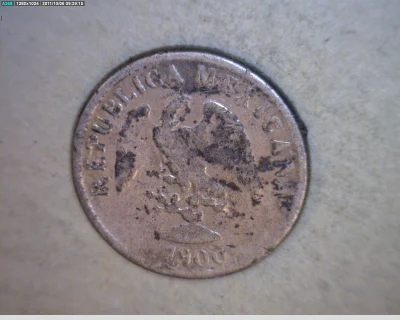
1873 Mexican 10 Centavos (Culiacán Mint)
Prices updated: August 2026
Mexican Republic · Culiacán Mint · Assayer P
Mexican Republic · Culiacán Mint · Assayer P
How much is the 1873 Mexican 10 Centavos (Culiacán Mint) worth?
The market value of the 1873 Mexican 10 Centavos (Culiacán Mint) is not yet documented with enough data to give a firm range. Weigh and measure your piece, compare it against the specifications, and check the forum for a second opinion.
The real price depends on four factors: the grade of preservation (a circulated piece is worth the low end of the range; an uncirculated one, or one still in its official blister pack, the high end), the finish (satin vs mirror/proof), the rarity within the series based on the mintage, and the metal spot price on the day of the deal when the piece is silver or gold. Check the value-by-grade table above and compare with equivalent pieces before buying or selling.
Where to buy or sell this coin?
Browse the national directory of numismatic shops or the community forum to trade directly with other collectors.
Description
If you inherited or found an 1873 Mexican 10 centavos, here is the honest answer: in worn condition it is worth a few dollars to a few tens of dollars, not a fortune. Value only climbs into the hundreds when the coin is sharp and problem-free, and higher still when certified by NGC or PCGS in Mint State. This page tells you what yours is worth in USD, how to spot a fake, and where to sell it.
This is a small silver-era decimal coin from the República Mexicana, struck at the Culiacán mint (mint mark tied to that facility) with assayer initial P. "Ensayador" is the assayer, the official who certified the metal fineness; his initial appears on the coin. Denominations like "10 centavos" mean one tenth of a peso, part of Mexico's decimal system introduced in the 1860s.
What the 1873 10 centavos is actually worth
There is no single price. What drives the number is condition (grade), authenticity, and whether a certification service has slabbed it. Rough ranges in US dollars:
| Condition | What it looks like | Approximate value (USD) |
|---|---|---|
| Heavily circulated (G-VG) | Flat, worn design, readable date | A few dollars to about 15 |
| Circulated (F-VF) | Clear detail, honest wear | 15 to 60 |
| About Uncirculated (AU) | Slight wear on high points | 60 to 150 |
| Uncirculated / Mint State (MS) | No wear, original luster, certified | 150 and up |
These are guide ranges, not guarantees. A coin with damage, cleaning, or corrosion sells below these figures regardless of how old it is. A cleaned coin, even a rare one, loses a large share of its value, so never scrub a coin you think might be worth money.
The specs (use these to check yours)
- Weight: 2.64 grams
- Diameter: 17.15 millimeters
- Denomination: 10 centavos
- Year: 1873 (single year for this specific issue)
- Mint: Culiacán, assayer P
- Era: República Restaurada and Porfiriato
If your coin does not match the weight and diameter closely, treat it as suspect. Counterfeits are common on small silver pieces because they are easy to cast, and cast fakes usually show flat, mushy detail and the wrong weight.
Is it rare?
Mintage figures for this exact Culiacán issue are not cleanly documented, which is common for provincial 19th-century Mexican coinage. Culiacán was a smaller, regional mint, so surviving pieces in high grade are genuinely harder to find than coins from the main Mexico City mint. That scarcity is what pushes a certified Mint State example above ordinary money. In worn grades, though, it stays modest. Age alone does not equal value; survivors and demand do.
There can be minor die varieties (letter positioning, small striking differences) that specialists track. For most owners those distinctions do not change the price, but if you suspect a genuine mint error (off-center strike, doubled die), it can add value. Most "errors" people post online are post-mint damage, not factory errors, so have it verified before you get excited.
How to tell if yours is genuine
- Weigh it. It should be very close to 2.64 grams. A cheap kitchen scale that reads to 0.1 g helps.
- Measure it. 17.15 mm diameter. Off-size is a red flag.
- Look at the relief. Genuine strikes have crisp, dimensional detail. Cast fakes look soft and flat, sometimes with a seam on the edge.
- Check the edge. Reeding should be even and sharp.
- Get it certified. For anything you think is worth real money, NGC or PCGS grading is the definitive answer. They authenticate and grade, and a slabbed coin sells for more and faster.
For grading basics, see our Mexican coin grading guide. This coin is part of the broader Mexican Centavos series if you want to see related denominations.
Where to sell it
Your realistic options, best value first:
- Certified auction (Heritage, Stack's Bowers). Best route for a high-grade or certified piece; serious buyers compete.
- A verified numismatic dealer. Fast, in-person appraisal. Use the Pesoteca dealer directory to find one without middleman markup.
- Collector-to-collector. The Pesoteca buy/sell forum puts you in front of people who know exactly what this coin is.
- Online marketplaces. Possible, but this is where the most fakes circulate. Always demand photos of both faces and the edge, and the seller's weight.
Before you sell anything, photograph the obverse, reverse, and edge in good light, and match your coin to the ranges above so you are not talked down. Do not dump it on the first offer in a Facebook group.
Think you have a sharp, uncirculated example, or an unusual variety? Post clear photos in the Pesoteca forum and let collectors help you pin down the grade before you sell.
Historical context
False, it is not silver.
This piece belongs to the era
República Restaurada y Porfiriato →Explore all the Mexican coins of this era, their historical context and how they connect to the monetary system of the period.
Value range of this piece
Value range without enough data for this piece.
See the full breakdown by grade (VG, F, VF, EF, AU, MS-60, MS-63, MS-65) for the whole series →
Same denomination, other years
10 centavos Plomo · Centavos Mexicanos
Frequently asked questions
How much is an 1873 Mexican 10 centavos worth?
It depends heavily on condition. Heavily worn examples bring a few dollars up to about 15 USD, circulated pieces run roughly 15 to 60 USD, and About Uncirculated coins 60 to 150 USD. Certified Uncirculated (Mint State) examples sell for 150 USD and up. For a precise number, have your specific coin appraised by a numismatic dealer or graded by NGC or PCGS.
Is the 1873 10 centavos rare?
It was struck at the Culiacán mint, a smaller regional facility, and exact mintage figures are not well documented. High-grade survivors are genuinely scarce, which is why certified Mint State pieces command a premium. In worn condition it stays common and inexpensive. Age alone does not make it valuable; the number of nice survivors and collector demand do.
How can I tell if my 1873 10 centavos is genuine?
It should weigh 2.64 grams and measure 17.15 mm across. If yours is off on weight or size, treat it as suspect. Genuine strikes show crisp, dimensional detail; cast fakes look flat and soft, sometimes with an edge seam. For anything you believe is valuable, NGC or PCGS certification is the definitive proof of authenticity.
Where can I sell my 1873 Mexican 10 centavos?
For a high-grade or certified coin, a specialist auction house like Heritage or Stack's Bowers gets the most competition. For a fast appraisal, use a verified dealer from the Pesoteca dealer directory, or list it to collectors on the Pesoteca buy/sell forum. Photograph the obverse, reverse, and edge, and avoid selling to the first offer online.
Conversation
0 comments
Sources
Images for informational and educational purposes, attributed to their original source. Reference values; the real price depends on the grade, the specific variant and demand.
Loading comments…