
1980 Mexico 10 Centavos "Maicito" (Corn Coin)
Prices updated: August 2026
Centavos cupronickel 1980.
Centavos cupronickel 1980.
Design
Banxico
Reverse
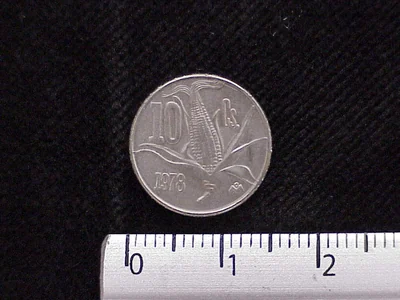
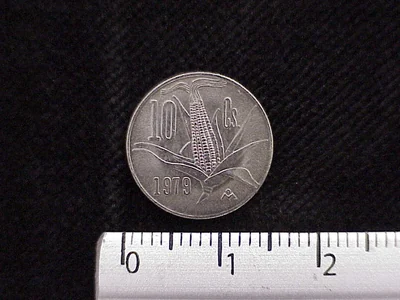
Standing ear of corn (hence the nickname "Maicito"), with the value "10 CS.", the year and the "Mo" mint mark of the Mexican Mint on the left. Design by Alfonso Rodriguez Facio.
Obverse
Obverse with the Mexican National Coat of Arms and the legend "ESTADOS UNIDOS MEXICANOS" per official convention. Struck by the Mexican Mint under a Banxico decree.
How much is the 1980 Mexico 10 Centavos "Maicito" (Corn Coin) worth?
The market value of the 1980 Mexico 10 Centavos "Maicito" (Corn Coin) is not yet documented with enough data to give a firm range. Weigh and measure your piece, compare it against the specifications, and check the forum for a second opinion.
The real price depends on four factors: the grade of preservation (a circulated piece is worth the low end of the range; an uncirculated one, or one still in its official blister pack, the high end), the finish (satin vs mirror/proof), the rarity within the series based on the mintage, and the metal spot price on the day of the deal when the piece is silver or gold. Check the value-by-grade table above and compare with equivalent pieces before buying or selling.
Where to buy or sell this coin?
Browse the national directory of numismatic shops or the community forum to trade directly with other collectors.
Description
If you inherited or found a small Mexican coin with an ear of corn on the back, you have the 1980 10 centavos, nicknamed the "Maicito" (little corn). Straight answer: circulated examples are worth pennies, a few cents in USD. This coin was struck by the tens of millions and is common today. Only a flawless uncirculated piece pulls a real premium, and even then it tops out around 10 to 65 Mexican pesos (roughly under 4 USD).
We say this because the search that brings people here is "how much is the corn coin worth," and the honest number matters more than a hopeful guess. This is a collectible, not a windfall. Below is exactly what you have, why it sells for so little, and the one detail that can make a specific example worth keeping.
What this coin actually is
The 1980 10 centavos is a small pocket coin with no silver in it. It is cuproníquel (a copper-nickel alloy), weighs 1.52 grams, and measures 15 mm across. The reverse shows a standing ear of corn with the value "10 CS.", the year, and the mint mark "Mo" for the Casa de Moneda de México (the Mexican Mint). The obverse carries the national coat of arms with the legend "Estados Unidos Mexicanos" (United Mexican States).
The corn design was created by Alfonso Rodríguez Facio and ran on this coin type from 1974 through 1980. The year 1980 was the final strike of the type, which is a small point of interest for collectors but does not make it rare on its own.
Collectors catalog it as KM#434.
Why it is worth so little
The mintage tells the whole story. In 1980 the Mexican Mint struck 21,290,000 of these coins. That is more than 21 million pieces, and they circulated heavily. Coins that survive by the millions do not command high prices, no matter how old or charming they look. Value in this piece comes from condition, not from the metal and not from age.
Here is the realistic range:
| Coin | Year | Condition | Value (USD approx.) |
|---|---|---|---|
| 10 Centavos "Maicito" | 1980 | Circulated (worn) | A few cents |
| 10 Centavos "Maicito" | 1980 | Uncirculated (BU), well centered | About 0.50 to 3.50 USD (10 to 65 pesos) |
BU means "brilliant uncirculated," a coin that never went into everyday use and shows no wear. A crisp, well-centered BU example with clean surfaces is the only version that brings the higher end of that range.
The one detail worth checking: varieties
For 1980 there are three recognized varieties, plus an overdate that catches collector interest. The differences are in the corn stalk and the spacing of the date:
- KM#434.1: sharp stalk, wide date (an overdate is reported on this variety)
- KM#434.2: blunt stalk, narrow date
- KM#434.3: blunt stalk, wide date
None of these varieties alone turns the coin into something valuable. But if your piece is in high grade and matches a sought-after variety, it becomes more interesting to a collector working to complete a set. That combination, high grade plus a specific variety, is the only path to any real premium here.
The ones people think are worth a fortune but aren't
A lot of people assume any old Mexican coin with an eagle or corn on it is worth serious money. This one is a clear case where the myth breaks down. The 1980 10 centavos is old enough to feel special and pretty enough to catch the eye, but it was made in the tens of millions and holds no precious metal. If someone tells you a circulated corn coin is worth hundreds of dollars, that is not accurate.
It is also no longer money. This coin type was demonetized on November 15, 1995. It is not legal tender anymore, so its only value is collectible.
How to tell if yours is genuine
This is a common circulation coin, so there is almost no reason for anyone to counterfeit it. Still, a quick check confirms what you have:
- Metal: it should be cuproníquel, not silver and not pure copper.
- Weight: about 1.52 grams.
- Diameter: 15 mm.
- Reverse: the standing ear of corn with "10 CS.", the year, and the "Mo" mint mark.
- Obverse: the national coat of arms with "Estados Unidos Mexicanos."
If it matches those specs, you have a genuine 1980 Maicito.
How to check value and where to sell
Grade drives everything on this coin, so the first step is honest assessment. Compare your piece to photos of BU examples. Any wear on the high points of the corn or the eagle drops it into the low, few-cents tier. A clean, lustrous, well-centered coin is worth setting aside.
Because it is so common, selling a single circulated coin rarely makes sense on its own. Sellers do better with high-grade pieces or by putting together a full variety set. To compare prices and find dealers, use the Pesoteca store directory, and browse the rest of the Mexican centavos series to see where this coin fits in the run.
Have a 1980 Maicito and want a second opinion on the variety or grade? Post clear photos of both sides in the Pesoteca forum and the community will help you pin down exactly which KM# you have.
Historical context
The cent coins form the base of the Mexican monetary system. Banxico has modified their diameters, materials, and alloys several times over the past decades to optimize minting costs. The 10 centavos cupronickel piece struck in 1980 belongs to the Banxico Colección Numismática catalog documented on its official site.
For Mexican collectors, cent pieces have value when they capture a change of material, a die error, or an atypically low mintage. Banxico publishes annual mintages in CM10 from the year 2000. For earlier pieces the data may not be available. This entry follows the convention of the PSM System, one ID per distinct physical piece, not per shared design.
This piece belongs to the era
México Moderno (pre-1992) →Explore all the Mexican coins of this era, their historical context and how they connect to the monetary system of the period.
Value range of this piece
Value range without enough data for this piece.
See the full breakdown by grade (VG, F, VF, EF, AU, MS-60, MS-63, MS-65) for the whole series →
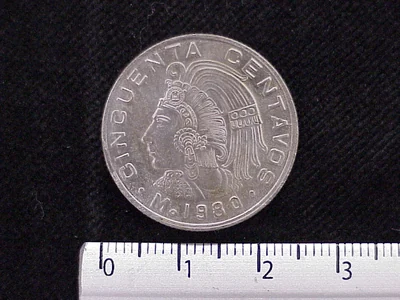
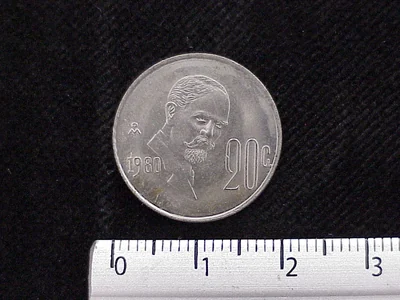
Other denominations from 1980
Centavos Mexicanos · Cuproníquel
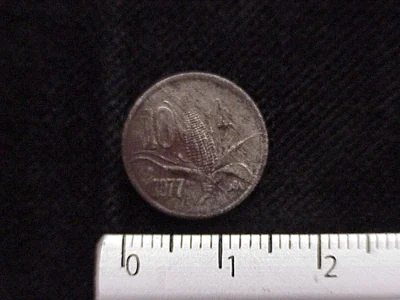
Same denomination, other years
10 centavos Cuproníquel · Centavos Mexicanos
Frequently asked questions
How much is a 1980 Mexican 10 centavos worth?
It depends on condition. A circulated coin is worth only a few cents in USD because the mintage was huge: 21,290,000 pieces in 1980. Only a well-centered, mark-free uncirculated (BU) example reaches roughly 0.50 to 3.50 USD (10 to 65 pesos). It is not a rare coin.
Is the 1980 10 centavos rare?
No. With more than 21 million struck in 1980 alone and heavy circulation, it turns up constantly. Value comes from high grade and specific varieties, not scarcity. Circulated examples move for pennies.
Is the 1980 10 centavos made of silver?
No silver at all. It is cuproníquel, a copper-nickel alloy. It weighs 1.52 grams and measures 15 mm across. Its value comes from condition and varieties, not metal content.
How do I tell if my 1980 10 centavos is genuine, and where can I sell it?
Check that it is cuproníquel, weighs about 1.52 grams, and measures 15 mm, with a standing ear of corn, "10 CS.", the year, and the "Mo" mint mark on the reverse. As a common circulation coin it is almost never faked. To sell, use the Pesoteca store directory (/tiendas) to compare prices; a high-grade coin or a complete variety set sells far better than a single circulated piece.
Conversation
0 comments
Sources
- Ejemplar de la Coleccion Numismatica Banco de Mexico . inv. 12293
- Ejemplar de la Coleccion Numismatica Banco de Mexico . inv. 12292
- Ejemplar de la Coleccion Numismatica Banco de Mexico . inv. 12295
- Ejemplar de la Coleccion Numismatica Banco de Mexico . inv. 12294
- Ejemplar de la Coleccion Numismatica Banco de Mexico . inv. 17189
Images for informational and educational purposes, attributed to their original source. Reference values; the real price depends on the grade, the specific variant and demand.
Loading comments…