
1 Peso Lead Coin, Oaxaca 1915: Value & How to Sell
Prices updated: August 2026
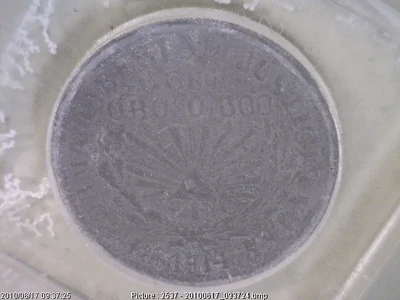
Free and Sovereign State of Oaxaca.
Free and Sovereign State of Oaxaca.
How much is the 1 Peso Lead Coin, Oaxaca 1915: Value & How to Sell worth?
The market value of the 1 Peso Lead Coin, Oaxaca 1915: Value & How to Sell is not yet documented with enough data to give a firm range. Weigh and measure your piece, compare it against the specifications, and check the forum for a second opinion.
The real price depends on four factors: the grade of preservation (a circulated piece is worth the low end of the range; an uncirculated one, or one still in its official blister pack, the high end), the finish (satin vs mirror/proof), the rarity within the series based on the mintage, and the metal spot price on the day of the deal when the piece is silver or gold. Check the value-by-grade table above and compare with equivalent pieces before buying or selling.
Where to buy or sell this coin?
Browse the national directory of numismatic shops or the community forum to trade directly with other collectors.
Description
Most 1915 Mexican revolution coins are worth a modest amount, not a fortune. The 1 Peso lead piece from Oaxaca (Estado Libre y Soberano de Oaxaca) typically trades between USD 15 and 150 depending on condition, with clean, high-grade examples reaching the top of that range. It carries no precious metal, so its value is entirely collector-driven.
If you inherited or found one, here is the honest picture: what it is, what it's really worth in 2026, how to spot a fake, and where to sell it without getting shortchanged.
What this coin actually is
During the Mexican Revolution, the central mint lost control and individual states began striking their own emergency money. Oaxaca was one of them. The "Estado Libre y Soberano de Oaxaca" (Free and Sovereign State of Oaxaca) issued a series of provisional coins in 1915, including this 1 Peso.
What makes it unusual is the metal. This peso was struck in lead, not silver. That alone tells you it was wartime emergency coinage, made from whatever was on hand. Because there is no silver or gold in it, there is no melt value to fall back on. Everything the coin is worth comes from collector demand for revolution-era Oaxaca money.
Technical specifications
| Spec | Detail |
|---|---|
| Denomination | 1 Peso |
| Year | 1915 |
| Metal | Lead |
| Weight | 7.32 g |
| Diameter | 25.25 mm |
| Edge | Incuse (recessed lettering) |
| Mint | Oaxaca |
| Catalog reference | 349 |
Check your coin against these numbers first. Weight and diameter are the fastest authenticity screen you have, and we cover that below.
What it's worth in 2026
There is no single price, because condition drives everything. A worn, corroded lead peso and a sharp, well-preserved one can differ by ten times in value.
| Condition | Approximate value (USD) |
|---|---|
| Heavily worn / corroded | 10 to 25 |
| Average circulated | 25 to 60 |
| Sharp, minimal wear | 60 to 150 |
| Exceptional / certified high grade | 150+ |
A word of caution on lead: it is a soft, reactive metal. Many surviving examples are corroded, pitted, or partially eaten away. That damage caps the value fast, no matter how old the coin is. A clean example is genuinely harder to find than an old one, and that is where the money is.
These ranges reflect what pieces in this series bring at specialist coin dealers and collector sales. If you want to anchor an exact figure, get it graded (more on that below).
The myth: "it's from the Revolution, so it must be worth thousands"
Age and a dramatic backstory do not equal high value. The Oaxaca 1915 provisional coins were made in quantity across several denominations, and lead pieces in particular survive in decent numbers. This is a collectible with real history, but it is not a rarity that commands four or five figures. Anyone telling you a common circulated Oaxaca lead peso is worth thousands is guessing or selling.
The pieces in this family that do bring serious money are specific gold provisional issues from Oaxaca, not the base-metal pesos. If you have a gold Oaxaca coin, that is a different conversation entirely, and worth a professional appraisal.
How to tell if yours is genuine
Counterfeits and replicas of revolution-era coins exist, so run these checks before you buy or sell:
- Weigh it. Use a jeweler's scale. It should read close to 7.32 g. A significant miss suggests a fake or a wrong-metal reproduction.
- Measure the diameter. It should be about 25.25 mm. Use calipers, not a ruler.
- Check the edge. This coin has an incuse edge, meaning the lettering is pressed inward rather than raised.
- Look at the surface. Genuine lead develops a dull gray tone and often shows age-appropriate pitting. A piece that is suspiciously bright, flat, or plastic-looking in the relief is a red flag.
If the weight, diameter, and edge all match and the wear looks natural, you very likely have the real thing. When in doubt, post clear photos of the front, back, and edge in the Pesoteca forum and let collectors weigh in.
About "error" coins
Genuine mint errors (off-center strikes, die rotation, double strikes) can raise value. But most "errors" people spot on lead coins are actually post-mint damage: knocks, corrosion, and the natural softness of lead deforming over a century. Real factory errors are far rarer than social media suggests. If you think you have one, verify it before you count on any premium.
Where to sell it
To sell for a fair price and not the first lowball offer:
- A verified coin dealer from the Pesoteca shop directory can appraise it in person, on the spot.
- The Pesoteca buy-and-sell forum puts you in front of collectors who actually want revolution-era Oaxaca coins, which usually beats a generic marketplace.
- Photograph the front, back, and edge in good light and compare against the ranges above before you accept any offer.
Avoid dumping it on a general auction app to the first bidder. A coin like this finds its real price with buyers who collect the series.
Have an Oaxaca 1915 piece in hand? Post your photos and weight in the Pesoteca forum and get a read on grade and value from people who handle these coins.
Value range of this piece
Value range without enough data for this piece.
See the full breakdown by grade (VG, F, VF, EF, AU, MS-60, MS-63, MS-65) for the whole series →
Same denomination, other years
1 peso Plomo · Misc 1 Pesos Plomo Revolución Mexi
Frequently asked questions
How much is the 1915 Oaxaca 1 Peso lead coin worth?
Most examples sell for roughly USD 15 to 150. Worn or corroded pieces sit at the low end (around 10 to 25 USD), while sharp, clean coins reach 60 to 150 USD or more if certified. Because it is lead with no precious metal, all of its value is collector-driven, and condition is the biggest factor.
Is this Oaxaca 1 Peso rare?
Not especially. It was struck in quantity as revolution-era emergency money and survives in reasonable numbers. What is harder to find is a clean, uncorroded example, since lead is a soft, reactive metal. A well-preserved coin is worth far more than a worn one, but this is a collectible, not a four-figure rarity.
Where can I sell it for a fair price?
Use a verified dealer from the Pesoteca shop directory for an in-person appraisal, or the Pesoteca buy-and-sell forum to reach collectors who want revolution-era Oaxaca coins. Photograph the front, back, and edge, and check the value ranges before accepting any offer. Avoid selling to the first bidder on a general marketplace.
How do I tell if mine is genuine?
Weigh it (should be about 7.32 g), measure the diameter (about 25.25 mm), and confirm the incuse edge with recessed lettering. Genuine lead shows a dull gray tone and natural age. Fakes often miss the weight or diameter, look too bright, or have flat, lifeless relief. When unsure, post photos in the Pesoteca forum for a second opinion.
Conversation
0 comments
Loading comments…