
1 Nuevo Peso Chaac Mool 1994 (Silver)
The 1 Nuevo Peso Chaac Mool 1994 is worth between $263 and $288 MXN depending on its grade of preservation.
Prices updated: August 2026
Pre-Columbian Maya Series · KM#572
Pre-Columbian Maya Series · KM#572
Design
Banxico
Reverse
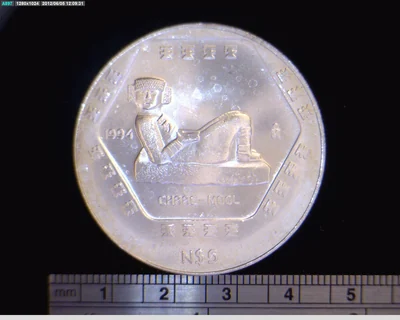
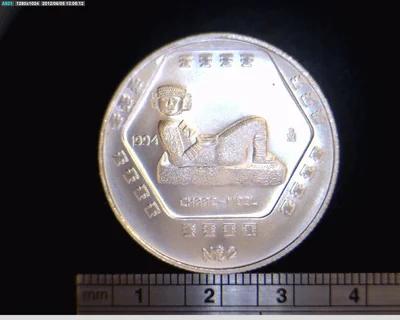
Figure of the Chaac-Mool (reclining Maya figure who held offerings over the belly) within a hexagonal shield with a decorated border. Legends: "1994", mint mark "Mo", "CHAAC-MOOL" and the denomination "N1".
Obverse
Mexican National Coat of Arms with the legend "ESTADOS UNIDOS MEXICANOS". The inscriptions of the face value "N$1" and the denomination "1 NUEVO PESO" appear.
The 1 Nuevo Peso Chaac Mool 1994 is worth between $263 and $288 MXN depending on its grade of preservation.
Prices updated: August 2026
How much is the 1 Nuevo Peso Chaac Mool 1994 (Silver) worth?
The estimated value of the 1 Nuevo Peso Chaac Mool 1994 (Silver) ranges from $263 (circulated, XF) up to $288 (official blister pack), with $279 as a reference for an uncirculated (UNC) piece. The estimate is based on the official mintage and the historical behavior of the family.
The real price depends on four factors: the grade of preservation (a circulated piece is worth the low end of the range; an uncirculated one, or one still in its official blister pack, the high end), the finish (satin vs mirror/proof), the rarity within the series based on the mintage, and the metal spot price on the day of the deal when the piece is silver or gold. Check the value-by-grade table above and compare with equivalent pieces before buying or selling.
Where to buy or sell this coin?
Browse the national directory of numismatic shops or the community forum to trade directly with other collectors.
Description
Despite the "1 Nuevo Peso" on its face, this 1994 coin is not the little pocket change that circulated in Mexico. It is a pure silver bullion piece, and its value comes almost entirely from the metal it contains. In 2026, a nice uncirculated example trades in the 18 to 34 USD range, with a metal floor around 8 to 10 USD.
If you inherited one or pulled it out of a box of old coins, here is the honest answer on what it is, whether it's rare (it isn't), and how to check yours before you sell.
What you actually have
This is the 1/4 ounce fraction of the Precolombina Maya (Pre-Columbian Maya) silver series that Mexico's Casa de Moneda (the national mint) issued alongside the 2 and 5 nuevos pesos coins. "Nuevos pesos" was the currency Mexico used from 1992 to 1995 after knocking three zeros off the old peso.
The star of the design is the Chaac-Mool, a reclining Maya figure that held offerings for the gods on its belly, framed inside a hexagonal shield. One side shows the Chaac-Mool with the denomination N1. The other carries the national eagle and the legend "1/4 ONZA DE PLATA LEY 0.999" (1/4 ounce of silver, .999 fineness), which is your clearest proof this is a bullion coin and not a circulating peso.
Key specs:
- Weight: 7.78 g
- Silver content: 1/4 troy ounce (about 7.75 g of .999 fine silver)
- Diameter: 27 mm
- Edge: reeded
- Catalog: KM# 572
- Mintage: 30,000 normal strike, plus 2,500 proof
Is it rare? No
With 30,000 regular pieces and 2,500 proofs struck (per Numista, KM# 572), this is one of the more accessible coins in the Maya series. It shows up regularly with dealers and collectors, so you won't have trouble finding one to buy or a buyer when you sell.
Because it isn't scarce, the coin doesn't carry a big collector premium over its silver. That's not a knock on it, it just means you should price it as silver first, design second.
What it's worth in 2026
The value has two layers: the silver floor and the collector price.
Silver floor. It holds 1/4 troy ounce of .999 silver. Whatever silver is trading at per ounce, divide by four for the raw metal value. In 2026, that floor lands roughly in the 8 to 10 USD range, and it moves with the silver spot price.
Collector market. Uncirculated examples typically sell in the 18 to 34 USD range. Proof strikes and coins in flawless condition command a bit more. The difference between a worn coin and a bright, untouched one is real here, so condition matters.
| Coin | Year | Type | Typical value (USD) |
|---|---|---|---|
| 1 Nuevo Peso Chaac Mool | 1994 | Uncirculated | 18 to 34 |
| 1 Nuevo Peso Chaac Mool | 1994 | Proof | 25 to 45+ |
| 1 Nuevo Peso Chaac Mool | 1994 | Silver melt floor | ~8 to 10 |
These are working market ranges, not record prices. This isn't a coin that breaks auction records, and any listing claiming it's worth hundreds is priced for the metal it doesn't contain.
How to tell if yours is genuine
Counterfeits of low-premium silver coins exist, so run the basic checks:
- Weight: should sit right around 7.78 g. A cheap digital scale settles most doubts.
- Diameter: 27 mm.
- Edge: reeded (grooved).
- Legend: the anverse must read "1/4 ONZA DE PLATA LEY 0.999." No fineness legend is a red flag.
- Color: real .999 silver is bright white-gray. If the metal looks yellowish or brassy, be suspicious.
If the weight or diameter is off, walk away.
Where to sell it
Because it's recognizable pure silver, this coin moves easily among collectors and metal buyers. Compare offers against the day's silver spot price so you don't sell for less than the metal is worth. Use the Pesoteca store directory to find dealers who buy and sell Mexican silver near you, and check the rest of the Nuevos Pesos 1992-1995 series if you want to know what else from that era is worth keeping.
Got one in your inherited lot? Post a photo of both sides in the Pesoteca forum and we'll help you tell a plain uncirculated coin from a proof worth a little more.
Historical context
The Chaac Mool is a Mesoamerican sculptural figure depicted in a reclining position with the head turned and a vessel on the abdomen. It appears at Maya sites such as Chichén Itzá and is associated with ritual offerings to Chaac, deity of rain. The iconography is one of the most representative of the Maya Postclassic. The 1994 issue corresponds to the second series of the Bank of Mexico's Pre-Columbian program, dedicated exclusively to Maya culture. The Pre-Columbian program began in 1992 with the Aztec series and continued with Veracruz (1993), Maya (1994), Olmec (1996), Teotihuacán (1997), and Toltec (1998). The pieces were struck at the Mexican Mint and offered to collectors and investors in parallel silver and gold denominations with coordinated motifs. International catalog reference: KM#572 (Krause/World Coins).
This piece belongs to the era
Nuevos Pesos y actualidad →Explore all the Mexican coins of this era, their historical context and how they connect to the monetary system of the period.
Value range of this piece
Market estimate: $263 - $288 MXN depending on the grade of preservation (typical range between a circulated and an uncirculated piece).
See the full breakdown by grade (VG, F, VF, EF, AU, MS-60, MS-63, MS-65) for the whole series →
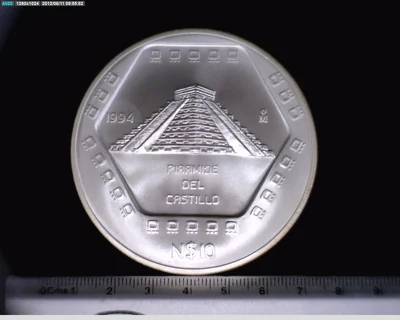
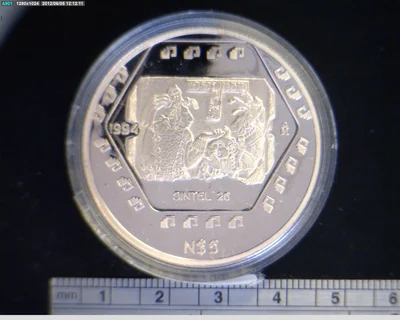
Other denominations from 1994
Nuevos Pesos 1992-1995 · Plata 0.999
Frequently asked questions
How much is the 1994 Chaac Mool 1 Nuevo Peso worth?
Its floor is the silver: it holds 1/4 troy ounce (about 7.75 g of .999 silver), worth roughly 8 to 10 USD in metal at {{AÑO}} spot prices. On the collector market, uncirculated examples sell for about 18 to 34 USD depending on condition, with proofs a bit higher.
Is it real silver or just a circulating peso?
It is genuine pure silver. This is not the circulating 1 nuevo peso coin, it's a 1/4 ounce bullion piece, .999 fine, cataloged as KM# 572. The coin itself says so with the legend '1/4 ONZA DE PLATA LEY 0.999' on the eagle side.
Is the 1994 Chaac Mool rare?
No. There were 30,000 struck in normal quality plus 2,500 in proof (Numista, KM# 572). It's one of the most accessible coins in the Pre-Columbian Maya series and easy to find, so it trades mostly on its silver content rather than rarity.
How do I know if my Chaac Mool 1994 is genuine?
It should weigh about 7.78 g, measure 27 mm across, and have a reeded edge. The '.999 silver, 1/4 ounce' legend must appear on the eagle side. If the weight or diameter is off, or the metal looks yellowish, be suspicious.
Conversation
0 comments
Sources
Images for informational and educational purposes, attributed to their original source. Reference values; the real price depends on the grade, the specific variant and demand.
Loading comments…