
1 Centavo 1863 (Copper): Value & Price Guide
Prices updated: August 2026
Mexican Republic · Mexico City Mint
Mexican Republic · Mexico City Mint
How much is the 1 Centavo 1863 (Copper): Value & Price Guide worth?
The market value of the 1 Centavo 1863 (Copper): Value & Price Guide is not yet documented with enough data to give a firm range. Weigh and measure your piece, compare it against the specifications, and check the forum for a second opinion.
The real price depends on four factors: the grade of preservation (a circulated piece is worth the low end of the range; an uncirculated one, or one still in its official blister pack, the high end), the finish (satin vs mirror/proof), the rarity within the series based on the mintage, and the metal spot price on the day of the deal when the piece is silver or gold. Check the value-by-grade table above and compare with equivalent pieces before buying or selling.
Where to buy or sell this coin?
Browse the national directory of numismatic shops or the community forum to trade directly with other collectors.
Description
Most 1863 Mexican 1 centavo coins are worth a few dollars in worn condition. The value jumps only when the coin is certified in high grade, where clean uncirculated examples can reach the low hundreds in USD. Here is what actually drives the price and how to check yours.
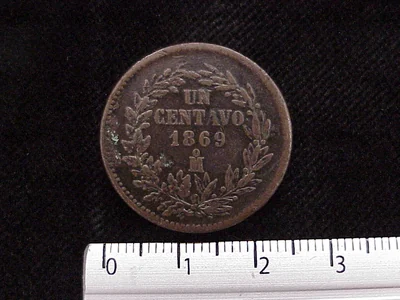
This is a copper 1 centavo (one cent) struck in 1863 at the Casa de Moneda de México, the Mexico City Mint, during the early decimal coinage of the Mexican Republic. It belongs to the Mexican Centavos series. If you inherited one or pulled it out of an old box, this page tells you the range, the red flags, and where to sell.
What it's actually worth
Copper coins from this era are common in low grades and scarce in high grades. That gap is the whole story of the value. A brown, worn 1863 centavo with soft detail is a low-value collectible. The same coin with sharp relief, original surfaces, and a red or red-brown color grade jumps in price because those survivors are rare.
Value by condition, in US dollars:
| Condition | What it looks like | Approx. value (USD) |
|---|---|---|
| Well circulated (G-VG) | Flat, worn detail, dark brown | 3 to 10 |
| Moderately circulated (VF) | Readable design, some wear | 10 to 30 |
| Lightly circulated (XF-AU) | Sharp detail, minor wear | 30 to 90 |
| Uncirculated (MS, certified) | Full detail, original luster | 100 to 300+ |
These are guide ranges, not fixed prices. Copper is unforgiving: corrosion, cleaning, or spots can cut the value of an otherwise nice piece in half. A certified example from NGC or PCGS almost always sells for more than a raw coin of the same apparent grade, because buyers trust the grade and the authenticity.
Specifications (check these first)
Before anything else, weigh and measure your coin. The genuine 1863 1 centavo has these exact specs:
- Denomination: 1 centavo
- Year: 1863 (single year of issue for this type)
- Metal: copper
- Weight: 8.19 grams
- Diameter: 25 mm
- Edge: reeded (grooved)
- Mint: Casa de Moneda de México (Mexico City)
- Era: Mexican Federal Republic
If your coin does not match the weight and diameter closely, treat it as suspect until proven otherwise.
Is it rare?
The exact mintage for this issue is not officially documented, which tells you it was not a mass modern issue. Rarity here is about condition, not raw survival. Circulated examples exist; genuinely uncirculated, problem-free copper is where the scarcity and the money are. Because it was struck in a single year, there are no year varieties, though die varieties (minor letter positions, small striking differences) exist that only graders like NGC or PCGS reliably identify.
How to tell if it's genuine
Copper coins from the 1860s get faked and, more often, get confused with damaged coins. Run through this:
- Weight and size. It must land near 8.19 grams and 25 mm. Fakes are frequently off.
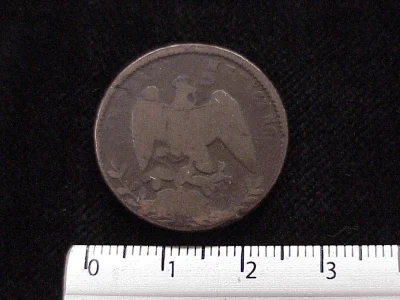
- Relief detail. Genuine strikes have crisp, dimensional relief. Cast fakes look flat, mushy, or have a grainy surface.
- Edge. The reeding should be even and sharp.
- Surface. Real corrosion pits and post-mint damage are not "errors." Most "error" copper circulating online is just damage.
For any coin you think is worth more than pocket change, professional grading from NGC or PCGS is the definitive check. It confirms authenticity and grade in one step.
Errors and varieties
Genuine mint errors (off-center strikes, die rotation, doubled strikes) can multiply value when they are real and verifiable. The catch: most "errors" people spot are post-mint damage, corrosion, or hits, not factory mistakes. If you think you have a true error, post clear photos of the obverse, reverse, and edge in the Pesoteca forum and let collectors review it before you get excited.
Where to sell it
Your realistic options, ranked by safety:
- A verified numismatic dealer from the Pesoteca shop directory, who can appraise it on the spot and pay a fair price.
- The Pesoteca buy-and-sell forum, dealing directly with collectors.
- Coin shows and collector groups, where you can compare offers.
- Online marketplaces, which get you exposure but attract the most fakes. If you buy or sell there, always request edge and weight photos.
Before you sell, photograph the obverse, reverse, and edge, and check the range in this guide so you know what a fair offer looks like. Do not take the first lowball offer on a social media group.
Have one sitting in a drawer and not sure which grade it falls into? Post your photos in the Pesoteca forum and the community will help you pin down the grade and a realistic price.
Historical context
Straight three.
Edge: Reeded.
This piece belongs to the era
República Federal Mexicana →Explore all the Mexican coins of this era, their historical context and how they connect to the monetary system of the period.
Value range of this piece
Value range without enough data for this piece.
See the full breakdown by grade (VG, F, VF, EF, AU, MS-60, MS-63, MS-65) for the whole series →
Same denomination, other years
1 centavo Cobre · Centavos Mexicanos
Frequently asked questions
How much is an 1863 Mexican 1 centavo worth?
It depends heavily on condition. A worn, circulated copper example is worth roughly 3 to 30 USD. A certified uncirculated coin with original surfaces can reach 100 to 300 USD or more. Copper is fussy: cleaning, spots, or corrosion cut the value sharply. For a precise number, get it graded by NGC or PCGS.
Is the 1863 1 centavo rare?
It's common in low, worn grades and scarce in high grade. The exact mintage isn't officially documented, and it was struck only in 1863, so there are no year varieties. The rarity, and the value, is in problem-free uncirculated copper, which is genuinely hard to find.
How can I tell if my 1863 1 centavo is genuine?
It should weigh 8.19 grams and measure 25 mm with a reeded edge. Genuine strikes have crisp, dimensional relief; fakes look flat or grainy. If your specs are off, be cautious. For any coin worth more than a few dollars, NGC or PCGS grading confirms both authenticity and grade.
Where can I sell my 1863 1 centavo?
The safest routes are a verified dealer from the [Pesoteca shop directory](/tiendas), who appraises it in person, or the [Pesoteca buy-and-sell forum](/foro/compra-venta) with fellow collectors. Photograph the obverse, reverse, and edge first, and check this guide's ranges before accepting any offer.
Conversation
0 comments
Sources
Images for informational and educational purposes, attributed to their original source. Reference values; the real price depends on the grade, the specific variant and demand.
Loading comments…