
En resumen
The Mexican 50-peso Centenario is one of the most liquid gold coins in the world, holding 1.2057 troy ounces of pure gold. Here is what it's actually worth today and how to avoid overpaying.
If you inherited a heavy gold Mexican coin with an angel on one side, you likely have a Centenario, the 50-peso gold piece. In 2026, its value tracks the gold price closely: with gold near 4,000 USD per ounce, a single Centenario holds over 4,800 USD in pure gold alone. It is not rare, but it is one of the most liquid gold coins you can own.
Here is the honest picture. Almost the entire coin is pure gold, and gold does not ask anyone's permission about what it costs today. That is exactly why the Centenario has been a go-to bullion coin for more than a century.
What a Centenario actually is
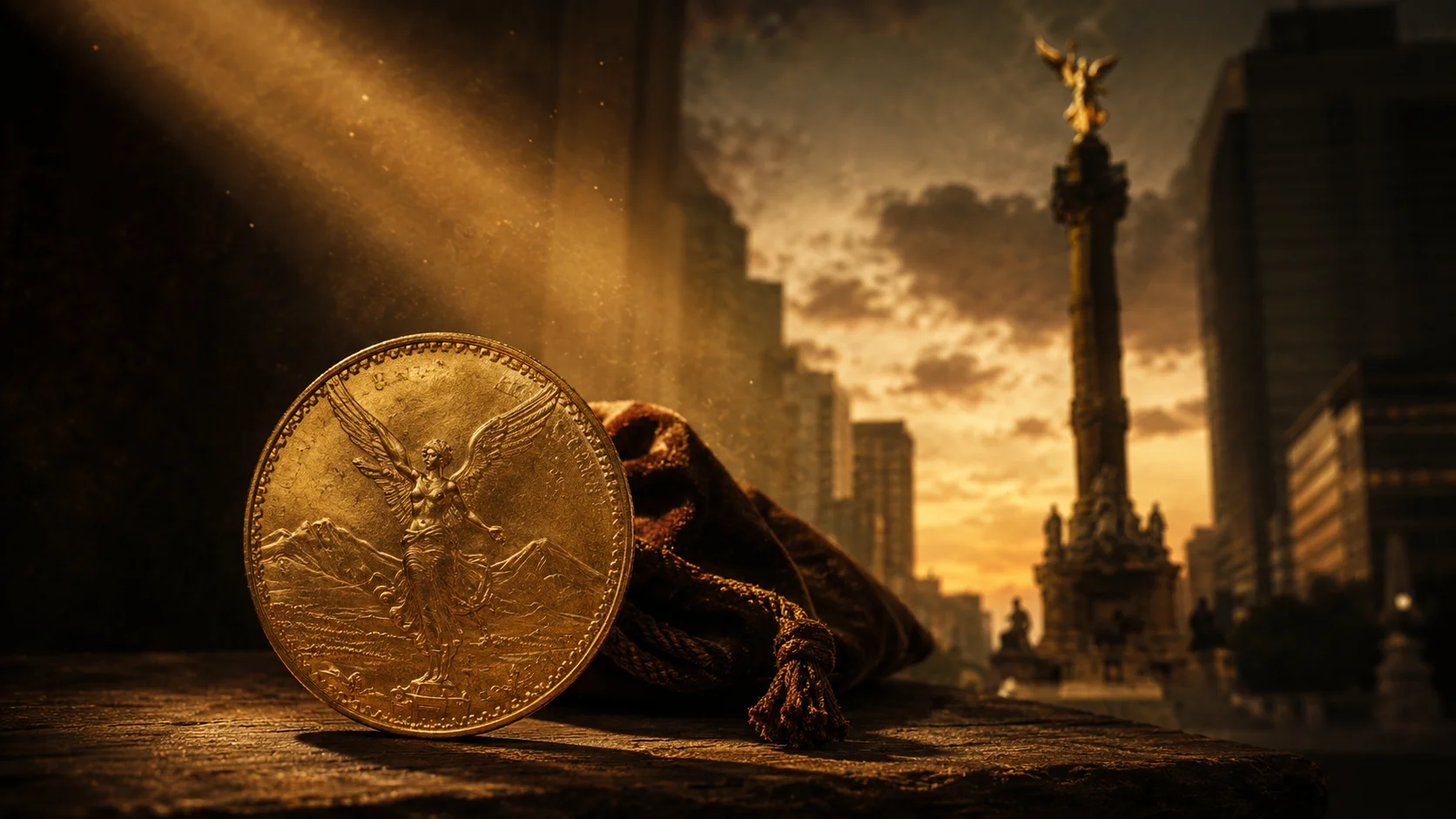
The 50-peso Centenario is a Mexican gold coin first struck between 1921 and 1947 to mark the 100th anniversary of Mexican independence (hence "Centenario"). The obverse shows the Mexican coat of arms; the reverse shows the winged Angel of Independence.
It is not rare. The Bank of Mexico has restruck it continuously since the 1940s using the "1947" date, so supply is steady. What makes it valuable is the metal content and the ease of selling it. Any major Mexican bank buys it the same day, no paperwork, at the day's gold price. That liquidity is what sets it apart from a generic gold bar or jewelry.
What's inside (the only numbers that matter)
| Spec | Value |
|---|---|
| Gross weight | 41.6667 g |
| Fineness | 0.900 (22 karat, 90% gold, 10% copper) |
| Pure gold content | 37.5 g (1.2057 troy oz) |
| Diameter | 37 mm |
| Thickness | 2.6 mm |
| Edge | Reeded |
| Design | Angel of Independence (reverse), coat of arms (obverse) |
Because it carries 1.2057 troy ounces of pure gold, its floor value is that metal times the current spot price. In 2026, with spot around 4,000 USD per ounce, that floor sits above 4,800 USD per coin.
Original date vs. restrike: this changes the price
This is the one thing most first-time buyers miss.
- Dated 1921 to 1930: these are original historic strikes. They can carry a numismatic premium above pure gold value, especially in high grade.
- Dated 1947: almost always a modern restrike. These are worth their gold content at the day's spot price, nothing more.
So if someone offers you a Centenario dated 1925 or 1930, you may have a collectible worth more than melt. If it is dated 1947, you are buying gold, priced as gold. Do not pay a collector premium for a 1947 restrike.
What it's worth today (the honest formula)
The math is simple. Take the spot gold price, multiply by the ounces the coin holds, then add the seller's spread:
Spot gold (USD/oz) × 1.2057 oz = metal value
At 4,000 USD per ounce, the gold in one Centenario is worth about 4,823 USD. On top of that, dealers and banks add a premium:
- Mexican Mint (Casa de Moneda): 4 to 5% over spot
- Major Mexican banks (Banamex, Banorte, HSBC, Santander): 5 to 7% over spot
- High-volume retail lenders (Banco Azteca): 7 to 8%, they charge more
- Independent dealers: 8 to 10% when selling to you, and they pay 7 to 9% below spot when buying from you
When you sell, expect to receive slightly under spot. That gap is how the buyer makes money. For the live price broken down by seller, see our Centenario price today page.
How to spot a fake before you pay
If someone offers you a Centenario through a marketplace listing, a friend of a friend, or a "family heirloom" story, one rule applies: scale and calipers in front of you.
A genuine coin weighs exactly 41.66 g and measures 37 mm. If it does not, walk away. The most common fakes are:
- Tungsten plated with gold: the weight can match, but the sound is off and XRF testing exposes the composition instantly.
- Copper alloys: lower weight, similar color. The scale catches these.
A jewelry scale accurate to 0.1 g costs about 20 USD. For a coin worth thousands, that is the cheapest insurance you can buy.
If you are spending real money, do not close the deal without XRF verification. The Mexican Mint and serious coin dealers do it in about ten seconds, non-invasive. If the seller refuses to have the coin tested, the conversation is over.
Centenario or gold Onza Libertad?
The most common question from first-time gold buyers. Practical differences:
The Centenario holds 1.2057 ounces of pure gold. The gold Onza Libertad holds exactly one ounce. Both are treated as legal-tender coins in Mexico, so both trade at the day's gold price and any major bank accepts them.
- Buying to hold long term without splitting the position: the Centenario. More gold per coin, fewer pieces to store and secure.
- Planning to sell in pieces over time: the Onza Libertad. You can sell one ounce at a time without breaking a larger lot.
- Giving a gift meant to hold value for generations: the Centenario. The Angel of Independence carries strong cultural weight in Mexico.
Both are solid choices. The right one depends on whether you value maximum gold per coin or flexibility when you sell.
Where to sell yours
If you already own a Centenario and want to sell, your best options in order of price:
- The Mexican Mint or a reputable coin dealer: closest to spot, plus authentication on the spot.
- A major bank: convenient, slightly below spot.
- Independent buyers: fastest cash, but the widest spread against you.
Get it verified first. A tested, confirmed-authentic coin sells faster and closer to spot than one the buyer has to inspect from scratch.
Do you have one tucked away, or are you thinking about buying your first? Tell us in the forum, there is usually someone who just went through the same process and can save you the learning curve. If you are buying to store value rather than collect, check whether it makes sense to invest in the gold Centenario at today's prices.

Loading comments…