
500 Pesos Banknote (1978, Morelos): Value Guide
Familia A · algodón
Period: México Contemporáneo
Design
Banxico
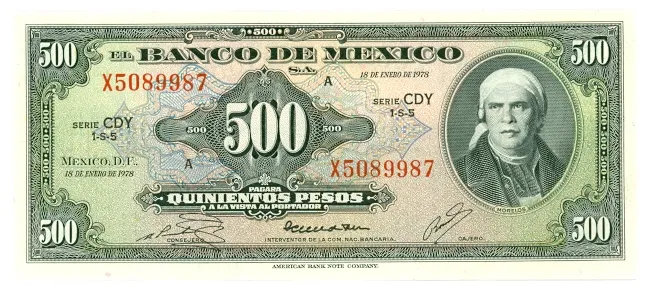
Obverse
José María Morelos
Portrait of José María Morelos y Pavón
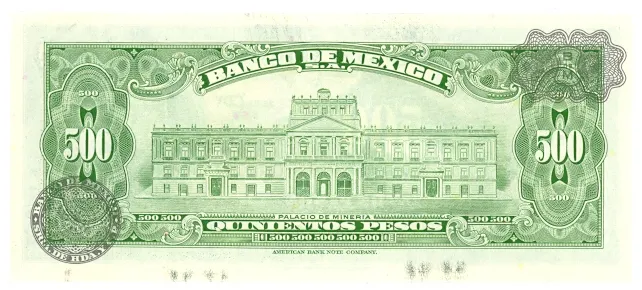
Reverse
The Palace of Mining in Mexico City
About this banknote
Most 1978 Mexico 500 pesos notes are worth a few US dollars, not a fortune. This green note featuring José María Morelos y Pavón is one of the more common Banco de México "Family A" issues, so the myth that any old Mexican note is worth hundreds of dollars almost never holds. But a small number, uncirculated examples, low serial numbers, or genuine printing errors, do sell for meaningful premiums to collectors.
If you inherited or found one of these green notes, here is what actually drives the price and how to check yours.
What this note is
The front (anverso) shows José María Morelos y Pavón, the priest and general who led Mexico's independence movement into its most organized phase, convening the Congress of Chilpancingo and drafting the Sentimientos de la Nación (Sentiments of the Nation) in 1813. It is a dominant green note, which is how most collectors recognize it at a glance.
The back (reverso) shows the Palacio de Minería in Mexico City, the neoclassical masterpiece by architect Manuel Tolsá. The design is one reason this denomination is popular with collectors of the period.
It was issued by Banco de México as part of what Mexican catalogs call Family A (the first modern family of designs). "Family A" simply means the earliest design series in that classification system, so a Family A note is not automatically rare. Many of them were printed in large numbers.
What it is worth
This note is no longer legal tender for spending, so its value is purely collector value, not face value. Condition is the single biggest factor.
| Condition / feature | Typical value (USD) |
|---|---|
| Circulated, folds and wear | roughly 1 to 5 dollars |
| Uncirculated, crisp, sharp corners | roughly 10 to 40 dollars |
| Low serial number or palindrome (radar) serial | premium, often several times the base |
| Genuine printing error (miscut, ink shift, misaligned serial) | premium, can be many times face, sold case by case |
These are broad ranges, not guarantees. A common circulated example is worth a few dollars at most. The premium comes from three things a collector will pay extra for:
- Uncirculated grade. No folds, no stains, corners still sharp, original paper crispness. Graded examples (PMG, PCGS Banknote) command more because the grade is certified.
- Special serial numbers. A very low serial (like 00000123), a solid serial, or a palindrome/radar serial (reads the same forward and backward) draws bids.
- Genuine factory errors. Miscuts, ink smears, doubled or missing serials, and fold-overs from the press can turn a common note into a real rarity. Normal wear and handling damage is not an error.
Treat the "worth thousands" listings you see online with skepticism. Most Family A notes are common. The high numbers apply only to top-grade certified examples or genuine error notes.
How to check what yours is worth
- Grade it honestly. Hold it flat under good light. Any fold, soft corner, or stain drops it out of uncirculated territory and into the few-dollars range.
- Read the serial number. Low, solid, or palindrome serials are worth flagging. A plain mid-range serial adds nothing.
- Look for errors. Compare edges, ink, and serial alignment against a normal note. A real factory error is consistent and repeatable in how it was produced; damage from use is not.
- Photograph both sides in even, natural light before showing it to anyone.
How to tell if it is genuine
Check the security features against official Banco de México images of the issue:
- Watermark visible when held to the light.
- Security thread embedded in the paper.
- Microprinting that stays sharp under magnification.
- Intaglio relief you can feel with a fingertip on the portrait and lettering.
Reproductions and "souvenir" copies usually give themselves away with smooth, flat paper and flat, printed-looking colors instead of the raised feel of genuine intaglio printing. If you are unsure, post clear photos of the front and back in the Pesoteca forum and the community will help you assess it.
Where to sell it
To sell the 1978 500 pesos note safely, use a verified numismatic dealer from the Pesoteca shop directory, who can appraise it on the spot, or list it in the Pesoteca buy-and-sell forum where collectors deal directly. Photograph both faces in good light, note the serial number, and mention any error. Avoid dumping it to the first buyer on social media, world paper money (notaphily) is an active market and a rushed sale usually leaves money on the table.
For context on what to watch out for, see the most counterfeited banknotes in Mexico and our broader guide to collectible Mexican banknote values.
Have one with an unusual serial or still sealed in a blister pack? Post it in the forum and let the community weigh in.
Historical context
The 1978 500-peso note bears José María Morelos y Pavón, the great leader of Independence after the fall of Hidalgo. A military strategist and political organizer, he convened the Congress of Chilpancingo and drafted the Sentiments of the Nation (1813), a document that laid foundations for the future republic before his execution in 1815.
The reverse shows the Palacio de Minería (Palace of Mining) in Mexico City, a Neoclassical jewel designed by Manuel Tolsá in the early nineteenth century, one of the most notable architectural works of late colonial Mexico.
This piece belongs to family A of the "old pesos." Its 500-peso denomination was beginning to reflect the erosion of purchasing power: by the late 1970s the country was carrying growing debts that, once into the 1980s, would trigger inflation and force the issue of notes worth thousands and tens of thousands of pesos.
Frequently asked questions
How much is the 1978 Mexico 500 pesos note worth?
A common circulated example is worth roughly 1 to 5 US dollars. An uncirculated, crisp note runs about 10 to 40 dollars, and examples with a low serial number, a palindrome serial, or a genuine printing error sell for several times more. Condition and rarity decide the price, not age.
Is the 1978 500 pesos (Morelos) note rare?
No, most of them are common. It belongs to Banco de México's Family A, and many were printed. What is scarce, and worth a premium, is a top-grade uncirculated note, a special serial number, or a verified factory error. A plain, worn example is not rare.
Where can I sell my 1978 500 pesos banknote?
The safest options are a verified dealer from the Pesoteca shop directory, who appraises it in person, or the Pesoteca buy-and-sell forum where collectors trade directly. Photograph both sides clearly, note the serial number, and flag any error before you agree on a price.
How can I tell if my 1978 500 pesos note is genuine?
Check the security features against official Banco de México images: watermark held to the light, embedded security thread, sharp microprinting, and raised intaglio relief you can feel on the portrait. Copies usually have smooth flat paper and flat colors. If unsure, post photos in the Pesoteca forum.
Características Banxico
1-S-5
Familia A
This banknote belongs to the BIL-A family within the Sistema PSM . Explore all the banknotes that share origin, era and design with this piece.
Ver todos los billetes de la familia A →