
Mexico 500 Pesos Banknote (1992): Value & How to Sell
Familia A · algodón
Period: México Contemporáneo
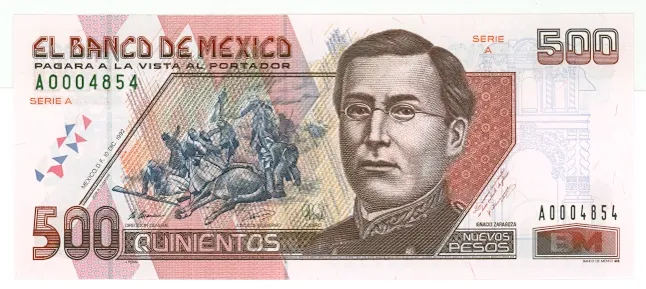
Design
Banxico
Obverse
Ignacio Zaragoza
Portrait of Ignacio Zaragoza and a battle scene
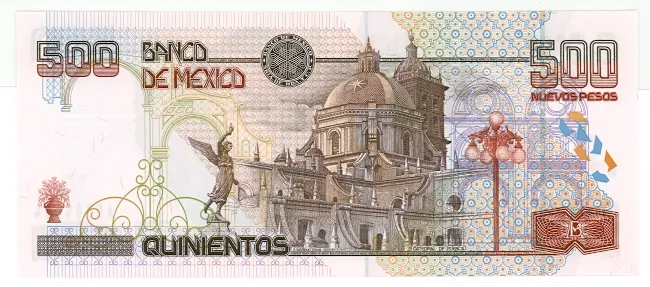
Reverse
The cathedral and historic center of Puebla
About this banknote
Most 1992 Mexican 500 pesos notes are worth a few dollars as collectibles, not a fortune. This is a demonetized note from the Banco de México "Familia A" (Family A) series, and the honest truth is that circulated examples are common. But an uncirculated note, a low or palindrome serial number, or a genuine printing error can push the value several times higher. Here is what yours is actually worth in 2026 and how to check.
What this note is
The 500 nuevos pesos note ("new pesos," from Mexico's 1993 currency revaluation) features Ignacio Zaragoza, the general who defeated the French army at the Battle of Puebla on May 5, 1862. That victory is the reason Cinco de Mayo is celebrated. Beside his portrait is a scene from the battle. The back shows the cathedral and historic center of Puebla, the city that held off the French assault.
This is the direct predecessor of the later 500-peso note from Family F. It belongs to the Banco de México Familia A, the first modern family of Mexican banknotes, and it has since been withdrawn from circulation.
How much is it worth in 2026
Because this note no longer circulates, its value is collector value, not face value. Condition drives everything.
- Circulated (folds, creases, soft corners): common. Expect a few US dollars, roughly 3 to 8 USD, for a typical worn example.
- Uncirculated (crisp, no folds, sharp corners, no stains): worth noticeably more, often 15 to 40 USD depending on the grade and the buyer.
- Low serial numbers, palindrome (radar) serials, or early series letters: these carry a premium and are actively sought by world paper money collectors.
- Genuine printing errors: the real money is here. Misaligned cuts, ink smears, foldovers, or repeated serials can sell for several times the note's normal value.
Be skeptical of the inflated "rare, worth thousands" listings you see online. Most Familia A notes are common. Only the scarce variants command real premiums.
| Attribute | Typical value (USD) |
|---|---|
| Circulated, no special features | 3 to 8 |
| Uncirculated | 15 to 40 |
| Low serial / radar serial | 30 to 100+ |
| Genuine printing error | Several times normal, case by case |
Values depend heavily on grade and the specific buyer. A note certified by a grading service (such as PMG) in high grade will always sell for more than a raw, ungraded example.
The overhyped ones that aren't worth much
Simple age does not make this note valuable. A worn, folded, stained 500 pesos from 1992 is a common note, no matter how old it looks. Damage from handling is not a "printing error" and adds nothing. If a listing claims a plain circulated example is worth hundreds of dollars, it is priced by hope, not by the market.
How to check what yours is worth
Check three things:
- Condition. Is it uncirculated, with no folds, no stains, and sharp corners? That alone is the biggest value factor.
- Serial number. Is it low, a palindrome, or from an early series letter? Any of those raises demand.
- Errors. Look for misaligned printing, off-center serials, or factory foldovers. Genuine factory errors are the ones worth real money.
If you think you have a real error or an unusual serial, post clear photos of both sides to the Pesoteca forum and the community can review it.
Where to sell it
For the safest sale, use a verified numismatic shop from the Pesoteca directory, which can appraise it on the spot, or the collector buy-and-sell forum where you deal directly with other collectors. Photograph both faces in good light and note the serial number before you agree to any price. Avoid dumping it to the first Facebook buyer who offers.
To understand which Mexican notes are most often faked, read our breakdown of the most counterfeited banknotes in Mexico.
Got one with an unusual serial or still sealed in a blister pack? Post it in the forum so the community can take a look.
Historical context
The 500 pesos of 1992 pays tribute to General Ignacio Zaragoza, the officer who commanded the Mexican army at the Battle of Puebla on May 5, 1862, when national troops defeated the French forces, then considered the finest in the world. That victory, though fleeting in strategic terms, became a symbol of national dignity and gave rise to one of Mexico's most celebrated dates. The note pairs his portrait with a battle scene.
The reverse shows the cathedral and historic center of Puebla, the city forever linked to his feat.
This piece belongs to the last of the "old pesos" of the A family. Issued in 1992, it circulated very briefly: the monetary reform of January 1993 removed three zeros from the peso and its denomination became 500 new pesos.
Frequently asked questions
How much is the 1992 Mexico 500 pesos note worth?
A typical circulated example is worth a few US dollars, roughly 3 to 8 USD. An uncirculated note runs higher, often 15 to 40 USD, and a low serial number, palindrome serial, or genuine printing error can sell for several times that. Condition and rarity decide the price.
Is the 1992 Mexico 500 pesos banknote rare?
In general, no. It belongs to the Banco de México Familia A (Family A) series and most examples are common. What makes one rare is an uncirculated grade, a low or radar (palindrome) serial number, an early series letter, or a genuine factory printing error.
Where can I sell my 1992 Mexico 500 pesos note?
The safest options are a verified numismatic shop from the Pesoteca directory, which can appraise it in person, or the Pesoteca collector buy-and-sell forum. Photograph both sides in good light, note the serial number and any errors, and compare offers before selling.
How can I tell if my 1992 Mexico 500 pesos note is genuine?
Check the security features: watermark held to the light, security thread, microprinting, and raised ink you can feel. Compare the design, paper, and signatures with official Banco de México images. Reproductions usually have smooth paper and flat colors. If unsure, ask in the Pesoteca forum.
Familia A
This banknote belongs to the BIL-A family within the Sistema PSM . Explore all the banknotes that share origin, era and design with this piece.
Ver todos los billetes de la familia A →