
Mexico 50 Pesos Banknote (1973), Ignacio Allende: Value Guide
Familia A · algodón
Period: México Contemporáneo
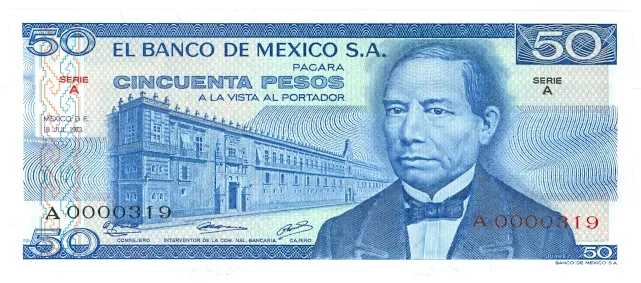
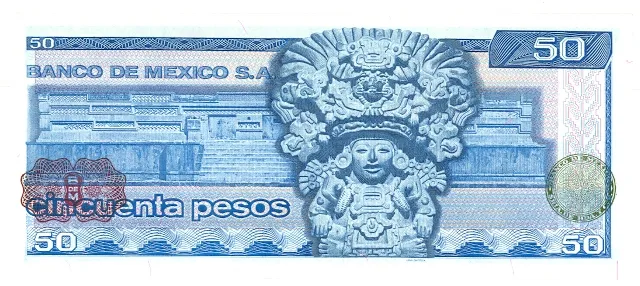
Design
Banxico
Obverse
Ignacio Allende
Portrait of General Ignacio Allende in military uniform
Reverse
The Angel of Independence
About this banknote
If you found a blue 1973 Mexican 50 pesos note, here's the honest answer: most examples are worth a few dollars, not a fortune. A worn, circulated note trades for roughly 2 to 8 USD among collectors. But an uncirculated example, a low or repeating serial number, or a genuine printing error can push the value well above that. Rarity and condition decide everything.
This note belongs to the Banco de México Familia A (Family A), the modern series issued from the late 1960s through the 1970s. The design carries Ignacio Allende on the front (the anverso), the military leader of the first months of Mexico's War of Independence, executed in 1811. The back (the reverso) shows the Ángel de la Independencia, the winged victory monument in Mexico City. The 1973 note shares its design with the 1972 issue; for collectors, the printed date is the difference that matters.
What the 1973 50 pesos is actually worth in 2026
This note no longer circulates, so its value is collector value, not face value. Condition drives the price more than anything else:
- Circulated (folds, soft corners, light soiling): roughly 2 to 8 USD.
- Uncirculated (crisp, no folds, sharp corners, no stains): commonly 15 to 40 USD, more for a top grade.
- Special serial numbers or genuine errors: several times the figures above, sometimes into the low hundreds of USD.
Most Family A notes are common. Millions were printed and many survived, so the "old note equals big money" idea rarely holds here. The premium sits with three things: grade, serial number (low numbers, radar/palindrome numbers, or early series), and printing errors.
| Note | Year / Series | Typical value (USD) | Where it trades |
|---|---|---|---|
| 50 pesos, circulated | 1973, Family A | 2 to 8 | Collector forums, eBay |
| 50 pesos, uncirculated | 1973, Family A | 15 to 40 | Notaphily dealers, auction |
| 50 pesos, low/radar serial | 1973, Family A | 40 to 150+ | Specialist collectors |
| 50 pesos, genuine print error | 1973, Family A | 50 to several hundred | Auction, forum sale |
Ranges reflect the active English-language world paper money market. A certified grade from PMG (Paper Money Guaranty) can raise the ceiling for a genuinely high-grade note.
Does yours carry a premium? Check three things
- Grade. Hold it flat. No folds, no soft corners, no writing or stains means uncirculated, and that alone multiplies the value. Any crease drops it into the circulated range.
- Serial number. Low numbers (like 0000123), repeating or palindromic numbers (a radar note reads the same forwards and backwards), and early series letters attract buyers.
- Printing errors. Misaligned cuts, ink smears, factory folds, or off-center printing turn a common note into a rarity. Note the difference: normal wear and handling damage is not a factory error and adds nothing.
If you think you have an odd serial or a real error, post clear photos of both sides in the Pesoteca forum and the community can weigh in. For context on what Mexican paper is actually faked, see the most counterfeited banknotes in Mexico.
How to tell if your 1973 50 pesos is genuine
Check the built-in security features against official Banco de México images:
- Watermark: hold the note to the light and look for the shaded portrait area.
- Security thread: an embedded line visible when backlit.
- Paper feel: genuine notes use cotton-based banknote paper with a distinct texture and slight relief. Reproductions feel smooth and print flat, dull colors.
- Design detail and signatures: compare the fine engraving lines and the signatures to reference photos.
Souvenir reprints and outright fakes usually give themselves away on paper and color. When in doubt, ask in the Pesoteca forum before you buy or sell.
Where to sell (or buy) the 1973 50 pesos
To sell, your safest options are a verified dealer or a collector-to-collector sale. Browse the Pesoteca dealer directory for a shop that will appraise it on the spot, or list it in the Pesoteca buy and sell forum among collectors who know the series. For an international audience, world paper money also moves on eBay and through specialist auction houses.
Before you sell: photograph both sides in good light, note the serial number, and flag anything unusual (low serial, radar number, error). Those details raise the price. Don't dump it on the first social-media offer, and don't pay a premium for a common note dressed up as rare.
Got a 1973 50 pesos with an unusual serial or something that looks like a factory error? Post it in the forum and let the community grade it with you.
Historical context
This 50 pesos of 1973 preserves the portrait of General Ignacio Allende in uniform, the military leader of the 1810 insurgency. A criollo from present-day San Miguel de Allende, he brought to Hidalgo's movement the military rigor it lacked; captured in 1811, he was executed by firing squad and his head displayed, along with those of other leaders, at the Alhóndiga de Granaditas.
As in the previous issue, the reverse shows The Angel of Independence, the quintessential symbol of the feat he helped ignite. The design remained stable from one year to the next, something common in Family A.
Minted among the "old pesos," this note circulated well before the 1993 monetary reform. In 1973 the peso still retained stability; the inflationary crisis that would swell the denominations up to a hundred thousand pesos was still years away.
Frequently asked questions
How much is the 1973 Mexican 50 pesos note worth?
A circulated example trades for roughly 2 to 8 USD among collectors. An uncirculated note (crisp, no folds, sharp corners) commonly brings 15 to 40 USD or more. A low or repeating serial number, or a genuine printing error, can push the value into the low hundreds of USD. Condition and rarity decide the price.
Is the 1973 50 pesos note rare?
No, not in itself. It belongs to Banco de México's Family A series, printed in large numbers, so most examples are common. The value premium comes from grade (uncirculated), special serial numbers (low, radar, or early series), and genuine printing errors, not simply from its age.
How can I tell if my 1973 50 pesos note is genuine?
Check the security features against official Banco de México images: the watermark visible when held to light, the embedded security thread, the textured banknote paper with slight relief, and the fine engraving detail and signatures. Reproductions feel smooth and print flat, dull colors. If unsure, ask in the Pesoteca forum before buying or selling.
Where can I sell my 1973 50 pesos note?
The safest routes are a verified dealer from the Pesoteca directory, who can appraise it on the spot, or the Pesoteca buy and sell forum among collectors. World paper money also sells on eBay and through specialist auction houses. Photograph both sides in good light and note any low or unusual serial number before you sell.
Familia A
This banknote belongs to the BIL-A family within the Sistema PSM . Explore all the banknotes that share origin, era and design with this piece.
Ver todos los billetes de la familia A →