
20 Pesos Banco de Zacatecas (1898)
Familia PRIV · algodón
Period: Bancos privados de emisión
Design
Banxico
Obverse
Banco de Zacatecas
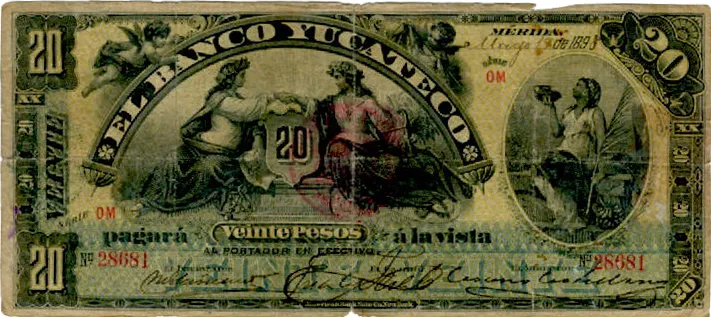
Engraved allegorical vignettes: a miner on the left, a female figure with goods in the center, and the profile portrait of a young man on the right
Reverse
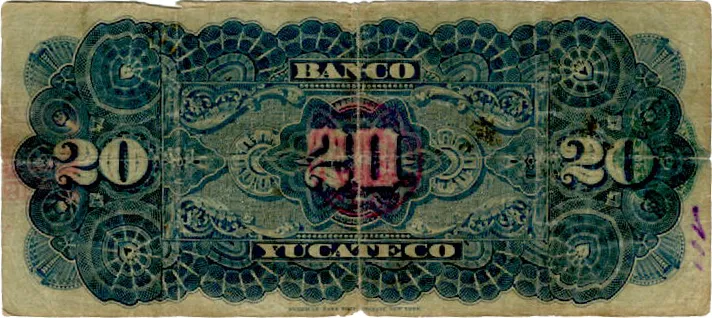
Scenes of mining and labor, or a monument set against the mountainous landscape of Zacatecas
About this banknote
If you inherited an 1898 Banco de Zacatecas 20 pesos note, here is the honest answer: most surviving examples sell in the range of 40 to 300 US dollars, and truly clean, high-grade pieces can reach several hundred dollars. This is not a rare-million-dollar note, but it is a genuine piece of Mexican banking history with a real collector market in 2026.
This is not modern Mexican currency and it is not a Banco de México note. It was issued by the Banco de Zacatecas, one of the private state banks authorized to print paper money during the Porfiriato (the 1876 to 1911 rule of President Porfirio Díaz). Before Mexico had a single central bank, individual states licensed private banks to issue their own banknotes, each backed by silver. That system ended in 1925 when the Banco de México was founded, which is why these older state-bank notes now trade purely as collectibles.
What it is worth in 2026
Because this note is over a century old, its value is entirely as a collectible. There is no face value to redeem, and the 20 pesos printed on it means nothing in modern money. What drives the price is condition, the issuing bank, and whether the note is issued or a remainder (an unissued example with no serial number or signatures, printed but never put into circulation).
| Type | Condition | Typical value (USD) |
|---|---|---|
| Circulated, issued (folds, wear) | Fine to Very Fine | 40 to 120 |
| Higher grade, issued | Extremely Fine | 120 to 300 |
| Remainder / specimen (unissued) | Crisp Uncirculated | 60 to 250 |
| Rare signature or serial variety | Any high grade | 300+ |
These are private-bank notes, so the market splits sharply. Some Porfiriato bank issues are common because large printings survived as remainders in bank vaults. Others are genuinely scarce because they actually circulated, got worn out, and few clean examples remain. Banco de Zacatecas notes sit in the accessible middle: collectible and desirable, but not a five-figure rarity. If a listing tells you this note is worth thousands, that is clickbait.
Why collectors want it
Zacatecas was one of the great silver-mining states of Mexico, and the note reflects it. The silver in the ground was the literal backing for the paper. The vignettes engraved on the note carry that theme:
- Obverse (front): a miner on the left, a female allegorical figure with goods at the center, and a portrait of a young man in profile on the right.
- Reverse (back): mining and labor scenes, or a monument set against the mountainous Zacatecas landscape.
For collectors of world paper money (notaphily), Mexican Porfiriato bank issues are a recognized specialty. The engraving quality, the mining iconography, and the story of a decentralized banking era make them consistently traded at auction and in specialist dealer stock.
What makes one worth more than another
Three factors move the price on this specific note:
- Condition. A crisp note with no folds, no tears, and bright color can be worth several times a soft, worn example. Notaphily grading runs from Poor up through Uncirculated, and the jump in value between Very Fine and Uncirculated is large.
- Issued vs. remainder. An issued note with a real serial number and hand or printed signatures is generally more interesting to a specialist than a blank remainder, though pristine remainders in Uncirculated grade also sell well.
- Serial number and printing quirks. Low serial numbers, unusual signature combinations, or genuine printing errors (misaligned cuts, doubled printing, offset ink) push a common note into rarity territory. Normal wear and handling damage is not an error.
How to tell if yours is genuine
Reproductions and modern reprints of Porfiriato notes exist, often sold as decoration. To check an original:
- Paper. Genuine period notes are printed on rag-content banknote paper with a distinct feel. Reprints often use smooth, modern paper with flat, uniform color.
- Engraving detail. Authentic notes show fine engraved line work under magnification. Copies show a printed dot pattern (halftone) instead of crisp lines.
- Serial and signatures. Compare the fonts, ink, and placement against confirmed examples of Banco de Zacatecas notes. Study reference images before you buy or sell.
When you are not sure, post clear photos of both sides in good light and let specialists weigh in. You can do that in the Pesoteca forum.
Where to sell or buy it
To sell an 1898 Banco de Zacatecas 20 pesos note, your safest routes are a verified numismatic dealer from the Pesoteca shop directory, who can appraise and pay you on the spot, or the Pesoteca buy-and-sell forum where collectors trade directly. For international sale, specialist world-paper-money auctions (such as Heritage Auctions) list Mexican Porfiriato bank notes regularly, which is the best way to reach the specialist buyers who pay top prices for high grade.
Before any sale, photograph both faces in good light, note the serial number, and check the condition honestly. Skip dumping it on a general marketplace to the first offer, since a specialist buyer will almost always pay more for a correctly described note.
Have a Banco de Zacatecas note, or another Porfiriato bank issue, that you cannot identify? Post the front and back in the Pesoteca forum and let the community pin down the bank, the variety, and a fair value.
Historical context
During the 1890s the Banco de Zacatecas consolidated a stable issue of notes that accompanied the state's mining boom. Founded in 1891, it operated backed by specie and with circulation limited to its territory, within the private banknote-issuing system that governed Mexico before the existence of a central bank.
This 20-peso note of 1898 corresponds to the mature years of the Porfiriato, when regional bank paper had become a common instrument of commerce. On the obverse appear the series's three vignettes: the miner evoking Zacatecan silver, a female figure with merchandise at the center, and the portrait of a young man in profile on the right, with mining scenes on the reverse. The printing, as with all its notes, was handled by the American Bank Note Company of New York, a guarantee of quality and security against counterfeiting. This issuing scheme would be replaced by the monopoly of Banco de México starting in 1925.
Frequently asked questions
How much is the 1898 Banco de Zacatecas 20 pesos note worth?
It has no spendable value, only collector value. A circulated example typically sells for 40 to 120 US dollars, and a clean, high-grade note can reach 300 dollars or more. Remainders (unissued examples) often bring 60 to 250 dollars depending on condition. Grade and rarity decide the price.
Is the 1898 Banco de Zacatecas 20 pesos note rare?
It is collectible but not a top-tier rarity. Some Porfiriato private-bank notes survive in quantity as remainders, while circulated issued examples in high grade are genuinely scarce. Anyone claiming this note is worth thousands is overselling it. Low serial numbers or genuine printing errors are what create true rarity.
Where can I sell an 1898 Banco de Zacatecas 20 pesos note?
Your safest options are a verified dealer from the [Pesoteca shop directory](/tiendas) or the [Pesoteca buy-and-sell forum](/foro/compra-venta). For high-grade notes, specialist world-paper-money auctions like Heritage reach the collectors who pay the most. Photograph both sides and note the serial number before selling.
How can I tell if my Banco de Zacatecas note is genuine?
Check the paper, the engraving, and the printing. Genuine notes use rag banknote paper with fine engraved lines, while reproductions use smooth modern paper with a printed dot pattern and flat color. Compare the serial number and signatures to confirmed examples. If unsure, post clear photos in the [Pesoteca forum](/foro).
Características Banxico
LXXX.
Familia PRIV
This banknote belongs to the BIL-PRIV family within the Sistema PSM . Explore all the banknotes that share origin, era and design with this piece.
Ver todos los billetes de la familia PRIV →