
Mexican 20 Pesos Note (2001, Family D): Value & How to Sell
Familia D · polímero
Period: México Contemporáneo
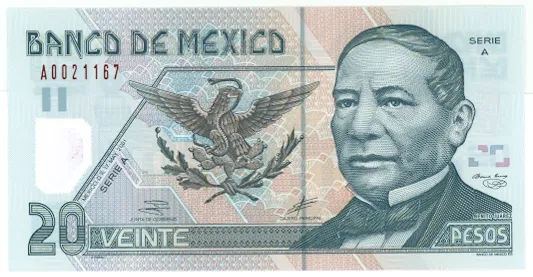
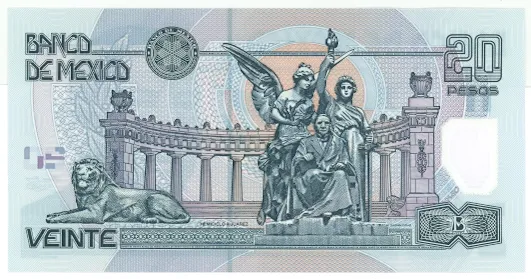
Design
Banxico
Obverse
Benito Juárez
Portrait of Benito Juárez (75th Anniversary of the Bank of Mexico)
Reverse
Monument and motifs of the Reform
About this banknote
Most 2001 Mexican 20 peso notes are worth about one US dollar, which is just their face value. A crisp uncirculated example with a special serial number or a genuine printing error is where the real collector money is, and that is what this page explains.
This is the Family D 20 peso note from the Banco de México, featuring Benito Juárez, a president of México and one of the country's most important historical figures. It was issued around the 75th anniversary of the Banco de México. This paper note is the direct predecessor of the famous blue polymer 20 peso note that most people recognize today, so check the year and series carefully so you do not confuse it with the later Family F polymer version.
What it is worth in 2026
Honest answer first: if the note is worn, folded, or stained, it is worth its face value of 20 pesos, roughly one US dollar. Age alone does not make a Mexican banknote valuable, and this one is not old enough or scarce enough to command a premium in circulated condition.
The value jumps when three specific things happen:
1. Uncirculated condition. A note that is crisp, flat, with no folds, tears, stains or handling marks is graded much higher by collectors. An uncirculated Family D 20 peso note can sell for several times face value, often in the range of a few US dollars to the low tens of dollars depending on eye appeal and whether it has been professionally graded.
2. A special serial number. Collectors of world paper money pay premiums for what are called fancy serials. Low numbers (like 0000123), radar or palindrome serials (that read the same forwards and backwards, such as 1234321), solid serials, and repeater patterns all add demand. A common note with an ordinary serial is worth face value; the same note with a low or radar serial can be worth many times more.
3. A genuine printing error. Misaligned cuts, ink smears, factory folds, and off-center or duplicated serials turn a common note into a scarce error piece. Error notes are actively collected and can be worth well beyond face value, sometimes into the tens or hundreds of dollars for dramatic, verifiable errors.
One point that trips up new sellers: ordinary wear and damage from use is not an error. A crease from someone's wallet is just a crease. A factory fold or an ink flaw that happened at the printing works is the error collectors want. If you think yours has a real error, get a second opinion before you assume it is valuable.
Quick value guide
| Condition / feature | What it typically means | Approximate value (USD) |
|---|---|---|
| Circulated, worn, ordinary serial | Face value only | ~1 |
| Uncirculated, ordinary serial | Modest collector premium | a few dollars to low tens |
| Low, radar or repeater serial | Fancy-serial demand | several times face value |
| Verified printing error | Scarce, actively collected | tens to low hundreds |
These are guide ranges for the paper Family D note, not fixed prices. Actual results depend on the exact grade, the serial, and how many collectors are bidding at the time.
Family D vs the polymer note
This is the paper predecessor of the blue polymer 20 peso note. The Banco de México later moved the 20 peso denomination to polymer (the plastic-feeling note with a clear window), and more recently began retiring the 20 peso denomination from active circulation in favor of a coin. That transition is exactly why collectors start hunting for the earlier paper versions in uncirculated condition: a denomination that is being pulled from circulation gains collector attention.
To place your note in context, read why the 20 peso note is disappearing from circulation and the most counterfeited banknotes in Mexico.
How to tell if yours is genuine
Check the built-in security features against official Banco de México images:
- Watermark: hold the note to the light and look for the portrait watermark in the blank area.
- Security thread: an embedded thread visible against the light.
- Microprinting: tiny text that stays sharp under magnification.
- Intaglio relief: genuine notes have raised ink you can feel with your fingertip.
Reproductions and photocopies usually give themselves away with smooth, flat paper and dull, printed-on colors with no raised texture. Compare the design, paper feel, and signatures with official references. If you are unsure, post clear photos of both sides in the Pesoteca forum and the community will weigh in.
Where to sell it
To sell the 2001 Family D 20 peso note, your safest options are a verified numismatic dealer or a collector-to-collector marketplace:
- A numismatic shop from the Pesoteca directory can appraise it on the spot.
- The Pesoteca buy-and-sell forum puts you in front of collectors who actually want world paper money.
Before you list or sell, photograph both faces in good light, and note the serial number and condition. Low serials, radar serials, and genuine errors raise the value, so flag them. Avoid dumping it on general social media to the first person who offers, since you are unlikely to reach real notaphily collectors that way.
Have a Family D 20 peso note with an unusual serial or a possible printing error? Post it in the forum and let us take a look.
Historical context
A second date variant of this 20-peso note of Family D, now with the peso fully consolidated after leaving behind the new pesos of the 1993 reform. As on the previous issue, the obverse bears the portrait of Benito Juárez, architect of the secular, republican Mexico of the nineteenth century.
The commemorative legend of the 75th Anniversary of the Banco de México is kept on this 2001 piece, a sign that the central institute extended that tribute in its issue of the most popular denomination. The reverse retains the monument and the motifs linked to the liberal Reform.
For the collector, distinguishing between the 2000 and 2001 dates of this same design is part of the appeal of Family D, a series in which small variations of year and signatures make the difference between pieces that are nearly identical to the naked eye.
Frequently asked questions
How much is the 2001 Mexican 20 pesos note worth?
A circulated, worn example is worth its face value of 20 pesos, roughly one US dollar. An uncirculated note can bring a few dollars to the low tens, and one with a low or radar serial number or a genuine printing error can be worth several times more. Condition and rarity drive the price.
Is the Family D 20 pesos note rare?
In circulated condition it is common and worth only face value. It becomes desirable when uncirculated, when it has a special serial number (low, radar, or repeater), or when it carries a verified printing error. As the 20 peso denomination is retired from circulation, uncirculated examples are drawing more collector interest.
Where can I sell my 2001 20 pesos note?
The safest routes are a verified dealer from the [Pesoteca shop directory](/tiendas), who can appraise it in person, or the [Pesoteca buy-and-sell forum](/foro/compra-venta) where world paper money collectors gather. Photograph both sides in good light and note the serial and condition before selling.
How do I tell if my 20 pesos note is genuine?
Check the security features: a portrait watermark and security thread visible against the light, microprinting that stays sharp under magnification, and raised intaglio ink you can feel. Fakes usually have smooth, flat paper and dull printed colors with no texture. If in doubt, post photos in the [Pesoteca forum](/foro).
Familia D
This banknote belongs to the BIL-D family within the Sistema PSM . Explore all the banknotes that share origin, era and design with this piece.
Ver todos los billetes de la familia D →