
Mexico 1,000 Pesos Banknote (1978): Value & Prices
Familia A · algodón
Period: México Contemporáneo
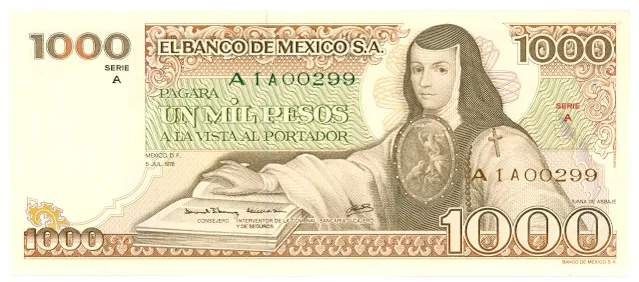
Design
Banxico
Obverse
Sor Juana Inés de la Cruz
Portrait of Sor Juana Inés de la Cruz (after the painting by Miguel Cabrera) and the San Jerónimo medallion
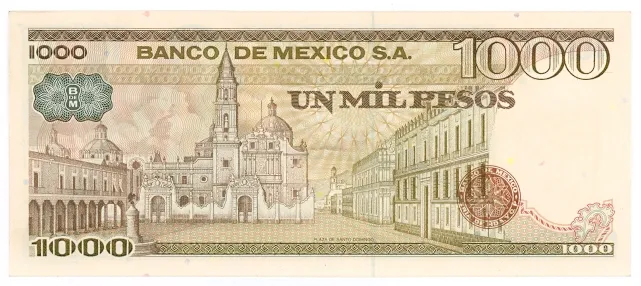
Reverse
A colonial plaza in Mexico City with its church
About this banknote
Most 1978 Mexican 1,000-peso notes are worth a few US dollars, not a fortune. In circulated condition this note trades for roughly 3 to 8 USD among collectors. A crisp uncirculated example, or one with a low or special serial number, can reach 20 to 40 USD or more. In 2026, that is the honest range for this Banco de México note.
This is the 1,000-peso note featuring Sor Juana Inés de la Cruz (1648-1695), the Hieronymite nun and poet often called the Tenth Muse, one of the greatest writers in the Spanish language. The old peso it is denominated in was replaced in 1993 by the "nuevo peso" at 1,000 old pesos to 1 new peso, so the face value in modern money is essentially symbolic. Its worth today is collector value, driven by condition, serial number, and any genuine printing error.
What the note looks like
According to the Banco de México circular, the front portrait reproduces part of the painting by Miguel Cabrera, the 18th-century Oaxacan artist. Beside Sor Juana sits a medallion of San Jerónimo (Saint Jerome), founder of the order she belonged to, framed by acanthus leaves. The back shows a colonial plaza with its church in the viceregal style of Mexico City, where she lived and wrote.
This is series (family) A of the Banco de México. Do not confuse it with the 1977 version of the same denomination, which shows Cuauhtémoc and the pyramid at Chichén Itzá. Two different designs, same face value.
What it is worth in 2026
The note is out of circulation, so any value is collector value. Condition rules everything.
| Condition / feature | Approximate value (USD) |
|---|---|
| Circulated, folds and wear | 3 to 8 |
| About uncirculated, minor handling | 10 to 20 |
| Crisp uncirculated (UNC) | 20 to 40 |
| Low serial, radar/palindrome serial, or first series | 40 and up |
| Genuine printing error (misalignment, ink smear, factory fold) | Several times the above |
These are collector ranges, not guarantees. World paper money (notaphily) is an active English-language market, and prices move with grade and demand. A note that has been washed, pressed, or repaired loses value, so leave it as found.
What raises the value
Three things turn a common note into one collectors chase:
- Grade. Uncirculated, no folds, sharp corners, full color. This is the single biggest factor.
- Serial number. A low serial (like 0000123), a radar/palindrome (reads the same both ways), or a note from an early print run commands a premium.
- Genuine printing errors. Misaligned cuts, smeared ink, factory folds, or off-center serials. Note that normal wear and handling damage is not a factory error.
How to tell if yours is genuine
Check the security features against official Banco de México images: the watermark held to the light, the security thread, the printed detail and feel of the paper, and the signatures. Genuine notes from this era use quality paper with layered engraving. Reproductions and photocopies tend to have smooth, flat paper and dull, flat colors. If you are unsure, post clear photos of both sides on the Pesoteca forum and the community will help you check.
Where to sell it
To sell the 1978 1,000-peso note without getting lowballed, your safest options are a verified numismatic shop from the Pesoteca shop directory, which can appraise it on the spot, or the Pesoteca buy-and-sell forum among collectors. Photograph both faces in good light, and check for a low serial, a radar number, or any error, all of which raise the price. Avoid dumping it to the first bidder on social media.
Want to know more about spotting fakes and premiums? See our guide to the most counterfeited banknotes in Mexico.
Have a clean example or an odd serial number? Post it on the forum and let the community weigh in on what it is worth.
Historical context
This 1,000 pesos of 1978 pays homage to Sor Juana Inés de la Cruz, the Tenth Muse, a Hieronymite poet and scholar of the seventeenth century and a major figure in the letters of New Spain. Her portrait follows the famous painting by Miguel Cabrera that shows her in her library, and it is accompanied by the medallion of Saint Jerome, an allusion to her religious order.
The reverse presents a colonial plaza of Mexico City with its church, an image of the viceregal setting in which the nun's life unfolded.
The piece is part of the "old pesos" of Family A. Its thousand-peso denomination, high for the time, reflects the growing loss of value of the peso in the late 1970s; the inflationary crisis of the 1980s would shortly lead to the printing of notes of far larger figures, until the 1993 reform removed three zeros from the currency.
Frequently asked questions
How much is the 1978 Mexico 1,000-peso note worth?
In circulated condition it is worth roughly 3 to 8 USD to collectors. A crisp uncirculated example runs 20 to 40 USD, and one with a low or radar serial number, or a genuine printing error, can go higher. Condition and rarity decide the price.
Is the 1978 1,000-peso note rare?
No, it is a common Banco de México note (series A) in circulated grades. What makes a specific example scarce is uncirculated condition, a special serial number (low, radar, or first series), or a genuine factory printing error. Any of those makes it worth several times more.
Where can I sell the 1978 1,000-peso note?
The safest options are a verified numismatic shop from the [Pesoteca directory](/tiendas), which appraises it in person, or the [Pesoteca buy-and-sell forum](/foro/compra-venta) among collectors. Photograph both faces in good light and note any low serial or error before you sell.
How do I tell if my 1978 1,000-peso note is genuine?
Check the watermark against the light, the security thread, the paper quality and feel, and compare the design and signatures with official Banco de México images. Reproductions usually have smooth, flat paper and dull, flat colors. If in doubt, post photos on the [forum](/foro).
Familia A
This banknote belongs to the BIL-A family within the Sistema PSM . Explore all the banknotes that share origin, era and design with this piece.
Ver todos los billetes de la familia A →