
Mexico 100 Pesos Nezahualcóyotl Note (2007): Value Guide
Familia F · polímero
Period: México Contemporáneo
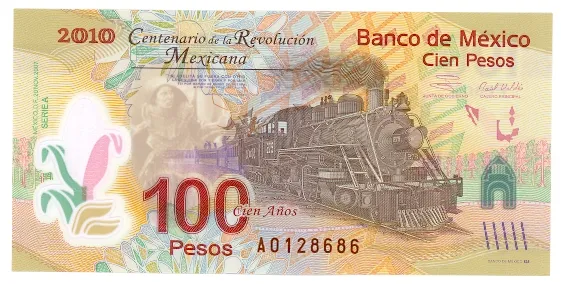
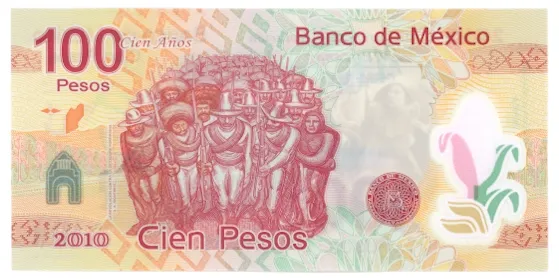
Design
Banxico
Obverse
Nezahualcóyotl
Portrait of Nezahualcóyotl, the poet-king of Texcoco
Reverse
The Templo Mayor and a fragment of a Nahuatl poem
About this banknote
If you found a Mexican 100 pesos note showing a man in a feathered headdress, here is the honest answer: a used one is worth its face value, roughly 5 to 6 US dollars at current exchange rates. Only three things push it above that, uncirculated condition, a special serial number, or a printing error. This is the Banco de México Family F 100 pesos note featuring Nezahualcóyotl, and it is worth knowing what you actually have.
What this note is
The front shows Nezahualcóyotl, the poet-king of Texcoco, a real historical ruler from the 1400s. Beside his portrait is an illustration of his famous verses about the cenzontle (a Mexican mockingbird, "the bird of four hundred voices"), along with Nahuatl symbols of speech and a flower sprouting from a piece of jade.
The back carries the Templo Mayor of Mexico-Tenochtitlan, the main Aztec temple, plus the glyph for Nezahualcóyotl's name (a fasting coyote). It belongs to what Banco de México calls Family F, the paper series introduced in the mid-2000s. Banco de México has announced the withdrawal of this design, which is exactly when a denomination starts attracting collectors who want it in fresh, unused condition.
How much it is worth in 2026
Start with the plain reality. A circulated Family F 100 pesos note, folded, handled, with any soft creases, is worth face value. That is about 5 to 6 US dollars depending on the peso exchange rate. There is no hidden premium on a common used note, no matter how old it looks.
Value only jumps when one of three things is true:
- Uncirculated condition. Crisp, no folds, no stains, no rounded corners. A pristine note is worth several times a worn one to a collector, and graded examples (rated by services like PMG) sell for more still.
- Special serial number. A low serial (000001-style), a radar/palindrome number (reads the same both ways), a repeater, or a solid number makes the note far more desirable.
- Printing error. Misaligned cuts, ink smears, missing print, or a factory fold turn an ordinary note into a genuine rarity worth many times face value.
Outside those three factors, a Family F 100 is worth 100 pesos. No magic. The withdrawal announcement is the reason to hang on to a clean example now rather than spend it.
| Note | Series | Condition | Approx. value (USD) |
|---|---|---|---|
| 100 pesos Nezahualcóyotl | Family F | Circulated | Face value (~5-6) |
| 100 pesos Nezahualcóyotl | Family F | Uncirculated | 10-25 |
| 100 pesos Nezahualcóyotl | Family F | Special serial or error | 30 and up |
These are collector-market ranges, not guaranteed prices. Condition, the specific serial, and buyer demand set the final figure.
The ones people overhype
A note being "old" or "out of circulation" does not make it valuable on its own. Millions of these were printed. Normal wear, a coffee stain, or a bank teller's fold is not a printing error and adds nothing. If a listing claims a plain circulated 100 pesos is worth hundreds of dollars, that is wishful pricing. The premium is real only for uncirculated grade, a genuine serial oddity, or a verified factory error.
How to tell if yours is genuine
Mexican notes carry several security features. Check them:
- Watermark: hold it to the light. A real note has the portrait built into the paper, not printed on top.
- Security thread: a woven strip visible against light.
- Microprinting: tiny text that stays sharp under a loupe.
- Raised ink (intaglio): run a finger over the portrait; you should feel texture.
A counterfeit usually feels smooth and flat, with a watermark that is printed rather than embedded. If you are unsure, post clear photos of both sides in the Pesoteca forum and the community will help you check.
Where to sell it
World paper money (notaphily) is an active English-language market. To sell safely:
- Photograph both sides in good, even light so the serial number and any error are readable.
- Note the condition honestly and flag any low, radar, or repeated serial, since those raise the value.
- Sell to established world-banknote dealers, at collector shows, or through the Pesoteca buy-and-sell forum among collectors.
Avoid dumping it to the first Facebook offer. For context on how the Mexican central bank retires and replaces notes, read why the 20 pesos note is leaving circulation, and to spot fakes see the most counterfeited notes in Mexico.
Think you have a rare serial or a genuine error? Post it in the forum and let the community weigh in before you sell.
Historical context
The obverse of this 100-peso note from 2007 recovers a singular figure: Nezahualcóyotl, lord of Texcoco between 1431 and 1472. A wise ruler of the pre-Hispanic world, he was an architect of hydraulic works, a lawgiver, and a key ally in the formation of the Triple Alliance that dominated the Valley of Mexico. But his fame goes beyond politics: he is remembered as the poet king, author of philosophical verses on the fleeting nature of life.
The reverse evokes precisely that lyrical side, with an allegory of his celebrated poem to the zentzontle, the bird of four hundred voices, accompanied by symbols of the word and motifs of Nahua thought.
Within the F family, begun in 2006, this piece stands out for giving prominence to a figure from ancient Mexico on a modern note, an uncommon gesture that reclaims the country's Indigenous cultural heritage on its paper money.
Frequently asked questions
How much is the Mexico 100 pesos Nezahualcóyotl note (2007) worth?
A circulated note is worth face value, roughly 5 to 6 US dollars at current exchange rates. An uncirculated example, one with a special serial number (low, radar, or repeated), or a genuine printing error can sell for several times that. Condition and rarity drive the price.
Is the 100 pesos Nezahualcóyotl note rare?
The standard note is common; millions were printed as part of Banco de México's Family F series. What is rare, and valuable, is an uncirculated example, a special serial number, or a verified factory printing error. Normal wear or stains do not make it rare.
Where can I sell my 100 pesos Nezahualcóyotl note?
Sell through established world-banknote dealers, collector shows, or the [Pesoteca buy-and-sell forum](/foro/compra-venta) among collectors. Photograph both sides in good light, flag any special serial or error, and avoid selling to the first casual offer online.
How do I tell if the 100 pesos Nezahualcóyotl note is genuine?
Check the security features: hold it to the light for the embedded watermark and security thread, look for microprinting under a loupe, and feel for raised (intaglio) ink on the portrait. Counterfeits feel smooth and flat with a printed-on watermark. When unsure, post photos in the [Pesoteca forum](/foro).
Características Banxico
Conmemorativo Centenario de la Revolución Mexicana.
Familia F
This banknote belongs to the BIL-F family within the Sistema PSM . Explore all the banknotes that share origin, era and design with this piece.
Ver todos los billetes de la familia F →