
Mexican 10 Pesos Banknote (1994, Emiliano Zapata)
Familia AA · algodón
Period: México Contemporáneo
Design
Banxico
Obverse
Emiliano Zapata
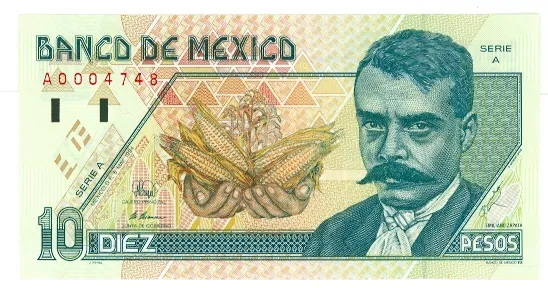
Portrait of Emiliano Zapata and ears of corn
Reverse
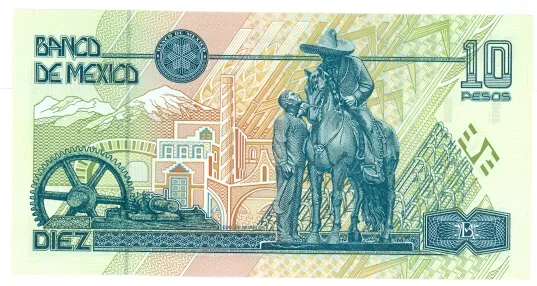
The Chinameca hacienda with figures on horseback and volcanoes in the background
About this banknote
If you found a Mexican 10 pesos note with a mustached revolutionary and cornstalks on the front, here is the honest answer: a circulated one is worth a few dollars at most to a collector, and its old face value in pesos. A truly uncirculated example, or one with a low serial number or a printing error, is what actually brings a premium. Most sell in the 2 to 15 USD range.
This is the Emiliano Zapata 10 pesos, part of the Banco de México Family AA series first issued in the mid-1990s. Zapata was the agrarian leader of the Mexican Revolution, author of the Plan de Ayala with its slogan "Tierra y Libertad" (Land and Liberty). The note has been withdrawn from circulation, so its worth today is collector value, not spending value.
What the 1994 Mexican 10 Pesos Is Worth in 2026
Condition drives everything with this note. Here is what you can realistically expect.
| Condition | Description | Approx. value (USD) |
|---|---|---|
| Circulated (used) | Folds, soft corners, light stains | 1 to 3 |
| Uncirculated (crisp) | No folds, sharp corners, no stains | 5 to 15 |
| Low serial / radar (palindrome) | Special serial number | 15 to 50+ |
| Genuine printing error | Misalignment, ink smear, mismatched serials | 30 to several hundred |
These are collector ranges, not guarantees. A common circulated note is the kind you keep as a souvenir, not a payday. The premium copies are the crisp uncirculated ones and the oddities, and those are genuinely sought by world paper money collectors.
The Design (How to Identify Yours)
Front (obverse): Emiliano Zapata, the "Caudillo del Sur," shown alongside ears of corn (maíz), a symbol of the land he fought for. The note is Family AA, meaning it dropped the word "Nuevos" that appeared after Mexico's 1993 currency redenomination, when three zeros were removed from the peso.
Back (reverse): The hacienda de Chinameca in Morelos, the site where Zapata was ambushed and killed in 1919, with mounted figures and volcanoes in the background.
If your note still says "Nuevos Pesos" or has a different family letter, you have a different issue and its value differs.
What Makes One Worth More
Three things turn a common note into a collectible:
- Grade. Uncirculated (no folds at all, original crispness) beats used by a wide margin. Never flatten or "iron" a note; collectors can tell, and it destroys value.
- Special serial numbers. Low numbers (like 0000012), solid runs, or radar/palindrome serials (reads the same both ways) draw bids.
- Genuine printing errors. Misaligned cuts, ink runs, factory folds, or mismatched serial numbers can multiply value. Normal wear or damage from handling is not an error.
How to Tell If Yours Is Genuine
Check the security features built into the note: hold it to the light for the watermark, look for the embedded security thread, feel for the raised intaglio print, and examine the microprinting under magnification. Compare the design, paper, and signatures against official Banco de México reference images. Fakes and reproductions usually have smooth paper and flat, printed-on colors with no relief you can feel.
If you are unsure, post clear photos of both sides in the Pesoteca forum and the community can weigh in. For context on which Mexican notes get counterfeited most, see our breakdown of the most forged banknotes in Mexico.
Where to Sell It
For the best result, take it to a verified dealer or sell to collectors directly:
- A verified numismatic shop from the Pesoteca dealer directory can appraise it on the spot.
- The Pesoteca buy/sell forum connects you with collectors who actually want world paper money.
Photograph both sides in good light, note whether the serial is low or a radar, and flag any possible error before you price it. Avoid dumping it on a general marketplace to the first buyer; you will usually leave money on the table.
Got a 10 pesos Zapata with an odd serial or something that looks off in the printing? Post it in the forum and let the community take a look.
Historical context
This 10-peso note belongs to Family AA, the first series of the new pesos born of the monetary reform that took effect on January 1, 1993. That reform removed three zeros from the currency (a thousand old pesos came to be worth one new peso) and introduced the N$ symbol, which these notes bear characteristically.
On the obverse appears Emiliano Zapata, the Caudillo of the South, agrarian leader of the Revolution and author of the motto "land and liberty," accompanied by ears of corn that evoke his peasant cause.
The reverse shows the Chinameca hacienda, the place where Zapata was ambushed and assassinated in 1919, with riders and volcanoes in the background. This low denomination was among those that most quickly disappeared from circulation as it was replaced by the ten-peso coin.
Frequently asked questions
How much is the 1994 Mexican 10 pesos note worth?
A circulated example is worth roughly 1 to 3 USD to a collector. A crisp uncirculated note runs about 5 to 15 USD, and notes with special serial numbers or genuine printing errors can bring 30 USD or more. Condition and rarity decide the price.
Is the 10 pesos Zapata banknote rare?
In circulated condition, no; millions were printed. What is scarce and collectible is a truly uncirculated note, one with a low or radar (palindrome) serial number, or one with a genuine factory printing error. Those command real premiums.
Where can I sell my 1994 Mexican 10 pesos note?
The safest options are a verified dealer from the Pesoteca directory, who can value it in person, or the Pesoteca buy/sell forum among collectors. Photograph both sides in good light and check for a low or radar serial or any error before setting a price.
How do I know if my 10 pesos note is genuine?
Hold it to the light for the watermark and security thread, feel for raised intaglio printing, and look for microprinting under magnification. Compare the paper, design, and signatures with official Banco de México images. Reproductions tend to have smooth paper and flat, printed-on color.
Familia AA
This banknote belongs to the BIL-AA family within the Sistema PSM . Explore all the banknotes that share origin, era and design with this piece.
Ver todos los billetes de la familia AA →